
Showing all posts about authors
Salman Rushdie struggles to write in aftermath of attack
8 February 2023
American based Indian author Salman Rushdie says he is struggling to write again, following a violent attack in August 2022, in a New Yorker article by David Remnick:
At this meeting and in subsequent conversations, I sensed conflicting instincts in Rushdie when he replied to questions about his health: there was the instinct to move on — to talk about literary matters, his book, anything but the decades-long fatwa and now the attack — and the instinct to be absolutely frank. “There is such a thing as P.T.S.D., you know,” he said after a while. “I’ve found it very, very difficult to write. I sit down to write, and nothing happens. I write, but it’s a combination of blankness and junk, stuff that I write and that I delete the next day. I’m not out of that forest yet, really.”
RELATED CONTENT
authors, Salman Rushdie, writers
Authors are the most likely people to feature on banknotes
22 April 2022
It seems ironic that while they may not earn a great deal of money, authors are the most likely people to feature on banknotes, ahead of even political leaders.
Some notable figures in this category include Colombia’s first Nobel Prize of Literature winner Gabriel García Márquez, the pioneer of Japanese modern literature Ichiyo Higuchi and Turkish writer Fatma Aliye Topuz, who is known as the first female author in the Islamic world. Writers can give voice to a place, time, and culture in a way that can resonate and instill a sense of shared identity among citizens, perhaps making them such a popular choice to feature on banknotes.
RELATED CONTENT
The 100 Most Influential People of 2021, but where are the writers?
20 September 2021
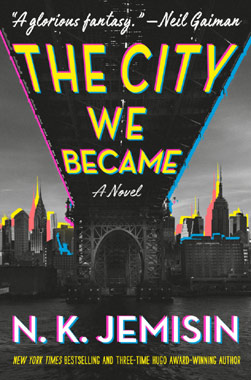
Time Magazine’s list of the Most Influential People of 2021, contains the names of icons, pioneers, titans, leaders, and innovators, but it’s only in drilling down into the artist category, that a single writer comes to light; American author N. K. Jemisin. First and foremost congratulations to Jemisin for being included, but it seems unfortunate more writers aren’t recognised here. How do we remedy this situation?
RELATED CONTENT
Homer frustrated writers by using the best Homeric Epithets three-thousand years ago
8 August 2011
John Barth, writing for The Atlantic:
When the eminent Italian critic and novelist Umberto Eco visited Johns Hopkins some decades ago, he spoke of the problem, for contemporary writers, of the “already said”: the circumstance that because Homer, for example, spoke so memorably in The Odyssey of the “wine-dark sea” and of “rosy-fingered Dawn,” nearly 3,000 years’ worth of poets and storytellers have had to find other images for sea and sunrise — a task that must become increasingly difficult as the repertory of possibilities is exhausted.
It’s not what you say, it’s the way you say it… writers have been struggling for three thousand years to write prose and poetry that is original.
Originally published Monday 8 August 2011, with subsequent revisions, updates to lapsed URLs, etc.
RELATED CONTENT