
Showing all posts about environment
Forests now cover two percent of Iceland thanks to replanting
22 July 2022
In the distant past, forests and trees covered large parts of Iceland, about forty percent of the country. But when permanent settlers arrived over a thousand years ago, much of this growth was cleared to make way for agriculture and grazing, and firewood. Efforts to replant trees since the 1990s though have seen forest areas return to two percent of the country today.
That number may not seem like much, but since 1990, the surface area covered by forest or shrubs in Iceland has increased more than six times over – from 7,000 hectares to 45,000. In 20 years, the number is expected to be 2.6%.
Every little bit helps. It’s a hopeful reminder that it’s not too late to take steps of any sort to deal with climate change.
RELATED CONTENT
climate change, environment, Iceland, nature
Don’t plant trees to combat climate change plant mini-forests
15 July 2022
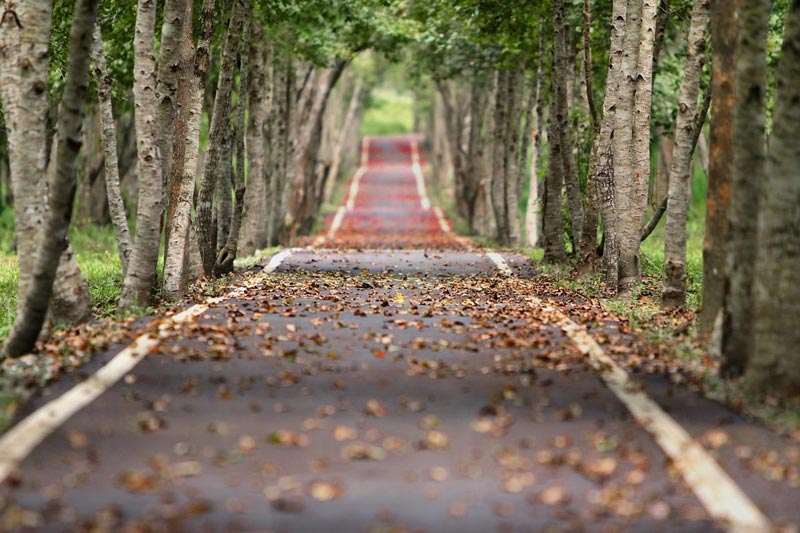
Image courtesy of 二 盧/uniquedesign52.
Planting trees is one way of mitigating the impact of climate change, but planting mini-forests is a more effective alternative, says American nature and conservation writer Hannah Lewis.
Mini-forests are more likely to nurture ecosystems, rather than single trees planted here and there, and, as a result, live longer. And better still, mini-forests can be established anywhere, even in densely populated urban areas, where there’s even a few spare square metres of land available.
A mini-forest is a small ecologically robust forest that can be planted by communities in parks and cities, in schoolyards and churchyards, and beside busy roads. It’s flipped traditional landscaping on its head. You get more biodiversity and a different appearance. It’s a dense band of multi-layer trees as opposed to the elegant but less ecologically useful line of single species down the side of the street.
Lewis’ call is based on the work of late Japanese botanist Akira Miyawaki, who advocated the planting of small forests with native species, as a way of fostering the emergence of ecosystems.
RELATED CONTENT
climate change, environment, nature
Coffee grounds go full circle being reborn as the Kreis Cup
12 July 2022
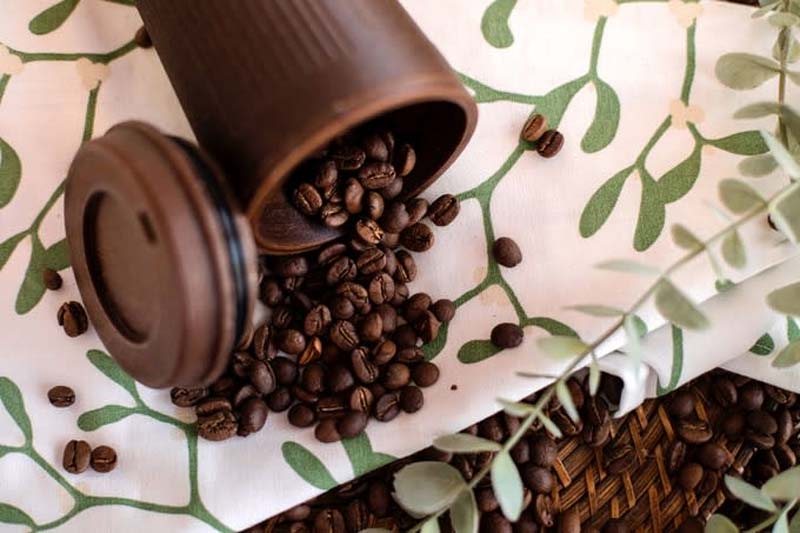
Our insatiable appetite for coffee leaves a few superfluous by-products in its wake. Disposable coffee cups are one. Coffee grounds, being what remains of the beans used to brew the cup of coffee you bought, are another. And, as with the disposable cups, coffee grounds tend to build up. It’s estimated two billion cups of coffee are made daily globally, which adds up to a lot of coffee grounds.
And given just about all these dregs end up in the waste bin, our caffeine addiction is hardly environmentally friendly, nor particularly sustainable. While some people make an effort to recycle discarded grounds, they can be repurposed as household deodorisers, compost, and even insect repellent in the garden, among other things, most end up in landfills.
The people at Coffee Kreis are hoping to change that though. They’d like to see coffee grounds come full circle, as it were, by turning them into reusable coffee cups, which is quite apt as kreis is the German word for circle, or circuit.
Kreis means circle, resembling our circular economy model based on the regeneration of natural materials into a sustainable product. The Kreis Cup is an alternative to disposable paper cups and aims to replace the end-of-life concept of used coffee grounds.
RELATED CONTENT
coffee, environment, sustainability
Used disposable coffee cups could be a concrete ingredient
11 June 2022
This might be the breakthrough coffee drinkers have been waiting for. Yanni Bouras, a Melbourne based structural engineer, thinks there might be a way to recycle the single-use takeaway coffee cups that Australians can’t seem to live without. Bouras has devised a method of replacing some of the sand used in concrete mix, with used, broken down, disposable coffee cups:
The cups are ground up and mixed in as a substitute for a proportion of the sand that goes into a typical concrete mix. So far, testing has found the material is weaker than standard concrete but has a higher thermal performance. That means it could be useful for non-structural purposes, like footpaths or even insulation. If 10 per cent of sand was replaced by takeaway coffee cups, there could be up to 700 coffee cups used per cubic metre of concrete.
RELATED CONTENT
NSW bans a bevy of single-use plastic items from 1 June 2022
4 May 2022
Big changes are coming up for people who buy takeaway food and beverages in NSW.
Lightweight plastic bags, single-use plastic straws, stirrers and cutlery, single-use plastic bowls and plates, expanded polystyrene food service items, and single-use plastic cotton buds and microbeads in certain personal care products, are among single-use items the NSW Government is banning from Wednesday 1 June 2022.
It’s all part of the NSW Government’s plan to phase out single-use plastics and reduce the harmful impact these items have on our environment. These bans apply to all businesses, organisations and anyone holding an activity for charitable, sporting, education or community purposes in NSW.
Takeaway coffee cups, along with their profligate plastic lids — of which Australia chews through one billion of per year — look to remain for the time being, but it is the NSW Government’s intention to do away with these by 2025.
The City of Sydney has put together a guide to assist consumers to find reusable alternatives.
RELATED CONTENT
coffee, environment, sustainability
Bondi says: break up with the cup
3 December 2021

BYO Cup Week is an initiative by bru coffee, a cafe at Sydney’s Bondi Beach, and Australian journalist and blogger Sarah Wilson, to bring about a reduction in the use of disposable takeaway coffee cups. Between now – 1 December actually – and Friday 10 December 2021, coffee drinkers across Sydney are being urged to switch to re-usable cups, sometimes known as keep-cups, for their caffeine fix. Contrary to what many of us might think, disposable coffee cups are an environmental nuisance:
Although disposable cups look like they are made of paper and recyclable, the majority contain plastics that don’t break down and are damaging to the environment. According to the NSW Environment Protection Authority, 1 billion disposable coffee cups end up in landfill sites across Australia each year. It is estimated that Bondi contributes 75,000 cups a week to that annual total.
RELATED CONTENT
coffee, environment, sustainability
Forty four degrees Celsius, I think that is a record for Sydney
1 January 2006
It’s almost midnight in Sydney. I think it’s safe to go outside now. Earlier today temperatures hit 44° Celsius. The last time I was in place that hot was Aswan, in Egypt.
44°C. That must be an all-time record for Sydney.
In other news, I’m pleased to report last night’s festivities were indeed festive. Seems quite a party was had at my apartment building too. When I arrived home today someone had ripped a fire extinguisher off the wall and sprayed most the common areas with it.
There’s fine white powder all over the stairs and on the roof top area.
Other than that I spent the day tinkering with disassociated, and slipping cool, cool beverages. Too hot for anything else, trust me. Happy New Year 🙂
Originally published Sunday, 1 January 2006.
RELATED CONTENT