
Showing all posts about writing
Case Study, by Graeme Macrae Burnet
14 January 2022
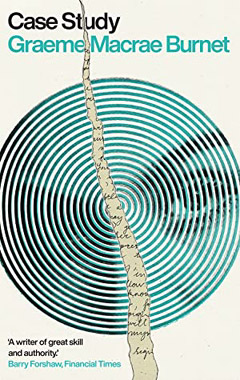
If Case Study (published by Text Publishing, 19 October 2021), the fourth novel of Glasgow based Scottish author Graeme Macrae Burnet, were a movie — and who knows, it might yet be — based upon video or film clips, it would be called a found footage story. The found footage technique is commonly seen in horror films, but it be could argued there’s elements of horror in Burnet’s latest work.
The literary equivalent of found footage is epistolary, where a story is told through a series of letters, or other written works, of which Case Study is an example. Martin Grey, who lives in present day Clacton-on-Sea, contacts the author after finding five diaries written by his cousin some fifty years earlier, under the pen name Rebecca Smyth. The journals detail her dealings with Collins Braithwaite, a therapist, who is remembered for his unconventional practise methods.
Rebecca’s sister Veronica, who had been a patient of Braithwaite’s for two years, killed herself, and Rebecca has no doubt the therapist was responsible. After creating a fictitious identity, and new persona for herself, Rebecca likewise becomes a patient of Braithwaite, in order to find out more about him. As the author reads the journals though, he comes to realise the intrinsically straight-laced journal writer was becoming ever more delusional, as she increasingly wrapped herself up in her free-spirited alter-ego.
RELATED CONTENT
fiction, Graeme Macrae Burnet, TBR list, writing
Writing tips for emerging authors from George Saunders
12 January 2022
Words of advice for aspiring writers by American author George Saunders, and winner of the 2017 Booker Prize. This one resonates with me:
Know when you over-revise: those new to writing should overwrite just “to get a familiarity with their particular world. We have to learn our individual symptoms” of over-revision. “For me,” Saunders says, “the symptom is the humour goes out of it.”
In writings of mine there’s always the temptation to go into great detail about settings and environments. It seems to me if I over-revise, or cut out superfluous information, I know I’ve gone too far in doing so if the story loses its soul, or becomes too dry. But Saunders is right, overwriting is a great way to become familiar with the backdrop to the story you’re writing.
RELATED CONTENT
Elizabeth Guy discusses Take Ink & Weep on SBS Russian
10 January 2022
Sydney based Australian writer and literature teacher Elizabeth Guy talks to Irina Burmistrova on the SBS Russian podcast about her novel Take Ink & Weep, a story set in 1915 about four Russian poets who believe their work will make the world a better place.
RELATED CONTENT
Sea of Tranquility, by Emily St. John Mandel
7 January 2022
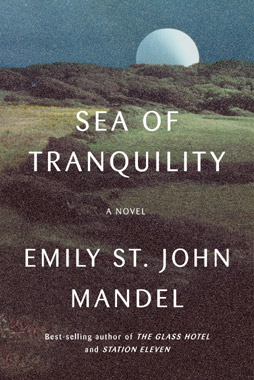
Where are we in time? Where is the motion of the cosmos taking us? Forwards or backwards? Possibly though, you feel you’re stuck in neutral, moving nowhere, yet keenly aware of each passing minute. The strange times we live in have left many of us displaced and confused.
Sea of Tranquility (published by Pan Macmillan Australia, May 2022), the sixth novel of Canadian author Emily St. John Mandel, may well be a microcosm of our pandemic dominated epoch. Gaspery-Jacques Roberts, a detective living in the twenty-fifth century, is asked to investigate a suspected anomaly in time.
But his search for answers is far from straightforward. The detective finds a young man, Edwin St. Andrew, who claims to be the son of a noble British family, who lived in the early twentieth century. And then there is Olive Llewelyn, an author unable to travel home because of a pandemic, who apparently lives in the twenty-third century.
What brings Edwin and Olive to the present day, and how? But is everything as it really seems to be in this usual world? Are Edwin and Olive who they claim to be, or is something else at play? Might the detective have stumbled upon some sort of switch junction in time, explaining the presence of Edwin and Olive?
RELATED CONTENT
Emily St. John Mandel, fiction, TBR list, writing
Positive representations of disabled people in Australian fiction
7 January 2022
Social Queue by Kay Kerr, and Stars In Their Eyes, a graphic novel by Jessica Walton and Aśka, are among works of fiction by Australian authors featuring central characters with disabilities. In Social Queue, Kerr’s autistic protagonist Zoe navigates the world of dating, while in Stars In Their Eyes, queer disabled teen, Maisie, finds love at a fan convention. These works are welcome: in the past people with disabilities who have been part of a story have often assumed the antagonist’s role.
RELATED CONTENT
Australian literature, writing
Don’t let New Year’s resolutions interfere with your novel
6 January 2022
British cartoonist Tom Gauld’s take on writers and New Year’s resolutions. I might caption the first frame “write a good book”, and then have an editor tell me in the second frame to write a “better” book. Whatever you do, don’t bring the neighbours, or any friends, into the process.
RELATED CONTENT
Jenny Hewson, literary agent, talks contracts, rejection, and writer’s voice
4 January 2022
London based literary agent Jenny Hewson spoke to Jemma Birrell in late 2020 as part of the Tablo Publishing Secret Life of Writers podcast series. Topics discussed included contracts, rejection, and writer’s voice, a pivotal aspect of the writing process, but one that can be overlooked.
RELATED CONTENT
Rabbit Hole short story contest 2022
31 December 2021
Rabbit Hole, a digital library of short stories is hosting another short story contest for writers in the new year. Recent additions meanwhile to their repository include Shouting and Weeping Creatures, by California based American sci-fi and horror writer Anna Ziegelhof, a story told from the point of view of a planet not unlike Earth.
RELATED CONTENT
What writers wish they knew before they started writing
30 December 2021
Australian author Allison Tait recently asked sixteen local Children’s and Young Adult writers what they wish they’d known before commencing their publishing careers. There’s a lot of good stuff here, but this insight from Canberra based author Jack Heath, takes the cake:
I saw myself as a social commentator – but I realise now that I was a novelist. People didn’t like me, they liked my novels. I should have spent my time working on my books, rather than play-acting as a celebrity. In a broader sense, I should have focused on writing, rather than being a writer.
RELATED CONTENT
The Good Child, by S.C. Karakaltsas
23 December 2021
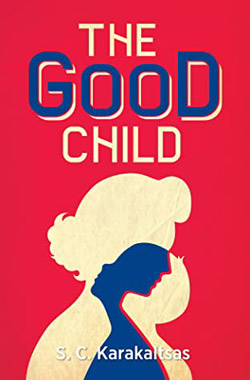
Tom’s a con artist. He might have been the big-wig at a major Australian financial institution, but he’s still a shyster. He’s fleeced thousands of people of their life savings and other assets. But he’s been found out, caught, and is due to have his day in court. Although not directly victim, two other women are caught up in Tom’s web of deception. His seventy-two year old mother, Lucille, and Quin, a former colleague who played a part in enabling Tom.
Lucille and Quin meet on a train bound for Melbourne. Both are en route to Tom’s trial, but at first neither realises who the other is. Lucille is devastated by Tom’s illicit activities. But that’s not all. She’s lost everything. She has no savings, no home, and on top of that, she feels responsible for everything that has happened. Perhaps if she had been less lenient on her son, not so overprotective, things might have turned out differently?
The Good Child (published by Karadie Publishing, 15 November 2021) is the fourth book from Melbourne based Australian author S.C. Karakaltsas. Told from the perspectives of Lucille and Quin, The Good Child poses the oft asked question, if you could say something to your younger self, warn them, tell them to turn left instead of right, would you try? But fanciful thinking is of little help. Both women need to find a way through this quagmire in the here and now.
RELATED CONTENT