
Showing all posts about film
A Room with a View, a brilliantly romantic film with Julian Sands
3 July 2023
Perfectly made, beautifully acted and pitch-perfect. Charlotte Higgins, writing for The Guardian, of A Room with a View, the 1985 Merchant Ivory film that launched the careers of British actors Helena Bonham Carter, and the late Julian Sands:
The film, in a small way, has followed me. Not unconnected with having loved the film, as a student I did travel around Italy, with a friend, and wandered around Santa Croce, and gazed at the Arno, and took a trip to the hills above Florence, though without, alas for us, romantic incident. On the morning of my 21st birthday I woke up in a house in rural Tuscany to be given, by a friend, a mixtape containing O mio babbino caro, the soaring, glorious aria from Puccini’s Gianni Schicchi that we hear as the film’s opening titles roll.
RELATED CONTENT
Vale British actor Julian Sands, star of A Room with a View
29 June 2023
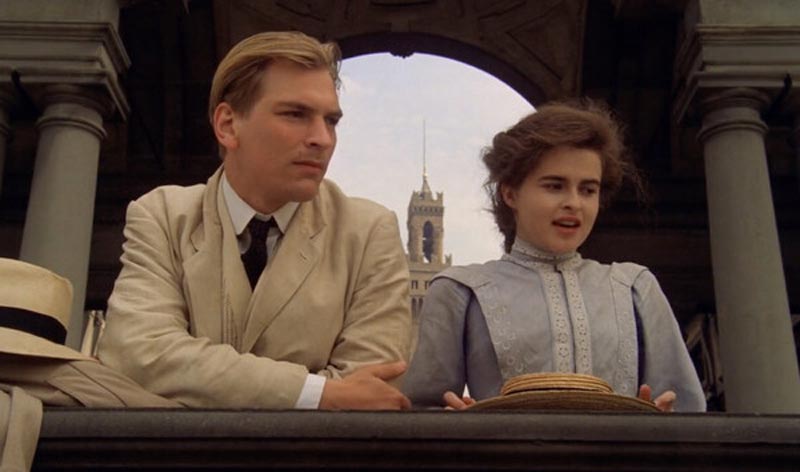
Julian Sands and Helena Bonham Carter, in a still from A Room with a View.
The remains of British actor Julian Sands, who had been missing since January this year, after setting off on a hike on Mount Baldy, in California, were located earlier this week. Sands’ disappearance sparked a large search effort, which was hampered by dangerous storms in the region.
Sands was a prolific film and television actor. His credits include The Killing Fields, The Phantom of the Opera, Ocean’s Thirteen, and The Girl with the Dragon Tattoo, to name a few. His breakthrough role however is considered to be that of George Emerson, in the 1985 film adaptation of late British author E. M. Forster’s 1908 novel, A Room with a View.
Made close to forty years ago now, the romance drama, set in Italy and England, was the intersection of an amazing array of acting and production talent. Acclaimed producers James Ivory and the late Ismail Merchant, who collaborated under the banner of Merchant Ivory, produced and directed. Late German novelist Ruth Prawer Jhabvala, wrote the screenplay.
As George Emerson, Sands played a love interest of protagonist Lucy Honeychurch, portrayed by compatriot actor Helena Bonham Carter, which was likewise seen as her breakout role. George was pitched against another of Lucy’s suitors, Cecil Vyse, played by Daniel Day-Lewis, in what was also one of his earlier film performances.
Veteran British actor Maggie Smith portrayed Charlotte Bartlett, Lucy’s older cousin, and chaperon during their trip to Italy. Smith and Bonham Carter would later work together in some of the Harry Potter films. Judy Dench featured in a supporting role as a novelist called Eleanor Lavish.
Denholm Elliott as George’s father, Rupert Graves as Lucy’s brother Freddy, and Simon Callow, as a vicar, Mr Beebe, also featured. New Zealand opera singer Kiri Te Kanawa sang O mio babbino caro, an aria from Italian composer Giacomo Puccini’s 1917 comic opera Gianni Schicchi, on the soundtrack.
While Sands appeared to not be nominated for any awards for his performance in A Room with a View, the film won in three categories in the 1987 Oscars, and four in the British Academy Film Awards in the same year. For anyone wishing to learn more about Sands’ work and career though, A Room with a View, is an essential, and excellent, starting point.
RELATED CONTENT
books, E. M. Forster, film, Helena Bonham Carter, Ismail Merchant, James Ivory, Julian Sands
An Oscar Award for film stunts may be on the way
25 June 2023
American filmmaker Chad Stahelski, possibly best known for directing the John Wick films, starring Keanu Reeves, believes an Oscar Award for movie stunts is forthcoming.
While promoting the latest instalment of the franchise, John Wick: Chapter 4, earlier this year, Stahelski, a stunt actor himself, said he spent time talking to the Academy of Motion Picture Arts and Sciences, who present the Oscars annually, and described the process as “incredibly positive”:
In a recent interview with ComicBookMovie.com to mark the Blu-ray release of “John Wick: Chapter 4,” Stahelski announced that conversations about a stunt Oscar have finally taken place “in the last couple of months” between the Academy and a contingent of stunt coordinators.
“We’ve been meeting with members of the Academy and actually having these conversations, and, to be honest, it’s been nothing but incredibly positive, incredibly instructional,” Stahelski said. “I think, for the first time, we’ve made real movement forward to making this happen.”
Earlier this year, entertainment and culture magazine Vulture, frustrated by the Academy’s apparent lack of interest in the matter, established their own awards for film stunts. Winners, who were announced in March 2023, included Top Gun: Maverick (surprise, surprise), The Batman, and Nope.
RELATED CONTENT
awards, film, film production, Oscars
The Last Daughter a film by Nathaniel Schmidt, Brenda Matthews
21 June 2023
For decades until the 1970’s, some Aboriginal and Torres Strait Islander children were forcibly removed from their families by successive Australian governments. These children became known as the Stolen Generations. Indigenous woman Brenda Matthews was taken from her family aged two, and placed in the care of a white family.
Matthews was later returned to her birth family after her biological mother regained custody of her. The The Last Daughter, trailer, a documentary which Matthews co-directs with Nathaniel Schmidt, recounts her story as she attempts to trace her adoptive, loving, white foster family, while learning more about her Indigenous family.
The Last Daughter is presently screening in selected Australian cinemas.
RELATED CONTENT
Australia, documentary, film, history, Indigenous culture
Behind the scenes images from the making of Asteroid City by Wes Anderson
14 June 2023
Design magazine Wallpaper* has published a selection of photos taken during the production of the new Wes Anderson film, Asteroid City. Anderson worked with his long-time collaborator, production designer Adam Stockhausen, to create the trademark “Andersonesque” sets of Asteroid City:
Stockhausen achieved the hyperrealistic quality of Asteroid City through the use of forced perspective: the town becomes desert and bleeds into the horizon, all on a set the size of a football field and its boundaries seemingly imperceptible.
RELATED CONTENT
film, film production, Wes Anderson
The Australian LUMIX 72-hour short filmmaking challenge
14 June 2023
Applications are open until Monday 26 June 2023 for the inaugural Australian LUMIX seventy-two hour filmmaking challenge. To be in the running, aspiring entrants need to submit a film clip of thirty to sixty seconds duration. From there, ten selected filmmakers will be invited to make a short film three to six minutes long, and will have seventy-two hours to do so. Check the details here.
RELATED CONTENT
Australian film, film, filmmaking
Don’t Worry, I’m Fine, by Philippe Lioret, with Melanie Laurent
11 June 2023
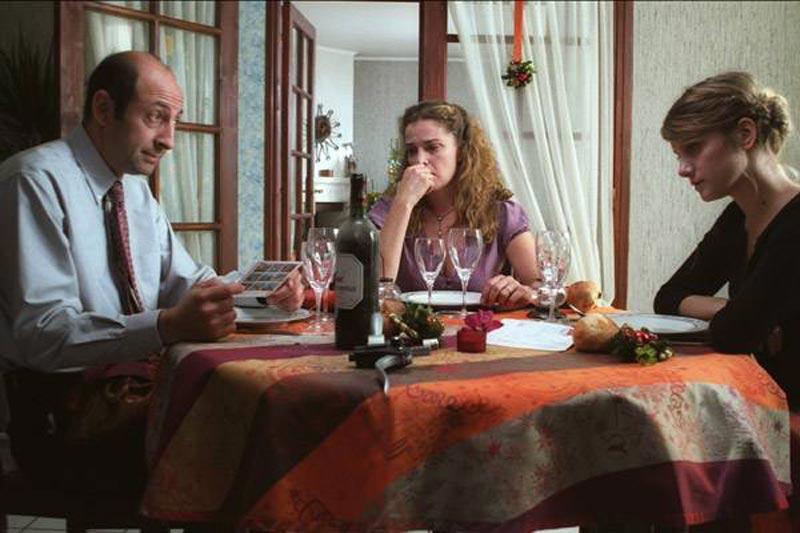
Still from Don’t Worry, I’m Fine, directed by Philippe Lioret.
Nineteen year old Lili (Mélanie Laurent), has returned to her parents place in Paris, France, after a holiday in Spain. She is alarmed to learn Loïc, her musician twin brother, stormed out of the family home days earlier, following an argument with her father, Paul (Kad Merad).
Believing, as twin siblings, they have a close bond, a perplexed Lili expects to hear something from her brother before too long. But her frustration only grows after he fails to respond to her calls and texts. Lili is also disheartened by her parent’s blasé attitude to Loïc’s abrupt departure.
Both her father, and mother, Isabelle (Isabelle Renauld), feel there is nothing they, nor anyone else, can do. They tell Lili the police have no interest, as they see it as a family matter. Lili soon breakdowns under the pressure, and is admitted, against her will, to a psychiatric hospital.
Her spirits only begin to lift after Loïc sends a letter assuring her he’s fine, and just needs some time away from their parents, particularly their father, whom he remains highly critical of. Loïc tells Lili he’s travelling from town to town around France, playing gigs, and working odd jobs, for a living.
As the months pass, letters and postcards continue to arrive sporadically, and a more settled Lili, who is now twenty, begins to get on with her life. But while on a holiday in another region of France with friends, Lili makes a disturbing discovery about the letters Loïc has been sending her.
Don’t Worry, I’m Fine, also known as Je vais bien, ne t’en fais pas (trailer), is a slow burning family drama, and a meditation on the extraordinary, unfathomable, decisions people make. Although the story is mostly straightforward, French filmmaker Philippe Lioret permeates proceedings with the feeling that something is not quite right.
Made in 2006, Don’t Worry, I’m Fine, sees Mélanie Laurent aged about twenty-three, already well established in her acting career. Her heartrending performance here, together with that of Kad Merad, steers this tale of a troubled family towards a final reveal that will leave your head spinning.
RELATED CONTENT
film, Kad Merad, Mélanie Laurent, Philippe Lioret
Mixed reviews for Asteroid City by Wes Anderson, a film for fans only?
10 June 2023
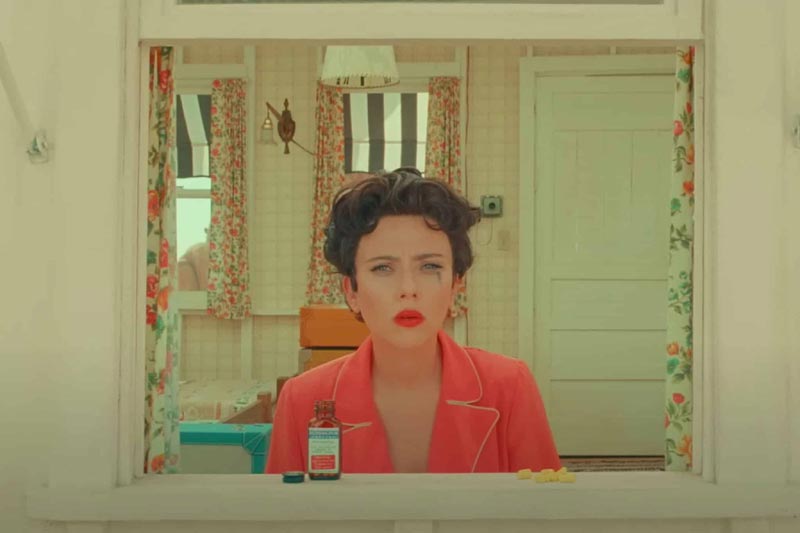
Still from Asteroid City, directed by Wes Anderson.
Asteroid City, the latest feature by American filmmaker Wes Anderson, premiered in Australia at the Sydney Film Festival on the evening of Thursday 8 June 2023. While there was much excitement in the lead up to the release of Anderson’s eleventh film, reactions so far from viewers and critics who have seen Asteroid City, do not quite match the pre-release hype.
It’s early days though. The film is yet to commence its theatrical run, and to date has mostly been seen only at media preview screenings, and film festivals. It could be argued these viewers, generally made up of film critics and seasoned film-goers, are a little more particular than wider audiences.
Still, some of the early film ranking metrics are not exactly encouraging. Rotten Tomatoes, the go-to gauge of a movie’s likability, presently gives Asteroid City a score of seventy-five percent. Metascore meanwhile, which aggregates the scores movie writers assign to a film through Metacritic, rates Asteroid City at seventy-three out of one-hundred.
The film’s IMDb rating, based on scores by IMDb members, sits at just under seven out of ten. All of these numbers still make Asteroid City worth watching in my opinion.
But bloggers and influencers who have seen early screenings, are distinctly mixed in their appraisals. Swara Salih, writing for But Why Tho?, thought Asteroid City’s biggest problem was none other than Wes Anderson:
What gets in the way of Asteroid City’s success as a narrative was Anderson himself. The writer-director’s insistence on meta commentary results in what could have been one of his most ambitious and groundbreaking films that instead collapses into a narrative mess.
Ali Naderzad, a film writer at Screen Comment, was at odds with Anderson’s trademark saturated pastel pallet, which he suggested worked against the film:
“Asteroid City” is a visual feat of a movie with little in the way of substance, in fact, this might be the most contrived Wes Anderson film I’ve watched. Scarlett Johansson, Tom Hanks, Liev Schreiber and Adrien Brody star in it, which adds heft but the photography is helliciously rendered in saturated pastels and so it’s weird.
Zornitsa Staneva, a staff writer at Tilt Magazine, was critical of Anderson’s penchant for constantly featuring oversize ensemble casts:
Does Wes Anderson invoice based on the number of Hollywood names stuffed in his distended cast? Is Wes Anderson blinded by narcissism to the extent that all he cares about is having a foot long list of cast credits, held tenuously together by a pretentiously self-referential vanity project?
On the flip side, Ben Rolph, writing for AwardsWatch, described Asteroid City as more of the same from Anderson, which was a good thing, albeit a touch more melancholic than usual:
With an explosion of pastel colours, precise camera moves and a whimsical script, Asteroid City is Wes Anderson operating at his best, still doing his usual quirky thing. His latest is another testament to the ongoing power of his one-of-a-kind, special style of filmmaking which here develops to become more mature and melancholic as a family deals with some serious issues.
Finally, Michael Walsh, who was in attendance at the premiere screening at the Sydney Film Festival, was likewise upbeat:
Quirky, offbeat and existential, Asteroid City is yet another darling little feature from the whimsical Wes Anderson that unites a stacked cast, consummate craftwork, and a surprising story that elicits good laughs and deep questions about life, purpose and legacy to deliver one of Anderson’s more character driven and emotionally resonate films in recent memory.
Anderson has an unconventional style of storytelling, which is something to be thankful for. While not all of his titles have one-hundred percent agreed with me, so far there’s not been one I’ve disliked. Asteroid City remains a film I’m hanging out to see.
RELATED CONTENT
film, science fiction, Wes Anderson
Letterboxd scavenger hunt for Wes Anderson’s Asteroid City
2 June 2023
The Australian premiere of the latest Wes Anderson feature, Asteroid City, takes place in less than a week on Thursday 8 June 2023, at the 2023 Sydney Film Festival.
If you need a little something to keep you occupied between now and then though, help contain the excitement and all, film social network Letterboxd is running the Asteroid City Scavenger Hunt for the next two weeks:
Every day for the next fourteen days, a new item will be hidden on Letterboxd somewhere in the extended Wes Anderson universe of films and their creators. We’ll drop daily clues on our social media, and once you have collected all fourteen items, you’re automatically in the draw to win the grand prize: a private screening of Asteroid City for you and your friends at your nearest cinema.
Letterboxd, in case you’ve not heard of it, was established in New Zealand in 2011, by Matthew Buchanan, and Karl von Randow, and I’ve been a member since 2012. If you’re looking for a place to discuss film, and film only, Letterboxd is where you need to be.
And here’s something, the screenplay for Asteroid City is available to buy in hardback book, or Kindle format, from Amazon on Tuesday 22 August 2023. I didn’t know that was a thing.
RELATED CONTENT
film, Sydney Film Festival, Wes Anderson
Influencer, a film by Kurtis David Harder with Cassandra Naud
27 May 2023

Still from Influencer, a film by Kurtis David Harder.
Being a social media influencer isn’t all sunshine and double shot half decaf blonde espresso cappuccinos with caramel drizzle. There’s a dark, and dangerous, side to this occupation. That you should have learned after seeing Sissy, a horror/thriller made in early 2022 by Australian filmmakers Hannah Barlow and Kane Senes.
Influencer, trailer, by Canadian filmmaker Kurtis David Harder, also a horror/thriller, set in Thailand, sees a young, worldly, traveller CW (Cassandra Naud) prey on social media influencers who venture into the region. One of her targets is Madison (Emily Tennant), who spruiks skincare products. Although her socials suggest otherwise, Madison isn’t quite enjoying Thailand as much as she hoped.
Madison’s vulnerability makes her the perfect target for CW, and before long the new friends are taking a boat trip to the obligatory secluded island. One can only imagine what happens next. I can’t find any information about a cinematic release in Australia for Influencer, but you may be able to stream the film on Shudder.
RELATED CONTENT
Cassandra Naud, Emily Tennant, film, Kurtis David Harder, trailer