
Showing all posts about Australian literature
The 2022 Stella Prize shortlist
3 April 2022
The shortlist for the 2022 Stella Prize was announced on Thursday 31 March 2022. The six titles, the work of Australian women and non-binary writers, along with an excerpt of the judges’ comments for each book are as follows:
Bodies of Light, by Jennifer Down.
This is an ambitious novel, spanning decades and locales, that sees Down demonstrate her imaginative range and take risks following the success of her previous two books. The result is a daring and compelling work, suffused with pathos and an impressive degree of empathic vulnerability.
Dropbear, by Evelyn Araluen.
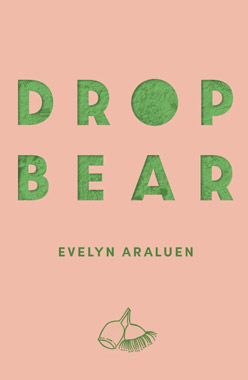
Dropbear is a breathtaking collection of poetry and short prose which arrests key icons of mainstream Australian culture and turns them inside out, with malice aforethought. Araluen’s brilliance sizzles when she goes on the attack against the kitsch and the cuddly: against Australia’s fantasy of its own racial and environmental innocence.
Homecoming, by Elfie Shiosaki.
Homecoming is both a genre-defying book, and a deeply respectful ode to the persistence of Noongar people in the face of colonisation and its afterlives… Shiosaki has delivered a work of poetic and narrative genius and can be read either as an ensemble of poems or as a single piece that moves seamlessly between the elegiac and the joyful.
No Document, by Anwen Crawford.
No Document is a longform poetic essay that considers the ways we might use an experience of grief to continue living, creating, and reimagining the world we live in with greater compassion and honour… This work is a complex, deeply thought, and deeply felt ode to friendship and collaboration.
Stone Fruit, by Lee Lai.
Lee Lai’s Stone Fruit is a moving graphic novel in which queer couple, Bron and Ray, find themselves at a tense crossroads in their relationship. Throughout scenes rendered in Lai’s signature art style – simple lines and a muted blue and grey colour palette – and featuring spare, perfectly articulated dialogue… Stone Fruit beautifully reflects a tender domesticity that is affecting and atmospheric.
Andrada’s collection adroitly combines the personal, the political, and the geopolitical, narrated by a voice that is at once hip, witty, and deeply serious. Andrada has the imaginative ability to move between the memories of poet-narrators, historical asides, reflections on the nature of race and feminism in Australia, and questions of colonisation both locally and in the Philippines. Formally remarkable, stylistically impressive, and often surprising, TAKE CARE is a collection that understands the ways in which ‘There are things we must kill / so we can live to celebrate.’
If the Stellas are about finding writing that mixes it up and shakes it around a bit, then the contest for this year’s Prize is going to be fascinating.
In the past novels, non-fiction, biographies, and memoirs have won, but in 2022 works of poetry have a better than average chance of prevailing, with the work of three poets in the shortlist.
Then of course there is Stone Fruit, Lee Lai’s graphic novel. Bring on Thursday 28 April, the day the winner is announced I say.
RELATED CONTENT
Australian literature, literary awards, Stella Prize
Self-portrait by Andrew Pippos, for Openbook magazine
30 March 2022
Sydney based Australian author Andrew Pippos, whose debut 2020 novel Lucky’s was shortlisted for the 2021 Miles Franklin Literary Award, writing for the State Library of NSW’s Openbook magazine, an excerpt from an upcoming new book of his, I believe.
My father enjoyed telling people he’d never read a book in his life, as if this were a detail you might remember about him, as if it were some great stroke of luck, like never being issued with a speeding ticket.
RELATED CONTENT
Andrew Pippos, Australian literature
The Best Australian Yarn Short Story Competition 2022
30 March 2022
The Best Australian Yarn is another generous local literary award currently accepting submissions for short stories of between 1500 – 2500 words.
Short stories have the power to transport us to another world, they educate and entertain us, and can make the everyday seem extraordinary.
A collaboration between The West Australian and the Minderoo Foundation, entries for The Best Australian Yarn are open until Tuesday 31 May 2022, to Australians everywhere aged twelve or over.
A total of A$50,000 in prize money is on offer. The overall winner will be awarded A$30,000, the West Australian winner A$4,000, Regional Australia winner $3,000, the Youth winner will received $2,000 and mentoring opportunities, while the nine shortlisted entrants will received A$1,000 each.
In addition, the winner of the Readers’ Choice award, as determined by a public vote, will receive A$2,000. The longlist, consisting of fifty works, will be announced in August 2022.
RELATED CONTENT
Australian literature, literary awards
The Stella Prize and the difference it has made
21 March 2022
The winners of Australian literary award, the Stella Prize, which recognises the work of Australian women and non-binary writers, talk about how the now decade old prize transformed their writing careers, and Australian literature.
Clare Wright is an academic at La Trobe University, and she says winning the Stella was invaluable to her burgeoning career as an author. “Stella really gave me a platform, and it gave me a microphone, and people wanted to hear the things that I had to say – about not only the subject of that book, but also about women in history, about history writing, about gender relations more broadly,” she says.
RELATED CONTENT
Australian literature, literary awards, Stella Prize
Do large book reviews result in more book sales?
4 March 2022
Since 2012 the Stella Count has been analysing the number, and length, of book reviews published across twelve Australian publications. These periodicals include regional and national newspapers, magazines, and journals.
Reporting of the counts for the two most recent years — being 2019 and 2020 — has been delayed by COVID imposed restrictions, but they have shown for the first time that reviews of books written by women, has exceeded the fifty percent mark for the first time since the Stella Count commenced.
While on the surface it appears there is finally some parity in book reviews between the genders, being published in the twelve surveyed publications, there is a significant caveat. This comes down to the length of the reviews. While more than half of small and medium sized reviews critiqued the work of women in the 2019 and 2020 period, when it came to large reviews, books by men remained in the majority.
As far as I can tell, the Stella Count only looks at print publications, though I assume these reviews are cross-posted to their online counterparts. While using established periodicals makes for a consistent benchmark to measure comparisons over time, I’m guessing these numbers would be quite different if social media reviews were — somehow — to be included.
The value — and prestige even — of large reviews cannot, and should not, be dismissed, but I wonder what the conversion rate, if you like, of large reviews to book purchases is, compared to small and medium reviews. Research tell us people take more time to assimilate longer articles (consisting of a thousand words or more), than they do shorter, or small and medium, sized write-ups.
This is possibly because large reviews contain more information, and readers perhaps feel better informed if they are making a decision to spend money. If I were making a big purchase, such as a car, I would read as many long-form, in depth articles, about the vehicle I was interested in as I could, but buying a novel would be different.
I tend to read several small book reviews published on social media, and possibly a couple of small to medium periodical articles, before deciding what to do. That way I’m able to get a range of opinions, and quickly, rather than relying on the thoughts of a single reviewer.
Might others of the TL;DR generation agree with me?
RELATED CONTENT
Australian literature, books, Stella Prize
Stella Prize longlist 2022, a good year for poetry
1 March 2022
Unlike the Miles Franklin Literary Award, which honours only works of fiction by Australian writers, the Stella Prize recognises writing across all genres, be it fiction, non-fiction, memoirs, graphic novels, biographies, historical writing, short story collections, novellas, and poetry.
In addition to the fiction and non-fiction works named on the Stella Prize longlist for 2022, Stone Fruit by Montreal, Canada based Australian cartoonist Lee Lai becomes the first graphic novel to be included on the longlist.
But it is the poets who have a made a mark this year, claiming four of the twelve slots on the longlist. Take Care by Eunice Andrada, Dropbear by Evelyn Araluen (cover featured above), Homecoming by Elfie Shiosaki, and The Open by Lucy Van, are all in contention for the prize.
If one of the poetry titles wins, or Lai’s graphic novel, it will be a first for the Stella. A shortlist consisting of six titles will be unveiled on 31 March 2022.
RELATED CONTENT
Australian literature, graphic novels, literary awards, poetry, Stella Prize
The 2022 Stella Prize longlist
28 February 2022
The 2022 Stella Prize longlist was announced today, and includes the following twelve books:
- Another Day in the Colony by Chelsea Watego
- The Open by Lucy Van
- Homecoming by Elfie Shiosaki
- Permafrost by SJ Norman
- Stone Fruit by Lee Lai
- Bila Yarrudhanggalangdhuray by Anita Heiss
- Bodies of Light by Jennifer Down
- No Document by Anwen Crawford
- She Is Haunted by Paige Clark
- Dropbear by Evelyn Araluen
- Take Care by Eunice Andrada
- Coming of Age in the War on Terror by Randa Abdel-Fattah
The Stella Prize, which was established in 2013, is a literary award celebrating the writing of Australian women. The shortlist will be announced on 31 March 2022.
RELATED CONTENT
Australian literature, literary awards, Stella Prize
Tim Winton critical of fossil fuel industry arts sponsorship
28 February 2022
Perth based Australian writer Tim Winton, and four times Miles Franklin Award winner, has spoken out against the over reliance the local arts community has on sponsorship from the fossil fuel industry, during a speech at Perth festival’s Writers Weekend.
“I do want us to acknowledge how things still work here … how captive [the arts and cultural sectors] are,” he told the Writers Weekend audience. “I suspect that to some of the folks who were involved in decisions around that production, all of them good people I’m sure, the dissonance just wasn’t audible. And that just shows you how normal it is, how safe the fossil giants still feel here in the wild west.”
Winton singled out a performance of Become Ocean, an orchestral composition by John Luther Adams, scheduled for Saturday 5 March at the Festival, which has already attracted the ire of a local activist arts group on account of sponsorship arrangements for the performance.
RELATED CONTENT
Australian literature, Tim Winton
Megan Albany speaks with Dora Papas
21 February 2022
Megan Albany, whose debut novel The Very Last List of Vivian Walker, I wrote about the week before last, will be in conversation with Dora Papas, editor of Better Homes and Gardens, as part of the Books & Bubbles series of virtual events, this Wednesday, 23 February 2022, at 6:30PM (ADST).
RELATED CONTENT
Australian literature, Megan Albany
This Devastating Fever, a new novel by Sophie Cunningham
19 February 2022
Melbourne based Australian author Sophie Cunningham is set to publish This Devastating Fever, her first novel in fifteen years in September 2022, according to Ultimo Press. In addition to her writing and teaching work, Cunningham is also one of the founders of the Stella Prize, an award honouring the work of Australian women writers.
RELATED CONTENT