
Showing all posts about publishing
Striking workers reach tentative deal with HarperCollins
13 February 2023
New York based American publisher HarperCollins has reached a tentative deal with workers who have been striking since November 2022.
The tentative agreement includes increases to minimum salaries across levels throughout the term of the agreement, as well as a one time $1,500 lump sum bonus to be paid to bargaining unit employees following ratification.
Employees have been seeking fairer rates of remuneration, and an undertaking from the company to increase workplace diversity. Some workers have been struggling to make ends meet on salaries of US$45,000, which is well below the minimum annual salary of about US$56,000 needed by a single person to live sustainably in the New York City region.
RELATED CONTENT
Adam Vitcavage: the first book you write may not be published
23 January 2023
Adam Vitcavage, whose podcast Debutiful explores the work of debut authors, offers a blunt observation to aspiring writers, in a recent interview with Los Angeles based novelist Ruth Madievsky:
I think aspiring writers need to realize that your dream first book might not be what you actually publish. So many writers have said they had to shelve books they were working on for years for one reason or another. Or that they had to take what was working and reshape it altogether.
The dream book may be a story the writer likes, but no one else, unfortunately.
RELATED CONTENT
Author meets publisher at Australian literary speed dating event
23 January 2023
Everyone has a book in them, so they say. But the multitude of story ideas is placing a strain on publishing houses. Some book publishers in Australia are said to be so overwhelmed with manuscripts, they are limiting submissions to works of literary fiction only.
The outlook for aspiring Australian authors may be bleak, but there are still opportunities to put work in front of publishers and literary agents, and literary speed dating is one of them. As the name suggests, literary speed dating is similar to regular (romantic) speed dating. Prospective authors have a set amount of time to present their book idea to publishing industry representatives, and see if they can “make a match” with someone.
A literary speed dating event hosted by the Australian Society of Authors (ASA) last year, saw forty percent of pitching authors, from a field of over four hundred, receive an expression of interest in their work. The ASA is planning more online speed dating events this year, commencing on Wednesday 29 March 2023, and they may be the opportunity some writers have been looking for.
RELATED CONTENT
Australian literature, publishing
Novel serialisation, good for readers, good for writers
13 January 2023
Publishing novels by serialisation, or regular instalment, used to be a widespread practice. At one time it was the only way to read the latest works of authors such as Charles Dickens, Elizabeth Gaskell, Jules Verne, Leo Tolstoy, H. G. Wells, and Arthur Conan Doyle. Usually authors would later publish their serialised work as a complete edition, or whole book.
But book serialisation is a model some writers are again embracing. As an experiment, American journalist and author Bill McKibben published his latest book, The Other Cheek, on email newsletter platform Substack. Long story, short, the idea seemed to go down well with readers, says McKibben, writing for Literary Hub:
Still, despite all that, readers seemed to enjoy it, and for just the reasons I had hoped: the story lingered in people’s minds from one Friday to the next, and they wondered what turn it would take. As it spun out across the span of a year I got letters (well, emails) from people regularly suggesting possible plot twists or bemoaning the demise of favorite characters. I didn’t consciously adjust the story to fit their requests (and I’d written much of it in advance) but I did take note of what people were responding to.
Reader interaction and feedback during the publishing of a book, instead of as a review, or reaction, to a whole work, now there’s something.
RELATED CONTENT
Bill McKibben, books, publishing, writing
Can an algorithm assess the quality of a novel manuscript?
18 December 2022
It pays to follow Australian scientist and writer Dr Karl Kruszelnicki (aka Dr Karl) on Twitter (as long as Twitter continues to permit such behaviour), especially if you are writing a novel.
The other day he posted a link to an article published in 2014, about a literary algorithm that is apparently capable of quickly assessing the quality of an unpublished novel manuscript. The article expounds upon research conducted (PDF) by Stony Brook University into the matter:
Regarding lexical choices, less successful books rely on verbs that are explicitly descriptive of actions and emotions (e.g., “wanted”, “took”, “promised”, “cried”, “cheered”, etc.), while more successful books favor verbs that describe thought-processing (e.g., “recognized”, “remembered”), and verbs that serve the purpose of quotes and reports (e.g,. “say”). Also, more successful books use discourse connectives and prepositions more frequently, while less successful books rely more on topical words that could be almost cliche, e.g., “love”, typical locations, and involve more extreme (e.g., “breathless”) and negative words (e.g., “risk”).
Fascinating, no? Remember though, don’t let the algorithm write the book, let it guide you in writing the book. But if you wish to avoid algorithms all together, look at the way Irish author Sally Rooney — for one — does things.
RELATED CONTENT
publishing, science, technology, writing
Gravidity and Parity by Eleanor Jackson wins 2022 SPN book of year
25 November 2022
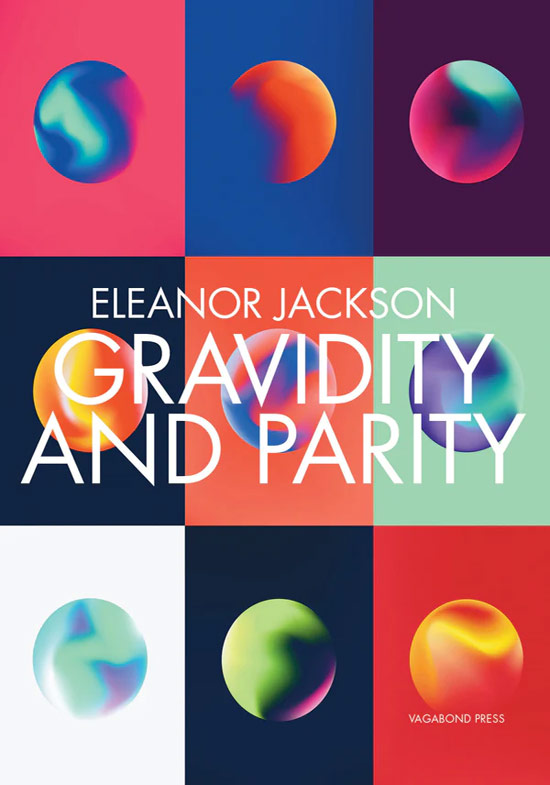
Gravidity and Parity, written by Eleanor Jackson, and published by Vagabond Press, has been named winner of the Small Press Network (SPN) Book of the Year award.
Gravidity and Parity is a poignant and intricate collection of poetry that guides the reader into the journey of motherhood, pulling no punches in how it addresses and details all that is often unsaid or unknown about pregnancy. The book is set during the COVID pandemic, and author Eleanor Jackson beautifully encapsulates this all-too-familiar moment in recent history, reflecting on themes of connectedness and isolation.
The SPN does invaluable work representing the interests of over two hundred and fifty small and independent book publishers in Australia and New Zealand.
RELATED CONTENT
Australian literature, books, Eleanor Jackson, literary awards, publishing
Penguin Random House calls off Simon & Schuster merger
23 November 2022
Penguin Random House, one of the world’s largest book publishers, has called off a proposed merger with Simon & Schuster. Last month, a United States court blocked the proposal, on the grounds competition, and remuneration to authors, stood to be adversely effected. Initially Penguin had indicated they would appeal the ruling, in the hope the deal could still go ahead. The merger, had it proceeded, would have reduced the world’s major publishers from five to four.
The U.S. Justice Department filed a lawsuit aimed at stopping the deal in November 2021. In hearings held in August, the government argued that the largest five publishers control 90% of the market, and a combined Penguin and Simon & Schuster would control nearly half of the market for publishing rights to blockbuster books, while its nearest competitors would be less than half its size.
Hopefully this is a good outcome for authors and book readers. However, Paramount Global, who own Simon & Schuster, have expressed a desire to divest itself of the book publisher, as the film production company sees ownership of a publisher as a non-core asset. This probably means we’ll see Simon & Schuster being brought to the market again, at some point in the future.
RELATED CONTENT
Blurb Your Enthusiasm by Louise Willder book blurbs uncovered
21 November 2022
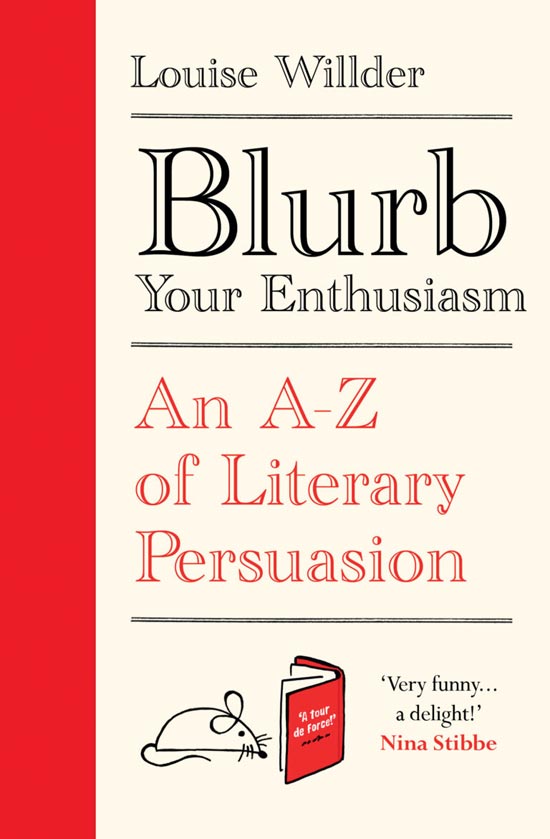
You’ve probably read more of the work of London based copywriter Louise Willder than you realise. Although her writings can be found in bookshops across the world, Willder has only ever written one book, which was published in October 2022.
Certainly Willder may not be in the same league as Elena Ferrante, Sally Rooney, or Kazuo Ishiguro, but her work may well have adorned one of their novels. Willder is a book blurb writer, and in a twenty-five year career at Penguin Books, estimates she has penned some five-thousand of these attention grabbing pitches, intended to entice someone to buy the book in their hands, having read the blurb printed on the dust jacket.
And in Blurb Your Enthusiasm (published by Simon & Schuster), Willder shares all she has learned about the craft of blurb writing:
We love the words in books — but what about the words on them? How do they work their magic? Here is a book about the ways books entice us to read them: their titles, quotes, covers and, above all, blurbs — via authors from Jane Austen to Zadie Smith, writing tricks, classic literature, bonkbusters, plot spoilers and publishing secrets. It’s nothing less than the inside story of the outside of books.
For my part, blurbs are something I take or leave. If a novel has a good enough recommendation — for instance it has been shortlisted for a literary prize — I’ll probably only settle for reading a mere outline of the story. And if I notice an endorsing blurb written by another (high profile) author, I’ll just about always ignore it. While I can’t be sure, I often get the feeling such “endorsements” have been given over sight unseen so to speak.
RELATED CONTENT
books, Louise Willder, novels, publishing
HarperCollins workers strike for an improved pay deal
12 November 2022
Workers at American publisher HarperCollins have been on strike since 10 November, as they attempt to negotiate their pay rates. While salaries at the company average US$55,000 — close to the average in America — many workers would be earning far less.
Publishing has for decades has been known for its low pay and overwhelmingly white staff. But workers at HarperCollins, the only member of the “big four” publishing houses to have a union, have had enough and authorized an indefinite strike. Work stopped at the downtown Manhattan offices on the sunny morning of 10 November.
Here’s hoping the workers and company can reach a fair deal.
RELATED CONTENT
Small publishers thrive on Prime Minister’s Literary Awards shortlist
9 November 2022
The shortlist for the 2022 Prime Minister’s Literary Awards was unveiled this week. Thirty titles, across six categories — including fiction, poetry, Australian history, and young adult — were selected from over five-hundred and forty entries.
Notably, sixteen of the books shortlisted were published by members of the Small Press Network, a representative body for small and independent Australian publishers.
With consolidations taking place in the publishing industry worldwide, potentially reducing the number of publishing houses, and leaving only a handful of large players, this is a welcome indication that smaller publishers are thriving.
RELATED CONTENT