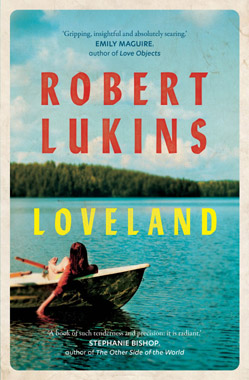
If you’re fast, you may still be able to score a (free) ticket to the launch of Melbourne based Australian writer Robert Lukins‘ second novel Loveland, tomorrow evening, Wednesday 9 March, at Readings Carlton, from 6:30PM.
Amid the ruins of a fire-ravaged amusement park and destroyed waterfront dwellings, one boarded-up building still stands. May has come from Australia to Loveland, Nebraska, to claim the house on the poisoned lake as part of her grandmother’s will. Escaping the control of her husband, will she find refuge or danger?
As she starts repairing the old house, May is drawn to discover more about her silent, emotionally distant grandmother and unravel the secrets that Casey had moved halfway around the world to keep hidden. How she and Casey’s lives interconnect, and the price they both must pay for their courage, is gradually revealed as this mesmerising and lyrical novel unfolds.
The cover of Nebraska, with that black-and-white photograph taken from the front seat of an old pick-up truck in deep winter. An empty highway is peeling away into an American horizon that was impossibly flat and infinitely distant. Snow is banked up on the truck’s hood and to me, a Sunshine Coast kid who lived permanently beneath fluoro board shorts and a stripe of zinc cream, this image was pure exoticism, pure mystery.
If this were Instagram, what would you call the filter on the cover of Loveland? Vintage? Retro? Whatever, I’ve added the novel to my to-be-read list.
This “fan favourite” vote was one of two initiatives the Academy introduced this year, to bolster interest in the awards. In recent years television audiences have been abandoning the annual celebration of film in droves. A mere 9.85 million viewers tuned into the 2021 ceremony, compared to 23.6 million in 2020.
That’s an alarming decrease in anyone’s book. But it’s not only the Oscars who are struggling. The Emmy Awards, and the Grammy Awards, are also seeing significant declines in their television audiences. But, in the case of the Oscars, with past ceremonies clocking in at well over three-hours in duration, is anyone surprised?
While I’ve always been interested in the Academy Awards, I’ve not once sat through a televised broadcast of the event. Or I should say, an entire broadcast. I watched once, but alarmed at the glacial pace of proceedings, switched off the TV, and wandered around to the local cinema to see a movie.
When I came home, the Oscars hadn’t even reached the Best Picture award. To counter this indulgent run-time, the Academy has promised to slim down the event, and will omit certain awards all together from the live broadcast. How that will help, if at all, remains to be seen. The fan favourite vote, on the other hand, has been an overwhelming success.
Well, kind of. The proposal certainly drummed up interest, though not perhaps quite what the Academy envisaged. Twitter members residing in the United States were invited to tweet the title of their favourite film from the last year, and or a scene from a film of any age, appended with a particular hashtag.
At least they were actual movies. Karl Quinn, an entertainment writer for The Sydney Morning Herald, spotted a film called Rochelle, Rochelle, sitting among frontrunners for the fan favourite award. Fans of nineties TV sitcom Seinfeld would be familiar with Rochelle, Rochelle, but year of release aside, there was another problem: the film does not exist.
While soon removed from the listings, its inclusion highlights the need to set firm parameters when opening the doors to everyone online. A few years ago, the Hottest 100, an annual music poll run by alternative and indie music Australian radio station Triple J, was swamped with votes for a track performed by Canadian singer Justin Bieber.
But the question stands, was the Oscars fan favourite vote a folly on the part of the Academy of Motion Picture Arts and Sciences? Again, while the final answer remains to be seen, if nothing else, the idea started people talking, and taking action. Perhaps the interest stirred up may yet make a difference.
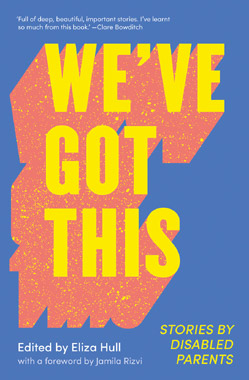
We Got This (published by Black Inc, 1 March 2022), is an anthology by parents with disabilities, edited by Victorian based Australian writer, audio producer, and musician Eliza Hull.
In We’ve Got This, twenty-five parents who identify as Deaf, disabled or chronically ill discuss the highs and lows of their parenting journeys and reveal that the greatest obstacles lie in other people’s attitudes. The result is a moving, revelatory and empowering anthology. As Rebekah Taussig writes, “Parenthood can tangle with grief and loss. Disability can include joy and abundance. And goddammit – disabled parents exist.”
Sandra Bullock, Brad Pitt, and Aaron Taylor-Johnson, star in what might be described as a kind of locked-room thriller, albeit set on a Japanese bullet train, in a film of the same name, Bullet Train, trailer, directed by American actor, stunt performer, and filmmaker David Leitch.
Since 2012 the Stella Count has been analysing the number, and length, of book reviews published across twelve Australian publications. These periodicals include regional and national newspapers, magazines, and journals.
While on the surface it appears there is finally some parity in book reviews between the genders, being published in the twelve surveyed publications, there is a significant caveat. This comes down to the length of the reviews. While more than half of small and medium sized reviews critiqued the work of women in the 2019 and 2020 period, when it came to large reviews, books by men remained in the majority.
As far as I can tell, the Stella Count only looks at print publications, though I assume these reviews are cross-posted to their online counterparts. While using established periodicals makes for a consistent benchmark to measure comparisons over time, I’m guessing these numbers would be quite different if social media reviews were — somehow — to be included.
The value — and prestige even — of large reviews cannot, and should not, be dismissed, but I wonder what the conversion rate, if you like, of large reviews to book purchases is, compared to small and medium reviews. Research tell us people take more time to assimilate longer articles (consisting of a thousand words or more), than they do shorter, or small and medium, sized write-ups.
This is possibly because large reviews contain more information, and readers perhaps feel better informed if they are making a decision to spend money. If I were making a big purchase, such as a car, I would read as many long-form, in depth articles, about the vehicle I was interested in as I could, but buying a novel would be different.
I tend to read several small book reviews published on social media, and possibly a couple of small to medium periodical articles, before deciding what to do. That way I’m able to get a range of opinions, and quickly, rather than relying on the thoughts of a single reviewer.
Might others of the TL;DR generation agree with me?
After months of speculation, it’s official, long running Australian television soap opera, Neighbours, is coming to an end after thirty-seven years. The call was made after the soap’s production company Fremantle, were unable to find another broadcaster in the United Kingdom to screen the show.
Ironically the only time I ever saw Neighbours was when I lived in the United Kingdom for a few years. There was a curious — to me at least — ritual at one of the places I worked at, where many of the staff would take their lunch breaks a little later than usual so they could watch Neighbours. My colleagues would assemble in a meeting room and look at the afternoon screening on the wall mounted TV, while engaging in animated banter about what was happening.
I’m a little surprised the producers struggled to find British support for the show though. Neighbours, and its Sydney based counterpart Home and Away, were, at the time, broadcast twice daily, in the early afternoon, and then a few hours later in the early evening. If that’s not a gauge of the popularity of a TV show, what is?
The final episodes will be filmed in June this year, according to reports.
While details are still scant, it is believed Australian actor and filmmaker Joel Edgerton will be one of the show’s producers, and we can expect to see it on screens sometime in 2023, or 2024.
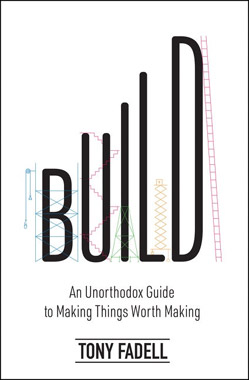
To stoke the collective oblong obsession. American engineer and designer Tony Fadell who invented the iPod, and co-invented the iPhone, has written a book, Build, which is being published in May. This is surely a must read for iPod and iPhone aficionados. The story behind the development of both products, especially the iPhone, is fascinating, especially if this perspective by John Gruber at Daring Fireball is anything to go by.
HR 6819 is a binary star about 1120 light years from Earth. So far so good, binary stars are a dime a dozen in the Milky Way. But one member of the duo — though some astronomers speculate HR 6819 may be a three star system — which is about four times the size of the Sun, is sucking material away from its smaller counterpart. Astronomers have a special name for stars like this: vampire stars.
In binary systems where two stars are close together, it’s not uncommon for one star to “suck” away the atmosphere of the other – a phenomenon sometimes called “stellar vampirism”. The researchers believe they may have observed the immediate aftermath of a stellar vampire attack in HR 6819.