
Showing all posts in the books category
Shepard and What Should I Read Next book discovery tools
21 July 2022
Image courtesy of wal_172619.
Bodies of Light by Jennifer Down, was named winner of the 2022 Miles Franklin literary award yesterday. As I’ve said before, the long and short lists of literary awards are great places to find reading inspiration. But, if, unlike me, you’re a fast, prolific reader, you might run out of ideas quickly. There’s always Goodreads or StoryGraph (which isn’t half bad), but they’re not the only options for finding something new to read.
Shepherd, founded by Boulder, Colorado, based American entrepreneur Ben Fox, offers reading suggestions based on the recommendations of authors. Fox thinks searching for a book should be fun, an element he believes many online bookshops, and social cataloguing websites, lack.
As a reader, I am incredibly frustrated with the bleak wasteland that is online book discovery. The big bookstores sell books the same way they sell toothpaste, without passion. And, Goodreads makes finding new books about as much fun as browsing a spreadsheet. How you find a book is important. That search is the start of a journey and it should be fun.
In creating Shepherd, Fox hopes to bring the IRL bookstore experience online, and imbue some of the in-store spontaneity to the book discovery process.
What Should I Read Next (WSIRN) works a little differently. Rather than offering author recommendations as Shepherd does, WSIRN will make new reading suggestions based on titles you’ve read previously that you liked.
Enter a book you like and the site will analyse our huge database of real readers’ favourite books to provide book recommendations and suggestions for what to read next.
And it’s not just three or four titles either. For example, typing in Conversations with Friends by Sally Rooney, returns an extensive list of suggestions.
RELATED CONTENT
Bodies of Light by Jennifer Down wins the 2022 Miles Franklin literary award
20 July 2022
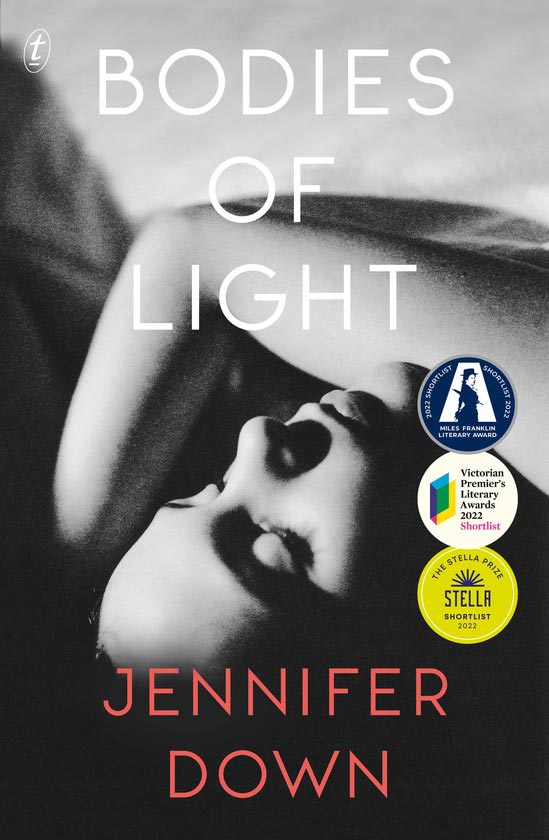
It’s a red letter day in Australian literature, with Bodies of Light, by Jennifer Down being named winner of the 2022 Miles Franklin Literary Award.
Here’s the book trailer for Bodies of Light:
And here is an outline of Bodies of Light’s premise:
So by the grace of a photograph that had inexplicably gone viral, Tony had found me. Or: he’d found Maggie. I had no way of knowing whether he was nuts or not; whether he might go to the cops. Maybe that sounds paranoid, but I don’t think it’s so ridiculous. People have gone to prison for much lesser things than accusations of child-killing.A quiet, small-town existence. An unexpected Facebook message, jolting her back to the past. A history she’s reluctant to revisit: dark memories and unspoken trauma, warning knocks on bedroom walls, unfathomable loss. She became a new person a long time ago. What happens when buried stories are dragged into the light?
RELATED CONTENT
Australian literature, books, literary awards, Miles Franklin
Going blue for Miles Franklin week 2022
18 July 2022

The winner of the 2022 Miles Franklin literary prize will be announced on Wednesday 20 July 2022, and to mark the momentous occasion I’ve remixed the disassociated logo with the Miles Franklin hues of blue for this week.
I’m a big fan of literary awards, as they’re great places to find quality reading suggestions. Of the six titles on the 2021 shortlist, I’ve so far read The Labyrinth by Amanda Lohrey, the 2021 winner, plus Lucky’s by Andrew Pippos, The Inland Sea by Madeleine Watts, and The Rain Heron by Robbie Arnott.
To date I’ve not been disappointed. But for more recent reading ideas, check out the 2022 Miles Franklin longlist, announced in May, and the shortlist from last month.
RELATED CONTENT
Australian literature, books, literary awards, Miles Franklin
Naomi R. Mercer: why should you read The Handmaid’s Tale
9 July 2022
The Handmaid’s Tale, speculative fiction novel written in 1985 by Margaret Atwood, is set in the fictitious Republic of Gilead — usually referred to as Gilead — a totalitarian patriarchal theocracy, occupying much of what is the continental United States. Gilead is a place where even the most basic rights and liberties of many, particularly women, have been curtailed.
But the recent decision by the Supreme Court of the United States to overturn the 1973 Roe v. Wade ruling giving women the constitutional right to terminate a pregnancy, has stoked fears of a Gilead-like regime becoming reality.
Talk of other long standing rights — including access to contraception, and same sex marriage — possibly being rescinded, is doing little to quell such concerns.
I first read The Handmaid’s Tale in 2019, weeks before Atwood announced she was publishing a follow-up, The Testaments. If you haven’t already read her 1985 novel, I recommend it to you, and a TEDEd video presentation Naomi R. Mercer made in 2018, is an excellent introduction.
RELATED CONTENT
Mal Peet’s Beck, a book finished posthumously by another author
6 July 2022
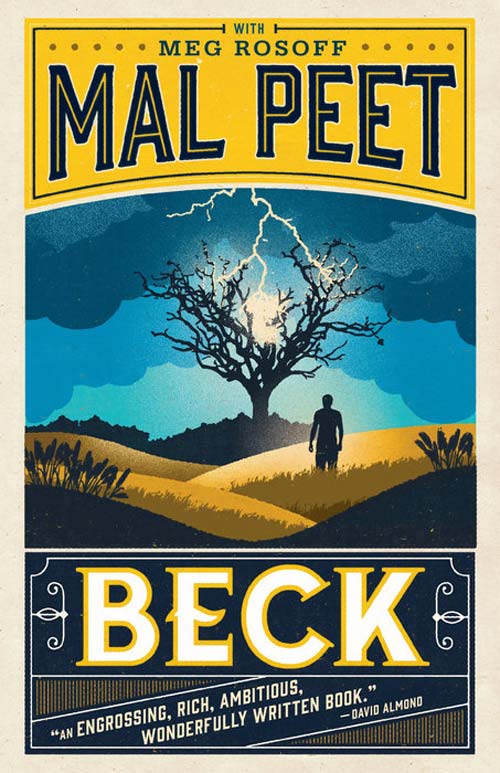
When late British author Mal Peet died in March 2015, his final novel, Beck, remained unfinished.
In a phone call Peet made to friend and American born, London based writer, Meg Rosoff, shortly before his death, he expressed a desire to finish writing Beck, but didn’t think he’d be able to. At that point Rosoff offered to step in.
At the time of their conversation, Rosoff knew nothing about the novel, or how much progress Peet had made. But this posthumous collaboration paid off. Beck was well received. In August 2016, the Sunday Times named Beck their Book of the Week, describing it as “powerful, shocking, uplifting, funny and beautifully written.”
But this is not the first time one person’s novel has been finished by another, because of death or incapacitation. Realising illness would prevent him finishing works in The Wheel of Time series of fantasy books, late American author Robert Jordan, prepared extensive notes, allowing Brandon Sanderson to conclude the fifteen book series.
British writer Siobhan Dowd died in 2007, before A Monster Calls, which she was working on at the time of her death, was finished, a task that Patrick Ness took on.
In some cases though the quantity of notes written by a deceased author have been enough for another to create books from scratch. The works of British author J. R. R. Tolkien are a case in point. After Tolkien’s death in 1973, his son Christopher wrote a number of Tolkien novels including, The Silmarillion and The Fall of Númenor.
Despite the success some have enjoyed, taking over another author’s part-finished manuscript remains a process fraught with difficulty. How exactly can one writer step into the shoes of another? How do the creative visions of two artistic people align? And perhaps, most crucially, how does one author assume the voice of another?
It was a question Rosoff grappled with, when picking up Beck where Peet left off. But the solution soon came to her: “the answer, I discovered, is not to.” It seems then, if an author is sufficiently in synch with the person whose work they are continuing, a book finished posthumously by another author can do well.
RELATED CONTENT
books, Mal Peet, Meg Rosoff, novels, writing
The 2022 Ned Kelly Awards shortlists
6 July 2022
The 2022 Ned Kelly Awards shortlists have been announced by the Australian Crime Writers Association. This year the work of nineteen writers has been shortlisted in four categories.
Best debut crime fiction
- Sweet Jimmy, by Bryan Brown
- Shadow Over Edmund Street, by Suzanne Frankham
- Cutters End, by Margaret Hickey
- Banjawarn, by Josh Kemp
Best true crime
- The Mother Wound, by Amani Haydar
- Larrimah, by Caroline Graham and Kylie Stevenson
- Banquet: The untold story of Adelaide’s family murders, by Debi Marshall
- A Witness of Fact, by Drew Rooke
Best international crime fiction
- Case Study, by Graeme Macrae Burnet
- The Heron’s Cry, by Ann Cleeves
- The Maid, by Nita Prose
- Cry Wolf, by Hans Rosenfeldt
Best crime fiction
- The Enemy Within, by Tim Ayliffe
- The Others, by Mark Brandi
- You Had it Coming, by B M Carroll
- The Chase, by Candice Fox
- Kill Your Brother, by Jack Heath
- The Family Doctor, by Debra Oswald
- The Deep, by Kyle Perry
The winners will be announced in early August 2022.
RELATED CONTENT
Australian literature, books, literary awards
Books to read by Indigenous authors suggested by Anita Heiss
6 July 2022
We’re in the middle of National Aboriginal and Islanders Day Observance Committee week, or NAIDOC week, in Australia, which is a celebration of the history, culture, and achievements of Aboriginal and Torres Strait Islander peoples.
It’s also a good opportunity to focus on the literature of Indigenous and First Nation people, and Twenty reasons you should read blak, by author and activist Anita Heiss, is an awesome starting point. The suggestions were made during a speech Heiss gave at the Blak and Bright Festival in 2016.
RELATED CONTENT
Anita Heiss, Australian literature, books, Indigenous literature
Write Emily Dickinson poems with 90s-style game EmilyBlaster
4 July 2022
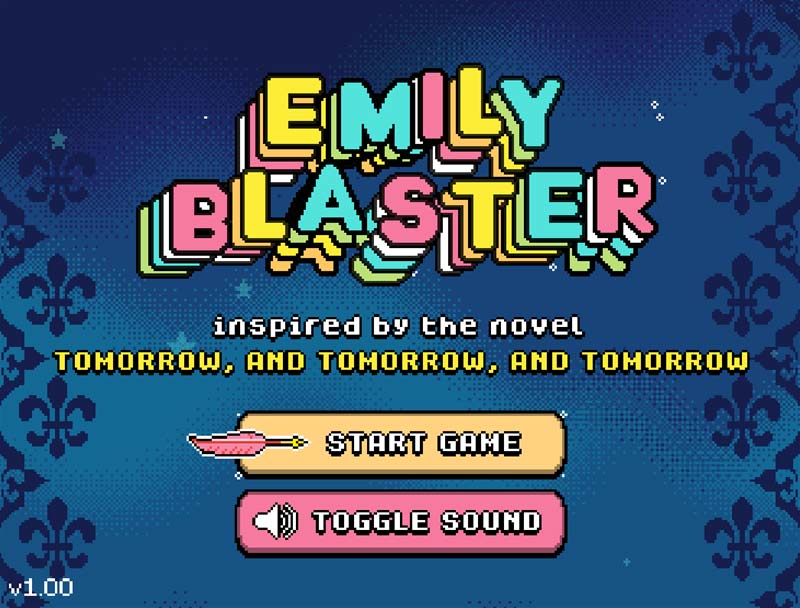
EmilyBlaster is a game developed by characters in Tomorrow, and Tomorrow, and Tomorrow, the latest novel by Los Angeles based American author Gabrielle Zevin, which is being published by Penguin Random House tomorrow, 5 July 2022.
This isn’t something we see every day, a device, or object, featured in a work of fiction that becomes actual or tangible. The object of the game is pretty simple, all the more so if you’re familiar with the work of nineteenth century American poet Emily Dickinson. To succeed a player needs to shoot words appearing on the screen in the correct order, to form one of Dickinson’s poems, which is shown before the game begins.
My accuracy level was — let’s say — nothing to write home about, but maybe you’ll fare better. The game itself — by the sounds of things — is one of many produced by Sam Masur, and Sadie Green, who collaborate successfully while still studying at university in Tomorrow, and Tomorrow, and Tomorrow:
On a bitter-cold day, in the December of his junior year at Harvard, Sam Masur exits a subway car and sees, amid the hordes of people waiting on the platform, Sadie Green. He calls her name. For a moment, she pretends she hasn’t heard him, but then, she turns, and a game begins: a legendary collaboration that will launch them to stardom. These friends, intimates since childhood, borrow money, beg favors, and, before even graduating college, they have created their first blockbuster, Ichigo. Overnight, the world is theirs. Not even twenty-five years old, Sam and Sadie are brilliant, successful, and rich, but these qualities won’t protect them from their own creative ambitions or the betrayals of their hearts.
Zevin says EmilyBlaster is one of the first games she devised in the novel, which she intended be simple yet effective:
It’s the simplest game in the book, and I needed it to be convincingly something a clever college student might be able to make on limited resources and time in the 1990s. The game was inspired by the poetry of Emily Dickinson and by edutainment games of the 1980s, like Math Blaster!
RELATED CONTENT
Emily Dickinson, Gabrielle Zevin, games, literature, poetry
The Eulogy, new autofiction by Jackie Bailey
4 July 2022
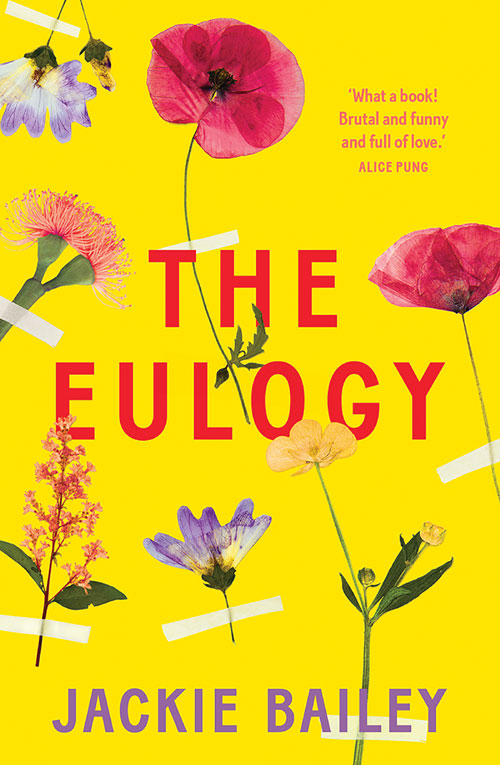
The Eulogy, published by Hardie Grant in June 2022, is the debut autofiction novel of Australian author Jackie Bailey, and if the description autofiction is indicative, then the story is based, in part at least, on Bailey’s own life:
It’s winter in Logan, south-east Queensland, and still warm enough to sleep in a car at night if you have nowhere else to go. But Kathy can’t sleep. Her husband is on her blocked caller list and she’s running from a kidnapping charge, a Tupperware container of 300 sleeping pills in her glovebox. She has driven from Sydney to plan a funeral with her five surviving siblings (most of whom she hardly speaks to) because their sister Annie is finally, blessedly, inconceivably dead from the brain tumour she was diagnosed with twenty-five years ago, the year everything changed. Kathy wonders – she has always wondered – did Annie get sick to protect her? And if so, from what?
Autofiction, in case you’re wondering — as I was — is term first used by late French author Serge Doubrovsky, when he published his novel Fils in 1977, although he by no means pioneered the genre. The autofiction like blending of autobiography with fiction, can be found in the writing of Sappho, a Greek poet who died in around 570 BCE.
Autofiction combines two mutually inconsistent narrative forms, namely autobiography and fiction. An author may decide to recount their life in the third person, to modify significant details and characters, using fictive subplots and imagined scenarios with real life characters in the service of a search for self.
Some titles by James Joyce, and Jack Kerouac, who both worked and died well before 1977, can be seen as examples of autofiction, while On Earth We’re Briefly Gorgeous, written in 2019 by Ocean Vuong, and Outline, from 2015, by Rachel Cusk, are more recent instances.
RELATED CONTENT
Australian literature, books, Jackie Bailey
Being inspired, or not, by the struggle to write novels
2 July 2022
Why I am not a writer, by American author, copywriter, and musician John Mancini.
Joyce spent twenty-nine thousand hours writing Ulysses. Vonnegut spent twenty-three years writing Slaughterhouse Five. Hemingway rewrote The Sun Also Rises fifty times. “Really great fun,” Wodehouse said of his time in a German internment camp.
On one hand it’s reassuring — perhaps for writers starting out — to realise that even the giants of literature struggled to write their best known works. On the other hand, maybe it isn’t.
RELATED CONTENT