
Showing all posts about novels
Publishing contract morality clauses may be unfair to authors
26 August 2022
Finding a traditional publisher for a novel is becoming ever more difficult. For one thing, aspiring — being unpublished — authors, are up against who knows how many other hopeful novelists. They also have to contend with a shrinking pool of publishing houses, as the industry appears to be going through a consolidation, which is seeing many smaller and independent publishers absorbed by larger players.
Even authors with several published works to their name, are reporting waits of up to a year to hear back about a pitch. But adding to the woes of many authors, emerging and established, are so-called morality clauses some publishers are including in their agreements.
In short, if a writer fails to meet a certain standard of behaviour, they may lose any advances or royalties they’ve received. The problem author advocates — such as the Authors Guild — have with morality clauses are the sometimes vague definitions of inappropriate or wrong conduct.
These contract provisions allow publishers to terminate a book contract, and in many cases even require the author to repay portions of the advance already received, if the author is accused of immoral, illegal, or publicly condemned behavior. Publishers insist they need the clauses to protect themselves in the event an author’s reputation becomes so tarnished after the book contract is signed that it will hurt sales. But most of these clauses are too broad and allow a publisher to terminate based on individual accusations or the vague notion of “public condemnation” — which can occur all too easily in these days of viral social media.
People should be held accountable for wrong-doing, but everyone is entitled to proper due-process. The concern is morality clauses, particularly where the definition of inappropriate or wrong behaviour is poorly defined, could be used unfairly against some authors.
RELATED CONTENT
Publishing your book online, Ted Gioia lists the reasons why
25 August 2022
American author Ted Gioia intends to publish his next book on Substack, an online publishing platform. This really is worth a read for anyone considering self-publishing a novel.
The Internet may be a curse in many regards, but it has given me direct contact with my readers. I cherish that. Things that once took a year now happen instantaneously. Instead of getting feedback from one editor, I learn from thousands of people, many of them very smart with useful things to say. The whole process is energized, streamlined, and turbocharged.
RELATED CONTENT
novels, publishing, Ted Gioia, writing
The fifty best books written since Ulysses by James Joyce
18 August 2022
To mark the one-hundredth anniversary of the publication of Irish novelist James Joyce’s 1922 novel Ulysses, British newspaper The Times has ranked the fifty best books of the twenty-first century, according to the nominations of contemporary authors and literary critics.
Between them they have read thousands of books, and their choices reflect this: the oldest book was published in 1924, the most recent in 2009. The list includes writers from Britain, Ireland, the US, Nigeria, India and South Africa, with subject matter just as diverse. You will find scalp-hunting outlaws, organ-donating clones and Wall Street traders.
To the Lighthouse by Virginia Woolf, The Prime of Miss Jean Brodie by Muriel Spark, and Giovanni’s Room by James Baldwin, are among inclusions. When it comes to Joyce’s work, I’ve read A Portrait of the Artist as a Young Man, but am yet to take on Ulysses, but I will, but I will…
RELATED CONTENT
books, James Joyce, literature, novels
Book plotlines tropes and clichés a publisher may reject
13 August 2022
The world is full of writers and the stories they’d like to write. American author Joseph Epstein, writing for the New York Times, quotes research suggesting eighty-one percent of Americans think they “have a book in them”. That’s a lot. Unfortunately, aspiring writers vastly outnumber book publishers, meaning many manuscripts stand to go unnoticed and unpublished.
It might not seem like much help, but Strange Horizons — a magazine publishing speculative fiction — once put together a list of the types of sci-fi stories that they’ve seen submitted too often, and subsequently did not feature. I suspect they’re not the only publishers seeing such ideas either. Knowing what might be rejected then, might help you write something that won’t be.
RELATED CONTENT
books, novels, science fiction, writing
Fiction and non-fiction reading suggestions August 2022
11 August 2022
Out of Breath by Anna Snoekstra, The House of Fortune by Jessie Burton, and Random Acts of Unkindness by Anna Mandoki, are among reading suggestions for August, put together by Lucy Sussex and Steven Carroll.
RELATED CONTENT
Everything Feels Like the End of the World by Else Fitzgerald
8 August 2022

Everything Feels Like the End of the World (published by Allen & Unwin, 2 August 2022), by Mornington Peninsula based Australian writer Else Fitzgerald, seems like a book title for the times some days.
Winner of the 2019 Richell Prize for emerging writers, Fitzgerald written a collection of short stories, exploring a number of chilling dystopian futures for Australia, set both in the near and distant future:
Each story is anchored, at its heart, in what it means to be human: grief, loss, pain and love. A young woman is faced with a difficult choice about her pregnancy in a community ravaged by doubt. An engineer working on a solar shield protecting the Earth shares memories of their lover with an AI companion. Two archivists must decide what is worth saving when the world is flooded by rising sea levels. In a heavily policed state that preferences the human and punishes the different, a mother gives herself up to save her transgenic child.
Nanci Nott, writing for Artshub, describes Everything Feels Like the End of the World as an engaging collection of speculative short fictions:
Each tale is intensely personal, vibrant with specificity, and written with precision. Characters don’t just exist within their settings; entire worlds inhabit these characters. A master of minutiae and memory, Fitzgerald creates an intricate universe of befores-and-afters, sacrifices and consequences, mundane joys and darkest days.
RELATED CONTENT
Australian literature, books, Else Fitzgerald, novels, science fiction
Shepard and What Should I Read Next book discovery tools
21 July 2022
Image courtesy of wal_172619.
Bodies of Light by Jennifer Down, was named winner of the 2022 Miles Franklin literary award yesterday. As I’ve said before, the long and short lists of literary awards are great places to find reading inspiration. But, if, unlike me, you’re a fast, prolific reader, you might run out of ideas quickly. There’s always Goodreads or StoryGraph (which isn’t half bad), but they’re not the only options for finding something new to read.
Shepherd, founded by Boulder, Colorado, based American entrepreneur Ben Fox, offers reading suggestions based on the recommendations of authors. Fox thinks searching for a book should be fun, an element he believes many online bookshops, and social cataloguing websites, lack.
As a reader, I am incredibly frustrated with the bleak wasteland that is online book discovery. The big bookstores sell books the same way they sell toothpaste, without passion. And, Goodreads makes finding new books about as much fun as browsing a spreadsheet. How you find a book is important. That search is the start of a journey and it should be fun.
In creating Shepherd, Fox hopes to bring the IRL bookstore experience online, and imbue some of the in-store spontaneity to the book discovery process.
What Should I Read Next (WSIRN) works a little differently. Rather than offering author recommendations as Shepherd does, WSIRN will make new reading suggestions based on titles you’ve read previously that you liked.
Enter a book you like and the site will analyse our huge database of real readers’ favourite books to provide book recommendations and suggestions for what to read next.
And it’s not just three or four titles either. For example, typing in Conversations with Friends by Sally Rooney, returns an extensive list of suggestions.
RELATED CONTENT
Mal Peet’s Beck, a book finished posthumously by another author
6 July 2022
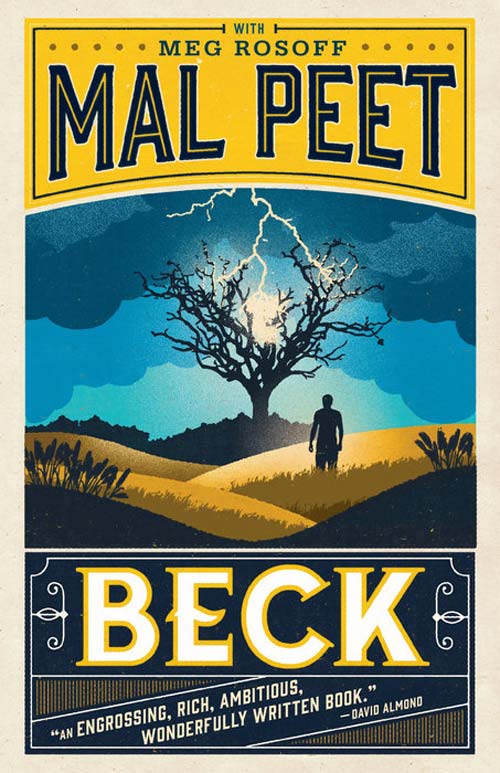
When late British author Mal Peet died in March 2015, his final novel, Beck, remained unfinished.
In a phone call Peet made to friend and American born, London based writer, Meg Rosoff, shortly before his death, he expressed a desire to finish writing Beck, but didn’t think he’d be able to. At that point Rosoff offered to step in.
At the time of their conversation, Rosoff knew nothing about the novel, or how much progress Peet had made. But this posthumous collaboration paid off. Beck was well received. In August 2016, the Sunday Times named Beck their Book of the Week, describing it as “powerful, shocking, uplifting, funny and beautifully written.”
But this is not the first time one person’s novel has been finished by another, because of death or incapacitation. Realising illness would prevent him finishing works in The Wheel of Time series of fantasy books, late American author Robert Jordan, prepared extensive notes, allowing Brandon Sanderson to conclude the fifteen book series.
British writer Siobhan Dowd died in 2007, before A Monster Calls, which she was working on at the time of her death, was finished, a task that Patrick Ness took on.
In some cases though the quantity of notes written by a deceased author have been enough for another to create books from scratch. The works of British author J. R. R. Tolkien are a case in point. After Tolkien’s death in 1973, his son Christopher wrote a number of Tolkien novels including, The Silmarillion and The Fall of Númenor.
Despite the success some have enjoyed, taking over another author’s part-finished manuscript remains a process fraught with difficulty. How exactly can one writer step into the shoes of another? How do the creative visions of two artistic people align? And perhaps, most crucially, how does one author assume the voice of another?
It was a question Rosoff grappled with, when picking up Beck where Peet left off. But the solution soon came to her: “the answer, I discovered, is not to.” It seems then, if an author is sufficiently in synch with the person whose work they are continuing, a book finished posthumously by another author can do well.
RELATED CONTENT
books, Mal Peet, Meg Rosoff, novels, writing
Goodreads members favourite books half way through 2022
5 July 2022
Goodreads has published a list of members top book choices so far, for 2022, across six genres. To Paradise by Hanya Yanagihara, The Maid by Nita Prose, Sea of Tranquility by Emily St. John Mandel, and The Nineties by Chuck Klosterman, are among titles at, or near, the top of their category.
RELATED CONTENT
The Handmaid’s Tale by Margaret Atwood unburnable edition
30 May 2022
With books being banned or burned, or both, in some parts, Toronto based Canadian poet and author Margaret Atwood has published a fireproof limited edition of her 1998 novel The Handmaiden’s Tale, which is, surprise, surprise, among titles banned in some jurisdictions. Coated with a fire retardant material, the book is able to withstand the fiery force of a flamethrower.
RELATED CONTENT