Hands up anyone who misses living in a share house. No, I didn’t think I’d see many hands up in the air. After all, what’s to miss about co-inhabiting with strangers, aside from maybe the parties? The conflicts and politics? No. The person who leaves the kitchen and bathroom perpetually messy? No. The someone bringing noisy “friends” in and out at all sorts of weird hours, usually when everyone else is trying to sleep? No.
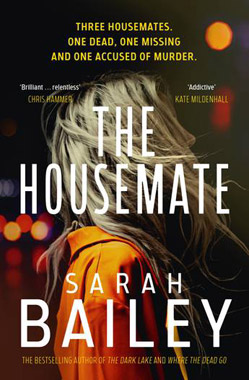
The self-appointed head of the house who… but I’ll stop right there. I’m here today to write about the newest addition to my to-be-read list, The Housemate (published by Allen & Unwin, August 2021), the latest novel by Melbourne based Australian author and advertising executive Sarah Bailey. Olive, an investigative journalist in Melbourne, is sent out by her boss to write about the suspicious death of a woman in rural Victoria.
The deceased turns out to be the former flatmate of another woman, murdered in the so-called “Housemates Homicide”, a story that had gripped the nation ten years earlier. While the third housemate was eventually jailed for the crime, the circumstances surrounding the horrific killing were never fully understood.
Working with Cooper, her colleague podcaster, whom she doesn’t always get along with, Olive begins delving into the killing again. In doing so, Olive discovers other deaths may be connected to the original murder ten years ago. She also learns she might have a previously unknown personal connection to case, one that may pose a danger to her and her family.
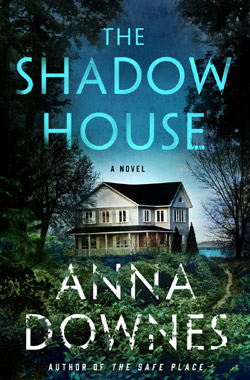
It might be a story we’ve heard before, but there’s something about The Shadow House (published by Affirm Press, September 2021), by Sydney, Australia, based British author Anna Downes, that’s snags at my curiosity. First, there’s the prospect of starting a new life in a beautiful house, in a remote, yet welcoming, community, surrounded by a lush forest, far from a previous, unhappy existence.
But then it comes. Slowly at first. A gnawing doubt, that perhaps it’s all a little too good to be true. But by the time that happens, it’s too late. Alex, with her children, Ollie, a teenage boy, and baby Kara, have left Sydney, and moved to rural Pine Ridge, a fictional town on the NSW Central Coast of Australia. She left an abusive partner, and despite Ollie’s misgivings at leaving the city, Alex feels she made the right choice.
Until that is the strange, disturbing parcels, begin appearing on her doorstep, and Alex thinks she sees shadowy figures moving about in the dense woods enveloping the house. Six years earlier, meanwhile, Renee, had lived on a farm that became the site of the community Alex moved to. Like Alex, Renee also had a teenage son, Gabriel. But Gabriel went missing one day, and was never seen again.
Is there a connection between the odd things happening to Alex, and the tragedy that struck Renee’s family? Who is leaving bone fragments outside Alex’s house, and what’s with the spooky carry-on in the nearby forest? But Alex has cause to be alarmed, Renee reported the exact same happenings just before Gabriel disappeared…
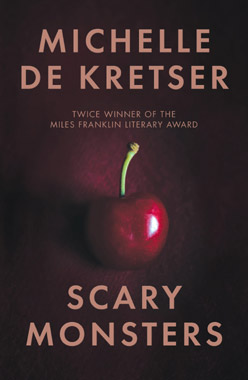
Scary Monsters (published by Allen & Unwin, October 2021) the latest novel from Sri Lankan born Australian writer Michelle de Kretser, literally leaves readers wondering where to begin. With two covers, and telling two stories, what would you do? The first story, set in 1981, centres on a woman named Lili. Her family immigrated to Australia when she was young, but now she works as a teacher in France.
Lili is alarmed by the treatment meted out to immigrants from Northern Africa, who have come to France looking for a new life. Lyle, the central character of the second story in the book, lives in a dystopian near-future Australia, which is still recovering from a recent pandemic. An area of the country is perpetually on fire, casting a smoky pall over the region. Islam has been banned, and anyone who doesn’t “fit in” is deported.
Lyle is also an immigrant, but does his best to act as Australian as possible, lest he garner scorn from the authorities. Despite the dark, ominous, premise of both stories, Michael Williams writing for The Guardian, described Scary Monsters as “both devastating and very funny.” But the question remains, whose story should we read first? Lili’s or Lyle’s?
Ok so I’ve been a little sceptical about the upcoming (rebooted?) Batman film, The Batman (trailer), directed by Matt Reeves, and starring Robert Pattinson, as the dark knight. Must there be another Batman film? Isn’t there another story about someone else to tell? But from the teaser snippets I’ve seen so far, Pattinson seems to make for a fine brooding superhero. Zoë Kravitz stars as Catwoman, and Paul Dano as the Riddler. The Batman premieres on 4 March, 2022.
But what happens, if one day in the future, we discover the means to cross the gulfs of interstellar space, and are able to establish colonies on planets we may find, that are somewhat more conducive to human habitation? The question of law enforcement is likely to be utmost on the minds of those organising such a gargantuan undertaking.
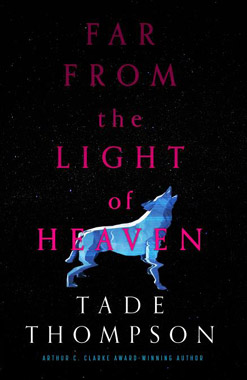
Crime beyond Earth is a theme central to Far from the Light of Heaven (published by Hachette Book Group, October 2021), the latest novel from British-born Yoruban doctor and novelist, Tade Thompson. Shell, the first mate of a vessel carrying one thousand colonists to a distant world, wakes from ten years in hibernation to discover some of the passengers have been murdered.
A puzzle to say the least, given everyone on board was asleep. Shell launches an investigation, but her work is cut out for her. Her captain, an artificial entity called Ragtime, who might know more than he lets on, is little help. Meanwhile menacing robots lurk in the shadows of the enormous vessel, which Shell cannot leave until she works out what happened.
A lot of people have been doing it tough as a consequence of the COVID pandemic, and its impact on jobs. But artists incomes, which often hover mere dollars above the poverty line at the best of times, have had a particularly difficult time, says Anna Freeland, writing for the ABC.
According to new research conducted by the National Association for the Visual Arts (NAVA), one in two visual artists experienced an income decline of between 20–100 per cent last financial year. A sobering four in five artists and one in two arts workers earned less than $25,000 over the year, which is more than $100 a week below the poverty line for a single person with no dependents. “That figure of $25,000 may be a misnomer in itself if people are being paid a fee for commissions and those commissions are being delayed, which has happened to artists for over a year,” says NAVA Co-Director Mimi Crowe.