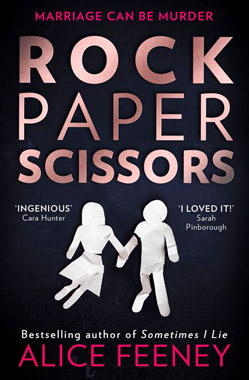
Amelia and Adam have been married ten years. Each year, on their anniversary, they exchange gifts in accordance with the occasion. Paper, leather, sugar, what have you. But there’s one gift Amelia has made for each anniversary that she never gives to Adam. Every year she writes him a letter, describing her feelings about him, and their marriage. Without giving too much away, Adam is a workaholic, more devoted to his screenwriting job, than his marriage to Amelia.
On the occasion of their tenth anniversary, being tin, Amelia wins a holiday to a remote village in the Scottish Highlands, in a workplace raffle. By this point, both partners recognise the marriage is struggling, and both see the holiday away from the distractions of home and work as an opportunity to revive their flagging relationship. But something doesn’t quite feel right. Might it be their accommodation, a chapel of all places? Or might it be the power failure just as they arrive?
And why have their phones suddenly stopped working? On top of that, a snowstorm traps them in the old chapel. And then there’s the minor detail about the holiday itself. Winning it seems not to be as random as it looked… Rock Paper Scissors (published by Harper Collins Australia, August 2021) is the latest novel from English author Alice Feeney, and if you’re a fan of domestic thrillers, with what seems like a touch of things going bump in the night, this might be the book for you.
Made in 1982 and filmed on a micro-budget over the course of a few days, Going Down, directed by Australian filmmaker Haydn Keenan is a gritty, no holds barred, slice of life glimpse of a night out on the town in Sydney. While the pacing and narrative technique reminded me a little of something like American Graffiti, Going Down is far more in your face.
Karli (Tracy Mann) is about to fly to New York. Her friends Jane (Vera Plevnik), Jackie (Julie Barry), and Ellen (Moira MacLaine-Cross), take her out for one last night of revelry before she leaves. The result is chaotic. Parties and bars are gone to, drugs are taken, sex is had, and a large sum money is lost. In the middle of it all, one of Karli’s friend’s tries to find sex work, as the girls, individually and collectively, make their way around the inner suburbs of a now barely recognisable Sydney.
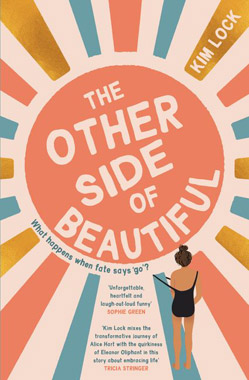
A traumatic workplace incident several years earlier has left Mercy Blain, a former doctor, housebound, in The Other Side of Beautiful (published by HQ Fiction/HarperCollins, July 2021), the fourth novel of South Australian based author Kim Lock. For two years she has not left the safety and security of her home. But when the house burns to the ground one night, Mercy has no choice but to step out into the world.
Her first port of call is her former husband’s place. But he is living with someone else, and Mercy is on the move once again. This time though she goes all out. She buys an old – an incredibly old – campervan, and leaving her hometown Adelaide, in South Australia, with Wasabi, her sausage dog, Mercy makes her way north to Darwin.
But then things begin to change. As Mercy continues towards Darwin, she begins to experience a catharsis of sorts, and she starts to see a way around the anxieties that have kept her shut away behind closed doors. All seems to be going well until she is required to return to Adelaide to resolve a legal matter, where even the mere thought of being back causes to her anxiety to come to the fore again.
Last week Facebook CEO Mark Zuckerberg announced the social network company he co-founded in 2004 will be known as Meta. Later, in his keynote presentation at the company Connect event, he unveiled a raft of technologies in development that have the potential to change the way we live and work.
The Star Trek geek in me could not help but make comparisons to the Holodeck, a room on the Enterprise that allowed the crew to realistically create, or re-create, almost any situation they could imagine. If you have a spare eighty or so minutes, check out Zuckerberg’s keynote. Tech analyst Ben Thompson interviewed the Facebook CEO shortly before the keynote, and if you have another forty-five minutes to spare, it’s a conversation well worth listening to. It’s a fascinating time for those of us with an oblong obsession.
Ridley Scott has put together a star studded cast including Lady Gaga, Adam Driver, Salma Hayek, Jared Leto, Al Pacino, and Jeremy Irons, for his adaptation of House of Gucci (trailer), based on the 2002 book by Sara Gay Forden. Not that a star studded cast really makes much difference to whether I see a film or not.
It’s November and that means NaNoWriMo is upon us. NaNoWriMo? It’s an acronym for National Novel Writing Month, an annual writing event established by Chris Baty, a freelance writer, in 1999. And if you think you can knock out a mere fifty thousand (50,000) words by the end of the month, you too can take part. As of 2020, over half a million people worldwide were participating in various NaNoWriMo projects.
Originally held in July of 1999, the event later switched to November, a move intended to take people’s minds off the approaching winter, tricky for people south of the equator though gearing up for summer. But heck, summer arrives in December down-under, so why worry? An impressive collection of NaNoWriMo works have gone on to be published, so it’s something worth checking out if you’re an aspiring author.