
A few random ideas for naming your next art exhibition
5 July 2022
The Random Exhibition Title Generator was a bit of a favourite in the earlier version of disassociated, when I originally linked to it in 2011. While choosing a name for an exhibition is probably the least of an artist’s worries — because I expect just about every other aspect of putting on an art show is onerous — apparently more than a few people found it useful. I hope you too find it helpful.
RELATED CONTENT
Security of Australian TikTok users data queried by senator
5 July 2022
In the wake of a request from the United States Federal Communications Commission that Apple and Google remove TikTok from their app stores, James Paterson, an Australian opposition senator, has raised concerns about the security of Australian TikTok users’ data, in a letter posted on Twitter.
Even though TikTok servers are based in America and Singapore, there are fears Chinese government officials may have access to the data of Australian TikTok users.
Australian users’ data is stored in servers in the US and Singapore, which raises questions about whether that data is subject to the same security concerns. Liberal Senator James Paterson has publicly put it to TikTok to address those concerns. “Australian TikTok users deserve to know whether their private information is equally exposed,” Mr Paterson wrote on Twitter.
RELATED CONTENT
Goodreads members favourite books half way through 2022
5 July 2022
Goodreads has published a list of members top book choices so far, for 2022, across six genres. To Paradise by Hanya Yanagihara, The Maid by Nita Prose, Sea of Tranquility by Emily St. John Mandel, and The Nineties by Chuck Klosterman, are among titles at, or near, the top of their category.
RELATED CONTENT
2022 Environment Award for Children’s Literature shortlist
4 July 2022
A total of twenty-one books, in four categories, including the inaugural Karijia Award, have been named on the 2022 Environment Award for Children’s Literature shortlist, a literary award which is hosted by the Wilderness Society.
Notable among those included on the shortlist is retired Australian Football League player Adam Goodes, whose book, Somebody’s Land: Welcome to Our Country, co-written with Ellie Laing, has been named on the Karijia Award shortlist, a prize which recognises the best in First Nations storytelling for children.
Picture Fiction:
- The Accidental Penguin Hotel, by Andrew Kelly, illustrated by Dean Jones
- 9 things to remember (and one to forget), written and illustrated by Alison Binks
- Sharing, by Aunty Fay Muir and Sue Lawson, illustrated by Leanne Mulgo Watson
- One Potoroo: A Story of Survival, by Penny Jaye, illustrated by Alicia Rogerson
- The River, by Sally Morgan, illustrated by Johnny Warrkatja Malibirr
- Saving Seal. The Plastic Predicament, by Diane Jackson Hill, illustrated by Craig Smith
Non-fiction:
- The Illustrated Encyclopaedia of Peculiar Pairs in Nature, by Sami Bayly
- The Australian Climate Change Book, by Polly Marsden, illustrated by Chris Nixon
- The Way of the Weedy Seadragon, by Anne Morgan, illustrated by Lois Bury
- The Gentle Genius of Trees, written and illustrated by Philip Bunting
Fiction:
- Fish Kid and the Turtle Torpedo, written and illustrated by Kylie Howarth
- Bailey Finch Takes a Stand, by Ingrid Laguna
- The Good Times of Pelican Rise: Save the Joeys, by Samone Amba
The Karijia Award for Children’s Literature:
- Sea Country, by Aunty Patsy Cameron, illustrated by Lisa Kennedy
- Sharing, by Aunty Fay Muir and Sue Lawson, illustrated by Leanne Mulgo Watson
- Warna-Manda Baby Earth Walk, by Susan Betts, illustrated by Mandy Foot and Susan Betts
- Wiradjuri Country, by Larry Brandy
- Somebody’s Land: Welcome to Our Country, by Adam Goodes and Ellie Laing, illustrated by David Hardy
- The Story Doctors, by Boori Monty Pryor, illustrated by Rita Sinclair
- The River, by Sally Morgan, illustrated by Johnny Warrkatja Malibirr
- Walking in Gagudju Country: Exploring the Monsoon Forest, by Diane Lucas and Ben Tyler, illustrated by Emma Long
The winners will announced during Nature Book Week, which takes place from Monday 5 September 2022 through to Sunday 11 September.
RELATED CONTENT
Adam Goodes, Australian literature, Indigenous literature, literary awards, nature
Write Emily Dickinson poems with 90s-style game EmilyBlaster
4 July 2022
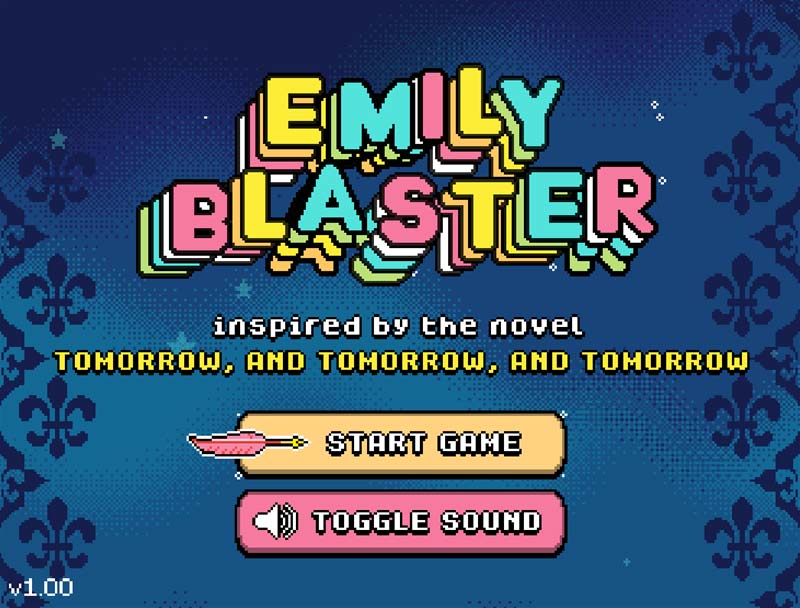
EmilyBlaster is a game developed by characters in Tomorrow, and Tomorrow, and Tomorrow, the latest novel by Los Angeles based American author Gabrielle Zevin, which is being published by Penguin Random House tomorrow, 5 July 2022.
This isn’t something we see every day, a device, or object, featured in a work of fiction that becomes actual or tangible. The object of the game is pretty simple, all the more so if you’re familiar with the work of nineteenth century American poet Emily Dickinson. To succeed a player needs to shoot words appearing on the screen in the correct order, to form one of Dickinson’s poems, which is shown before the game begins.
My accuracy level was — let’s say — nothing to write home about, but maybe you’ll fare better. The game itself — by the sounds of things — is one of many produced by Sam Masur, and Sadie Green, who collaborate successfully while still studying at university in Tomorrow, and Tomorrow, and Tomorrow:
On a bitter-cold day, in the December of his junior year at Harvard, Sam Masur exits a subway car and sees, amid the hordes of people waiting on the platform, Sadie Green. He calls her name. For a moment, she pretends she hasn’t heard him, but then, she turns, and a game begins: a legendary collaboration that will launch them to stardom. These friends, intimates since childhood, borrow money, beg favors, and, before even graduating college, they have created their first blockbuster, Ichigo. Overnight, the world is theirs. Not even twenty-five years old, Sam and Sadie are brilliant, successful, and rich, but these qualities won’t protect them from their own creative ambitions or the betrayals of their hearts.
Zevin says EmilyBlaster is one of the first games she devised in the novel, which she intended be simple yet effective:
It’s the simplest game in the book, and I needed it to be convincingly something a clever college student might be able to make on limited resources and time in the 1990s. The game was inspired by the poetry of Emily Dickinson and by edutainment games of the 1980s, like Math Blaster!
RELATED CONTENT
Emily Dickinson, Gabrielle Zevin, games, literature, poetry
The Eulogy, new autofiction by Jackie Bailey
4 July 2022
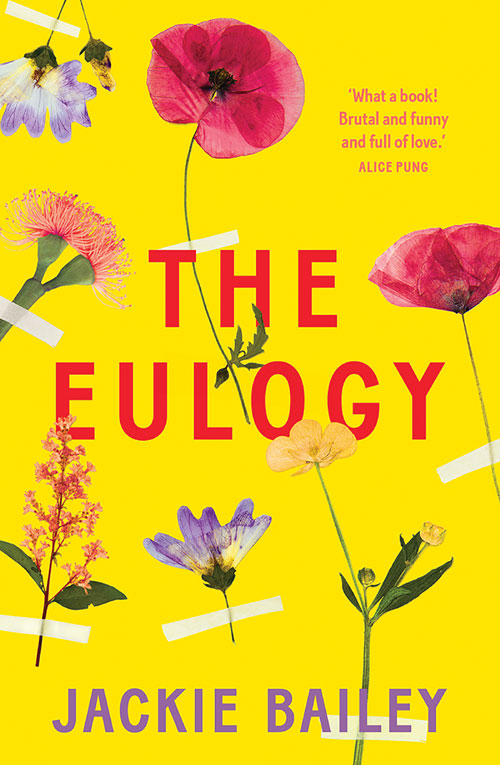
The Eulogy, published by Hardie Grant in June 2022, is the debut autofiction novel of Australian author Jackie Bailey, and if the description autofiction is indicative, then the story is based, in part at least, on Bailey’s own life:
It’s winter in Logan, south-east Queensland, and still warm enough to sleep in a car at night if you have nowhere else to go. But Kathy can’t sleep. Her husband is on her blocked caller list and she’s running from a kidnapping charge, a Tupperware container of 300 sleeping pills in her glovebox. She has driven from Sydney to plan a funeral with her five surviving siblings (most of whom she hardly speaks to) because their sister Annie is finally, blessedly, inconceivably dead from the brain tumour she was diagnosed with twenty-five years ago, the year everything changed. Kathy wonders – she has always wondered – did Annie get sick to protect her? And if so, from what?
Autofiction, in case you’re wondering — as I was — is term first used by late French author Serge Doubrovsky, when he published his novel Fils in 1977, although he by no means pioneered the genre. The autofiction like blending of autobiography with fiction, can be found in the writing of Sappho, a Greek poet who died in around 570 BCE.
Autofiction combines two mutually inconsistent narrative forms, namely autobiography and fiction. An author may decide to recount their life in the third person, to modify significant details and characters, using fictive subplots and imagined scenarios with real life characters in the service of a search for self.
Some titles by James Joyce, and Jack Kerouac, who both worked and died well before 1977, can be seen as examples of autofiction, while On Earth We’re Briefly Gorgeous, written in 2019 by Ocean Vuong, and Outline, from 2015, by Rachel Cusk, are more recent instances.
RELATED CONTENT
Australian literature, books, Jackie Bailey
Being inspired, or not, by the struggle to write novels
2 July 2022
Why I am not a writer, by American author, copywriter, and musician John Mancini.
Joyce spent twenty-nine thousand hours writing Ulysses. Vonnegut spent twenty-three years writing Slaughterhouse Five. Hemingway rewrote The Sun Also Rises fifty times. “Really great fun,” Wodehouse said of his time in a German internment camp.
On one hand it’s reassuring — perhaps for writers starting out — to realise that even the giants of literature struggled to write their best known works. On the other hand, maybe it isn’t.
RELATED CONTENT
Human tolerance to high temperature, humidity, lower than thought
2 July 2022
New research from Pennsylvania State University (PennState) shows human tolerance to temperatures — in situations where humidity is at one hundred percent — isn’t as high as previously thought. And that’s for younger people in good health.
For those not in that category, temperatures of 31°C (wet-bulb) would be far too high. Such temperatures are a regular occurrence in many parts of the world, certainly areas of Australia during the height of summer, so temperatures in the high thirties, or even forties, with one hundred percent humidity, pose a danger for just about everyone.
But in their new study, the researchers found that the actual maximum wet-bulb temperature is lower — about 31°C wet-bulb or 87°F at 100% humidity — even for young, healthy subjects. The temperature for older populations, who are more vulnerable to heat, is likely even lower.
RELATED CONTENT
Espresso, Lady J Cafe, Bondi Junction, Sydney
1 July 2022
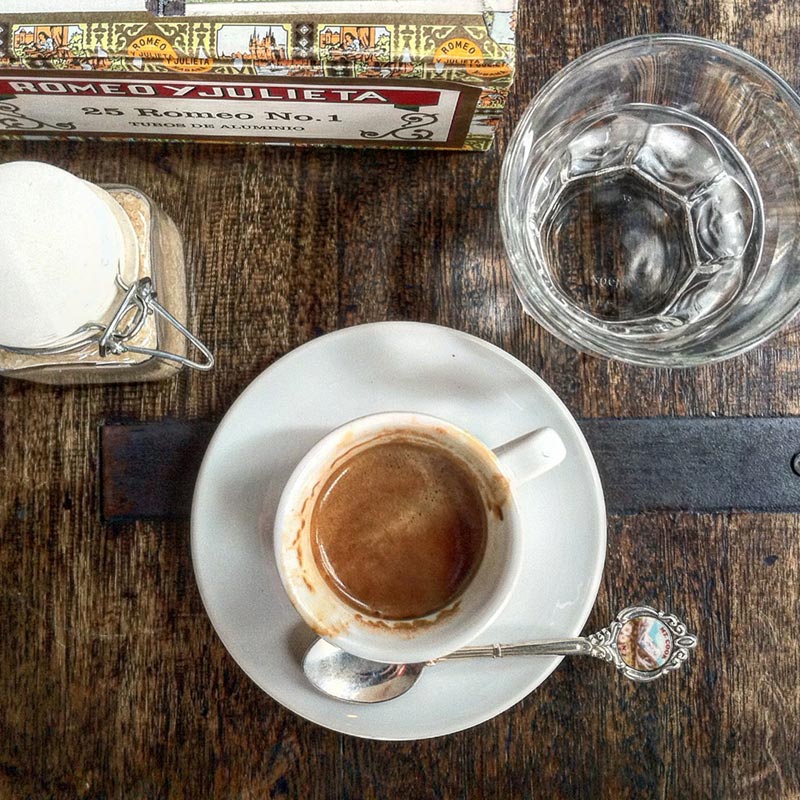
For Flash Back Friday. Espresso at the sadly long closed Lady J Cafe at Bondi Junction in Sydney, a snap I took several years ago. At the moment I’m using part of the image for the header on my Twitter page.
Lady J was an institution in its day, and I think it’s telling that a number of cafes and restaurants that have occupied Lady J’s old retail premises since, have struggled to make a go of it. They last a short time and close. The store space is along the bustling Oxford Street, so it’s not as if there’s a shortage of foot-traffic, or the place is hidden away.
Interesting, I was searching for the Lady J Instagram page, and found another IG page for a cafe with the same name and a similar logo, opening “soon”, somewhere in Texas. If it’s operated by the same people, and the similar logo certainly seem to suggest that, then Texans are in for a treat.
RELATED CONTENT
Book detective Toby Wools-Cobb will help find that lost book
1 July 2022
It sounds like a scene from Adam Brooks’ 2008 film Definitely Maybe, where Ryan Reynolds’ character trawls through American bookshops, searching for a particular copy of Jane Eyre. But for Launceston, Tasmania, based bookshop owner Toby Wools-Cobb, it is something the self-professed book detective does all the time.
Mr Wools-Cobb uses the investigative skills from his career as a librarian and the archaeological expertise from his studies in Egyptology to find copies of books from his shop, Quixotic Books. Special algorithms help him scan the millions of titles listed in publisher databases, but he also must understand the “life cycle of books to figure out where they may have ended up”.
Some of Wools-Cobb’s clients are people who sold a little-known book, perhaps at a garage sale, and are trying to locate it years later. And incredibly, he often succeeds in tracking down a copy.
“I managed to find some information that the author had partnered with a book chain to do a promotion,” he said. He tracked down the shop and asked the staff if any promotional stock had been left behind in the storeroom. “They were saying, ‘Oh, we don’t have it in stock on our system’, but sure enough, they go out and sheepishly come back and say, ‘We’ve got a whole box of them’.
RELATED CONTENT