
Showing all posts about fiction
One Illumined Thread, debut fiction by Sally Colin-James
28 February 2023
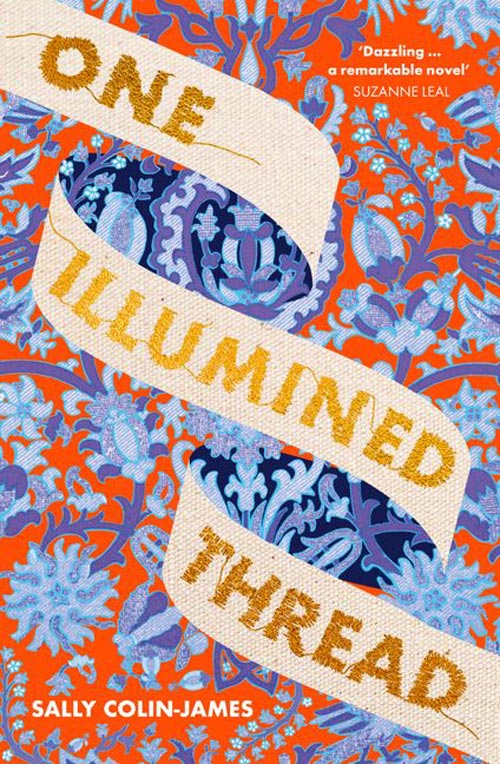
The stories of three women, living millennia apart, form a single, though not immediately obvious, thread that runs through One Illumined Thread, published by HarperCollins, March 2023, the debut novel of Australian author Sally Colin-James.
A young woman living two thousand years ago in Judea, an ancient kingdom in parts of what are today Palestine and Israel, is cast out of her home after failing to become pregnant. She longs to have a child, and as a way of keeping the hope of motherhood in her sights, takes the unusual step of learning the craft of glassblowing.
Fifteen hundred years later, in the Italian city of Florence, a woman is left without any money after being betrayed by her husband. The Renaissance is at its height, but with a son to look after also, she battles to make ends meet. The third thread of the story plays out in latter day Australia. Here a woman, devastated by a loss, working as a textile conservator, faces danger that puts her life at risk.
While the challenges confronting each woman seem insurmountable, the three share a link, even though they are separated by vast periods of time and distance.
The premise of One Illumined Thread brought to mind The Bass Rock, written in 2020 by Anglo-Australian author Evie Wyld. Wyld’s novel, winner of the 2021 Stella Prize, recounts the story of three woman who lived in the North Berwick area of Scotland at various times. Two women, Ruth and Viv, have a family connection, step grandmother and granddaughter, while the third, Sarah, lived several centuries earlier.
But where the ties between the three main characters in The Bass Rock are more apparent, the links in One Illumined Thread are far less so. Here is a story shrouded in mystery.
Before she took up writing, Colin-James worked in events management, and communications, both in Australia, and internationally. In 2020 she won the inaugural Historical Novel Society Australasia (HNSA) Colleen McCullough Writing Residency in the aspiring writer category. The residency, named in memory of late Australian author Colleen McCullough, awards recipients a week on Norfolk Island, where McCullough spent the latter part of her life.
Colin-James has also won the Varuna PIP Fellowship Award, and the Byron Bay Writers Festival Mentorship Award in 2020. In addition, she was also shortlisted in the First Pages Prize for writers who do not have agents, in 2021.
RELATED CONTENT
Australian literature, fiction, novels, Sally Colin-James
How to Be Remembered, debut fiction by Michael Thompson
26 February 2023
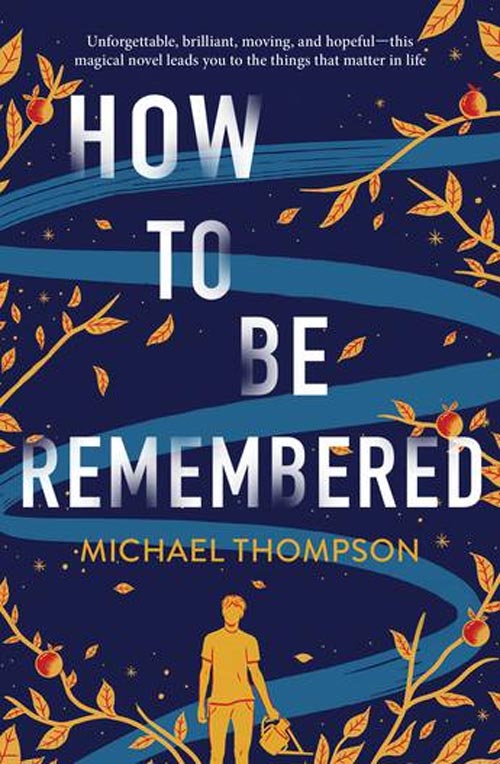
Tommy is desperate to create a legacy for himself. But he can’t wait until he reaches old age. Tommy needs people to remember who he is sooner than that. Before his birthday, to be precise. For, come the conclusion of each lap of his around the Sun, all memory of his existence is erased from the minds of everyone in the world. No one at all remembers him.
This includes his parents, his friends, and even the girl he has a crush on. As far they’re concerned, he was never there. Every trace of his life is obliterated. Memories. Photos. Shared experiences. Every last thing, including, presumably, a criminal record if he has one. Each and every detail gone, as if it were never there. And you thought you were having a bad day.
But not everything dissolves when the clock ticks over into his birthday. Anything Tommy is in direct contact with, such as his clothes, stays with him. The phenomenon is some sort of enigmatic cosmic occurrence that Tommy has dubbed “the Reset”, and it began the day he turned one.
On his first birthday, his parents woke to find an unknown baby in the house. They had no recollection whatsoever of having a son. Clueless as to who the infant was, they called the police, who sent Tommy to a foster home. And so it went. Every year all traces of Tommy are wiped from the world’s slate, leaving him to spend the following twelve months rebuilding his life.
How to Be Remembered (published by Allen & Unwin, February 2023), by Sydney based Australian journalist and podcast producer Michael Thompson, straight away had me thinking of Harold Ramis’ 1993 film Groundhog Day. Like Ramis’ hapless protagonist Phil, portrayed by American actor Bill Murray, Tommy is aware of his predicament, albeit one that plays out annually instead of daily.
He remembers everything from before his birthday. To him, his life is continuous. He still knows those around him, although they don’t have the faintest idea who he is. Accordingly, Tommy has devised strategies to re-establish himself in the lives of those he was with before the Reset.
But Thompson’s debut work of fiction is not only reminiscent of the likes of Groundhog Day. Parallels have also been drawn with The Curious Case of Benjamin Button, and even Forrest Gump. The Reset, meanwhile, is another matter. It is a sadistic abnormality that perhaps a serial speedster — seeking only to have an unblemished driving record restored every year — might appreciate.
But it is for that reason I see How to Be Remembered being a story that will excite readers. So much so, that I wouldn’t be surprised to see a screen adaptation in the not too distant future.
RELATED CONTENT
Australian literature, fiction, Michael Thompson, novels
Australian genre fiction authors look overseas for publishers
22 October 2022
If you’re an Australian author, don’t bother submitting manuscripts for anything other than literary fiction to local publishers. Nothing else will be accepted. That seems to be the message from a number of prominent Australian writers, including Stephanie Laurens and Shelley Parker-Chan, who say they had to find overseas publishers for their works of genre fiction.
The local publishing landscape is dominated by trade houses that concentrate on contemporary or literary fiction: books that are often character-driven, serious and contemplative. But these novels are not the most popular. A 2021 survey of Australian readers found crime and mystery was their favourite genre, followed by science fiction and fantasy, then contemporary and literary fiction.
But according to Jo MacKay, the head of local publishing at HQ Books, a division of HarperCollins, the Australian book market is saturated by the likes of fantasy fiction. It may be popular, but no one is buying it, if that makes any sense. And while Australian authors undoubtedly greatly benefit from exposure to markets such as those in America, there are strings attached.
For instance, Laurens reported having to be content with a cover design her publisher thought would be conducive to sales, rather than an option she would have preferred.
RELATED CONTENT
Australian literature, books, fiction, novels
ManyBooks fifty-thousand free fiction titles to read
12 September 2022
ManyBooks is an online book resource offering free access to over fifty-thousand titles. That should keep you occupied for a while.
ManyBooks was established in 2004 with the vision to provide an extensive library of books in digital format for free on the Internet. Many of the early eBooks are from the Project Gutenberg archives, which means you will be able to find a lot of classics on the site.
RELATED CONTENT
Susanna Clarke’s Piranesi: an introvert on steroids?
27 May 2022
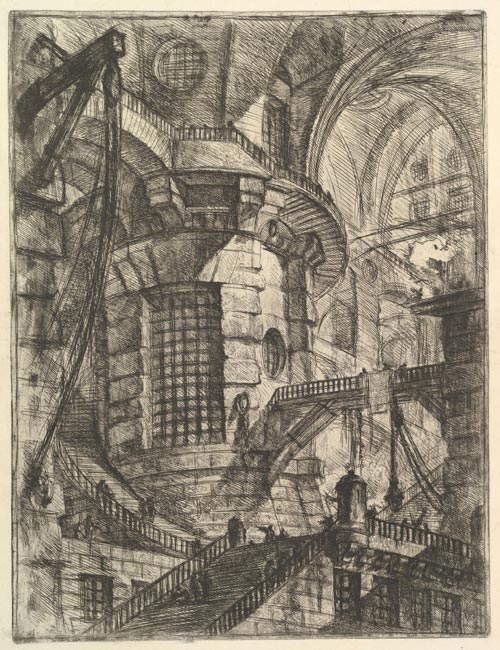
Detail from Imaginary Prisons, by Giovanni Battista Piranesi, courtesy of The Metropolitan Museum of Art.
Warning, spoilers follow. Return to this article once you’ve finished reading the book.
Imagine you live in a sprawling multi-storied house. The lower levels are flooded by an ocean, while the upper floors are shrouded in mist and clouds. The seemingly endless labyrinth like hallways are adorned with classical style marble statues, and for whatever reason, sea birds have taken to nesting among some of these figures. But it’s not really a house you’re in, it’s more like a complex with the dimensions of a city, and one none too small at that.
This is the world, Piranesi, the titular character in the second novel of British author Susanna Clarke (published by Bloomsbury Publishing, August 2021), finds himself in. Piranesi knows little about how the house came to be, or when he arrived there, although he has vague recollections of living elsewhere before. Come to that, Piranesi knows hardly anything about himself. He’s perhaps aged in his mid-thirties, and if pressed, couldn’t even be sure his name was Piranesi.
Despite these peculiar circumstances, Piranesi otherwise seems content, and goes about his day to day life as if nothing were amiss. But how would you feel were it you in Piranesi’s place? Wouldn’t you wonder how you ended up in this predicament, and whether there was a way leave, and return to the real world? Wouldn’t you miss family and friends, and wonder if they felt the same way? Wouldn’t you crave the company of others at least some of the time?
But Piranesi doesn’t appear to be the least bit perturbed. Why though? Does he have some sort of problem? Does he loathe all people, and is thankful for the sanctuary the house offers, a place devoid of humans? Or is he perhaps an introvert, who’s found his happy place? Yet Piranesi isn’t completely alone in the house. Once or twice a week, he goes to a certain area of the complex, where he briefly meets a middle-aged man, whom Piranesi refers to as The Other.
If Piranesi knows little about himself, he knows even less about The Other. He has no idea who this gentleman really is — although he believes him to be some sort of academic — nor does he know where The Other resides in the house. The Other meanwhile frequently questions Piranesi, and even sets him tasks, some relatively arduous. One such request required Piranesi to walk to a distant point in the house, on a journey lasting two days return.
To make a comparison, and better understand the scale of the house, I looked up the walking time and distance from Sydney’s CBD to the western suburb of Penrith on Google, and was advised the trek is approximately fifty-six kilometres in length, and the non-stop walk would take almost twelve hours.
Of course the question of exactly what sort of place Piranesi finds himself in came up repeatedly as I read the novel, particularly as he never encountered anyone else — at least not at first — in the sprawling complex. While plenty of Clarke’s readers (myself included) have ideas as to the nature of the house, and what it really is, I found myself wondering how Piranesi could remain oblivious to his acute isolation, and not miss the company of other people.
After all, surely not even the most extreme of introverts would continuously crave the deep solitude of the apparently empty house. But there were indications Piranesi was lonely. He regarded the sea birds nesting in the statues in some of the hallways as friends, and would often have conversations — albeit one-sided — with them. But when it becomes obvious another person is lurking, out of sight, in the house, Piranesi is keen to find out who they are.
In trying to understand Piranesi’s apparently people averse personality, I would describe him as an introvert. But no ordinary — if there is such a thing — introvert. To live alone for years in a vast complex, spending perhaps an hour at most, once a week, with one other person could not be anyone’s ideal. While it can argued something else is going on, that he is unaware of, Piranesi’s outright acceptance of his plight remains compelling. Piranesi is certainly an introvert, but he’s more, he’s an introvert on steroids.
RELATED CONTENT
fiction, introversion, novels, psychology, Susanna Clarke
Fictosexuals: people married to fictional characters
3 May 2022
Sometimes a book is just too good to put down, leaving you no choice but to… marry one of its (fictional) characters. Unofficially at least.
And no, this is no joke. The practice is said to have thousands of adherents in Japan, including Akihiko Kondo, a thirty-something salaryman, who is “married” to Hatsune Miku, a singing voice synthesizer, who features in video games, and even opened a concert for Lady Gaga once*.
In Miku, Mr. Kondo has found love, inspiration and solace, he says. He and his assortment of Miku dolls eat, sleep and watch movies together. Sometimes, they sneak off on romantic getaways, posting photos on Instagram.
*… though can someone who opened a show for Lady Gaga be unreal?
RELATED CONTENT
Again, Rachel, Marian Keyes
28 February 2022
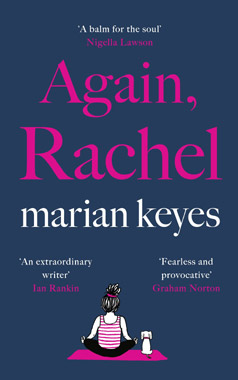
Readers of Irish author Marian Keyes‘ Walsh Family Series of novels first made the acquaintance of Rachel Walsh in 1997, in Rachel’s Holiday. Rachel was twenty-seven, and not in a good place. She’d just broken up with her boyfriend, Luke, and had been placed in rehabilitation by her family on account of her substance abuse.
Fast forward to 2021, and Rachel’s world is a better place. In fact, she has come full circle. She now works as a councillor at the facility she was admitted to twenty-five years earlier. Further, she’s in a happy relationship, and is getting along nicely with her mother and siblings. All up, everything seems to be going exceedingly well for Rachel. But her reverie is shattered by an out of the blue call from an old flame, in Again, Rachel (published by Penguin Books Australia, February 2022).
Just when she thought she had everything sorted out, and was settled, Rachel finds her life turned on its head. What is she to do? Follow her heart, and her ex, and venture back into a time and place she thought she’d left behind? Or remain in the predictable now? How fragile, it seems, is the life we believed to be firmly established…
RELATED CONTENT
fiction, Marian Keyes, TBR list, writing
Impossible by Sarah Lotz
21 February 2022
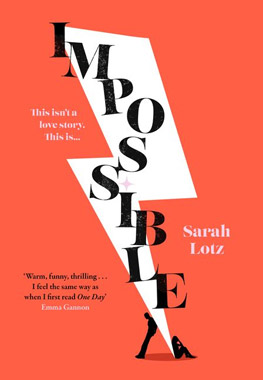
What would you do if an email intended for another person, made its way to your inbox? Would you delete it forthwith? Or would you, without blinking at it, inform the sender by return, of their error? Or might you feel that’d be tantamount to admitting you’d read the message? Might you think you were therefore exposing yourself to possible retribution, by making yourself known to the sender?
Or might you be like Bee, a London dress maker, who having received, and read, an incorrectly addressed email, decides to send a considered reply to the sender, because she found the contents intriguing? And would you believe for a second that such a response could be the beginning of a friendship, or perhaps something more?
This is exactly what happens in Impossible (published by HarperCollins Publishers, March 2022), by Sarah Lotz, the eighth novel by the British novelist and screenwriter. Nick, who is struggling personally and professionally, is surprised when Bee, a stranger, replies to his misdirected rant, but is delighted as their correspondence becomes regular and more intimate.
After all, who doesn’t like a meeting a new friend? But when Bee and Nick realise there is more to their exchanges than cordial banter, they decide to take the next step. Nick jumps on a train from Leeds, while Bee makes her way to London’s Euston station to meet him. But is it that simple? Can something come of what they have? Could it? Or is there too much they don’t know about each other to make that possible?
RELATED CONTENT
fiction, Sarah Lotz, TBR list, writing
The This, Adam Roberts
16 February 2022
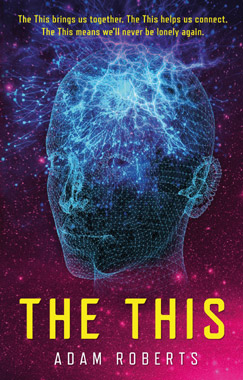
This sounds convenient. Instead of hauling a smartphone around all the time, you could instead have a social media platform injected into the roof of your mouth. The implant would mesh with your brain, eventually taking the place of your phone. Blink twice to take a photo maybe, communicate brain to brain with friends who also have the app implant.
Welcome to The This, the futurist social media app, and novel of the same name, written by British science fiction author Adam Roberts, published by Hachette Australia. The app is popular with many, but there are those who do not like it. They do not want to be part of the so-called hive mind. They’ve seen Twitter, they’ve seen enough. But the storyline has all the hallmarks of a hive mind, a sprawling, surreal, neural network spanning space and time.
Adan is a journalist, sent to profile the CEO of The This. But after Adan’s mother unexpectedly leaves the country, he is forced to join the army as he is left without a home or any money. Adan is battling a robot invasion, in a reality far removed from the one he once knew. In later centuries a diminished humanity is fighting off another hive mind, one intent of the final destruction of humanity. And all because we wanted to try out a new social media app…
RELATED CONTENT
Adam Roberts, fiction, TBR list, writing
The Very Last List of Vivian Walker, Megan Albany
12 February 2022
I couldn’t imagine how I’d feel if I were told I only had a certain amount of time left to live. It’s not the sort of situation most of us are used to dealing with. Our time, energy, and thought-output goes into dealing with all those other everyday predicaments. Paying the mortgage, getting the kids into the best school. Meeting the latest deadline. No pun intended.
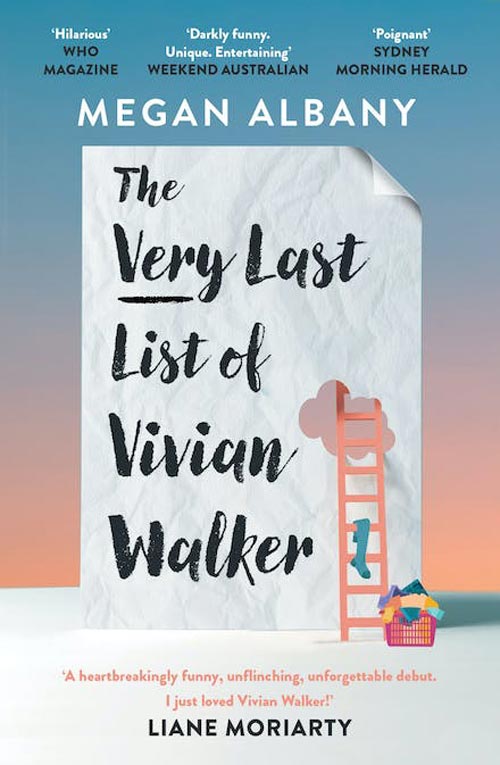
But this is what happens to Vivian, the titular character of The Very Last List of Vivian Walker (published by Hachette Australia, 9 February 2022), the debut novel of Kalkadoon woman Megan Albany, an Australian author based in the Northern Rivers of NSW.
With her mortality hanging by a thread, Vivian does what any self-possessed control freak whose life is regimented by lists would; she decides to face her demise by organising herself. She prepares to-do lists not only for herself, but husband Clint, and son Ethan. These lists, she hopes, will soften the blow of her terminal diagnosis, and prepare the family for a future without her.
Vivian’s final days are punctuated with a certain dark humour, and one hopes not too many of us will ever find ourselves taking a leaf from the book of Vivian Walker.
RELATED CONTENT