
Showing all posts about writing
Book plotlines tropes and clichés a publisher may reject
13 August 2022
The world is full of writers and the stories they’d like to write. American author Joseph Epstein, writing for the New York Times, quotes research suggesting eighty-one percent of Americans think they “have a book in them”. That’s a lot. Unfortunately, aspiring writers vastly outnumber book publishers, meaning many manuscripts stand to go unnoticed and unpublished.
It might not seem like much help, but Strange Horizons — a magazine publishing speculative fiction — once put together a list of the types of sci-fi stories that they’ve seen submitted too often, and subsequently did not feature. I suspect they’re not the only publishers seeing such ideas either. Knowing what might be rejected then, might help you write something that won’t be.
RELATED CONTENT
books, novels, science fiction, writing
Ann Mossop new Sydney Writers Festival artistic director
1 August 2022
Ann Mossop has been appointed as the new artistic director of the Sydney Writers’ Festival. Mossop, who has been behind a string of events in Sydney, has a long association with the writers’ festival:
Festival Chair Mark Scott said, “Ann Mossop comes to Sydney Writers’ Festival with a career programing cutting-edge public conversations at the Sydney Opera House for the Ideas at the House series, Festival of Dangerous Ideas, All About Women and recently as the Director of the Centre for Ideas at UNSW Sydney. Ann also has a long association with the Festival, sitting on the board from 1995–2000 and was part of the committee that established Sydney Writers’ Festival as an independent entity in 1998.”
RELATED CONTENT
2022 Melbourne Writers Festival program
29 July 2022
The 2022 Melbourne Writers Festival program was unveiled last Tuesday by MWF artistic director Michaela McGuire. Between Thursday 8 September 2022, and Sunday 11 September, over two-hundred-and-fifty storytellers from across the world will gather in Melbourne, Australia, and after several years of COVID imposed lockdowns, this year’s event is aptly themed ambition:
Reading is the ultimate act of ambition; the boundless ambition of the curious mind. Ambition to learn, to inhabit another person’s life and experience the world from their point of view. To grasp the limitless possibilities that literature affords us, the solace it has given, the joy it still has to offer.
RELATED CONTENT
events, literature, Melbourne, writing
Beat writer’s block and meet deadlines with AI writing apps
28 July 2022
Far from usurping writers of fiction, AI writing programs, such as Sudowrite, could aid authors, particularly those bogged down with writer’s block, and facing looming deadlines, says Josh Dzieza, writing for The Verge:
Lepp, who writes under the pen name Leanne Leeds in the “paranormal cozy mystery” subgenre, allots herself precisely 49 days to write and self-edit a book. This pace, she said, is just on the cusp of being unsustainably slow. She once surveyed her mailing list to ask how long readers would wait between books before abandoning her for another writer. The average was four months. Writer’s block is a luxury she can’t afford, which is why as soon as she heard about an artificial intelligence tool designed to break through it, she started beseeching its developers on Twitter for access to the beta test.
In other words, AI writing programs could act as ghostwriters, of a sort, who are paid — in kind at least — but never acknowledged for their contribution.
RELATED CONTENT
Mal Peet’s Beck, a book finished posthumously by another author
6 July 2022
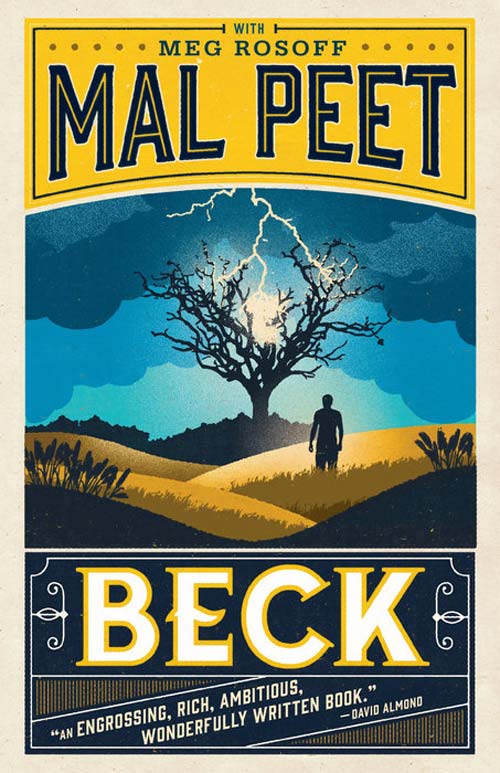
When late British author Mal Peet died in March 2015, his final novel, Beck, remained unfinished.
In a phone call Peet made to friend and American born, London based writer, Meg Rosoff, shortly before his death, he expressed a desire to finish writing Beck, but didn’t think he’d be able to. At that point Rosoff offered to step in.
At the time of their conversation, Rosoff knew nothing about the novel, or how much progress Peet had made. But this posthumous collaboration paid off. Beck was well received. In August 2016, the Sunday Times named Beck their Book of the Week, describing it as “powerful, shocking, uplifting, funny and beautifully written.”
But this is not the first time one person’s novel has been finished by another, because of death or incapacitation. Realising illness would prevent him finishing works in The Wheel of Time series of fantasy books, late American author Robert Jordan, prepared extensive notes, allowing Brandon Sanderson to conclude the fifteen book series.
British writer Siobhan Dowd died in 2007, before A Monster Calls, which she was working on at the time of her death, was finished, a task that Patrick Ness took on.
In some cases though the quantity of notes written by a deceased author have been enough for another to create books from scratch. The works of British author J. R. R. Tolkien are a case in point. After Tolkien’s death in 1973, his son Christopher wrote a number of Tolkien novels including, The Silmarillion and The Fall of Númenor.
Despite the success some have enjoyed, taking over another author’s part-finished manuscript remains a process fraught with difficulty. How exactly can one writer step into the shoes of another? How do the creative visions of two artistic people align? And perhaps, most crucially, how does one author assume the voice of another?
It was a question Rosoff grappled with, when picking up Beck where Peet left off. But the solution soon came to her: “the answer, I discovered, is not to.” It seems then, if an author is sufficiently in synch with the person whose work they are continuing, a book finished posthumously by another author can do well.
RELATED CONTENT
books, Mal Peet, Meg Rosoff, novels, writing
Being inspired, or not, by the struggle to write novels
2 July 2022
Why I am not a writer, by American author, copywriter, and musician John Mancini.
Joyce spent twenty-nine thousand hours writing Ulysses. Vonnegut spent twenty-three years writing Slaughterhouse Five. Hemingway rewrote The Sun Also Rises fifty times. “Really great fun,” Wodehouse said of his time in a German internment camp.
On one hand it’s reassuring — perhaps for writers starting out — to realise that even the giants of literature struggled to write their best known works. On the other hand, maybe it isn’t.
RELATED CONTENT
Why do writers plagiarise the work of other writers?
29 June 2022
Australian book aficionado Stella Glorie spoke to two thousand plagiarists (cripes, I hope they weren’t all Australian…) and asked why they appropriated the work of others. Here, she presents the top ten reasons, presumably meaning there were who knows how many excuses in total.
What’s the big deal? No one complains every Sunday when my priest plagiarises his sermons from the bible.
This is enlightening research, no?
RELATED CONTENT
A history of Australian literary scandals
29 June 2022
The recent John Hughes plagiarism fracas is but one of numerous scandals in Australian literature, some more audacious than others, writes Melbourne based Australian journalist and author Thuy On.
In 1990, Mutant Message Down Under by Marlo Morgan was released, purportedly about the journey of a middle-aged, white American woman and her interactions with a group of Indigenous peoples in Australia. Morgan stated the book was inspired by actual experience, however research in central and Western Australia failed to uncover any evidence of her presence in the area or the existence of the tribe in question.
RELATED CONTENT
Australian literature, writing
2022 ASA/Varuna Ray Koppe Young Writers Residency
29 June 2022
Applications for the 2022 ASA/Varuna Ray Koppe Young Writers Residency are open until Friday 29 July 2022. The residency was established in memory of the late Ray Koppe, by her family. Koppe worked for many years assisting with the administration of the Australian Society of Authors.
Each year, the Australian Society of Authors awards a two-week residential fellowship to a writer under the age of 35 who is as yet unpublished.
Danielle Binks and Hannah Bent, are among past winners.
RELATED CONTENT
Australian literature, literature, writing
2022 Melbourne Writers Festival early line-up announcement
29 June 2022
The program for the 2022 Melbourne Writers Festival — which runs from 8 to 11 September 2022 — will be unveiled on Wednesday 27 July.
In the meantime festival organisers have announced American actor, comedian, and author Jenny Slate, Scottish actor Brian Cox, British Pakistani novelist Mohsin Hamid, and British musician, and former Pulp front-man Jarvis Cocker, will be part of the show.
These four incredible artists are just the beginning of an extraordinary line-up that we can’t wait to bring to Melbourne audiences this year after the pandemic kept us away for so long.
RELATED CONTENT