
Showing all posts in the books category
Small publishers thrive on Prime Minister’s Literary Awards shortlist
9 November 2022
The shortlist for the 2022 Prime Minister’s Literary Awards was unveiled this week. Thirty titles, across six categories — including fiction, poetry, Australian history, and young adult — were selected from over five-hundred and forty entries.
Notably, sixteen of the books shortlisted were published by members of the Small Press Network, a representative body for small and independent Australian publishers.
With consolidations taking place in the publishing industry worldwide, potentially reducing the number of publishing houses, and leaving only a handful of large players, this is a welcome indication that smaller publishers are thriving.
RELATED CONTENT
Australian literature, books, literary awards, publishing
November is NaNoWriMo bad writing and vomit texts incoming
7 November 2022
It’s November and that means it is NaNoWriMo (National Novel Writing Month) time. Writers, whether new or established, have thirty days to pen a fifty-thousand word manuscript. That works out to about seventeen hundred words a day. A daunting task for sure, but it wouldn’t be much of a challenge if it were easy.
NaNoWriMo doubtless makes for an enjoyable way to while away cool autumn days for northern hemisphere participants. A Camp NaNoWriMo event is also held in April and July, and might suit writers based south of the equator, who’d rather be away from their laptops, enjoying the spring weather in November.
And while the vast majority of works produced during NaNoWriMo seldom sees the light of day, the event has launched the careers of several authors. But it’s not for everyone, and some writers are critical of NaNoWriMo. They say the tight deadline encourages bad writing, as people scramble to reach the fifty-thousand word target.
It’s one reason science fiction author and game developer, and past participant, Dale Thomas gave up on NaNoWriMo. But Thomas goes further than describing some NaNoWriMo output as “bad writing”. To his mind, vomit texts make for a more apt metaphor:
You see, the big problem I have with the challenge is that it forces me to write fast. Too fast for my liking. I end up vomiting all over my writing application. And because only wordcount matters and the clock is ticking, there is no time to wipe the drool from my mouth, no time to find a damp cloth to clean up the mess. The vomit just sits there, drying out, and day after day I vomit afresh. Layer upon layer of disgusting, half-digested ideas, dripping all over the once pristine white page.
RELATED CONTENT
Susannah Begbie wins 2022 Richell Prize for Emerging Writers
3 November 2022
Australian doctor Susannah Begbie has been named winner of the 2022 Richell Prize for Emerging Writers, with her manuscript titled When Trees Fall Without Warning.
Her work, When Trees Fall Without Warning, which took ten years to write, is an expertly told, compelling work of commercial fiction. Instantly captivating, with characters alive with personality who ring emotionally true, this is an original and lively narrative that creates memorable insights into a dysfunctional family dynamic. The Richell Prize judges have no doubt that Susannah is a writer with the ability to create an ongoing literary career.
So good to see that ten years of writing looks like it will result in a published work.
RELATED CONTENT
Australian literature, literary awards, Susannah Begbie
The Climate Book by environmental activist Greta Thunberg
3 November 2022
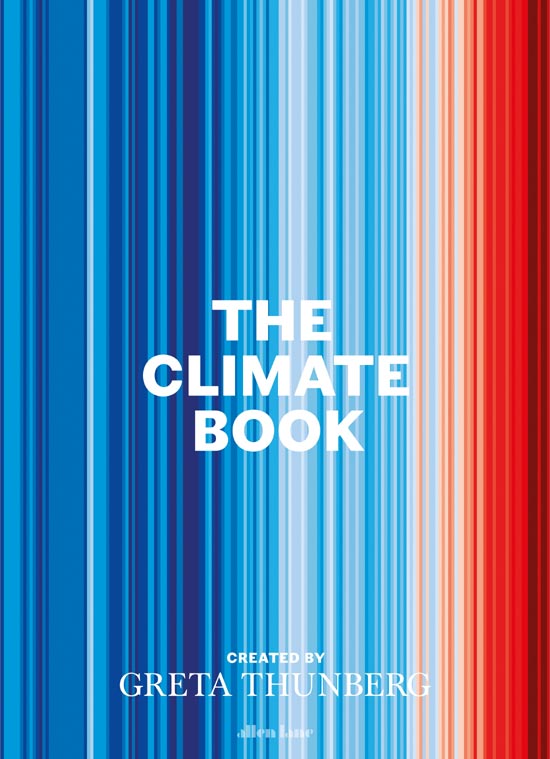
The Climate Book, written by Swedish environmental activist Greta Thunberg, and published this month by Penguin Books, sets out the facts about climate change, and outlines solutions for dealing with it. As Thunberg says, we need to act now, if we want to make a difference.
In The Climate Book, Greta Thunberg has gathered the wisdom of over one hundred experts – geophysicists, oceanographers and meteorologists; engineers, economists and mathematicians; historians, philosophers and indigenous leaders – to equip us all with the knowledge we need to combat climate disaster. Alongside them, she shares her own stories of demonstrating and uncovering greenwashing around the world, revealing how much we have been kept in the dark. This is one of our biggest challenges, she shows, but also our greatest source of hope. Once we are given the full picture, how can we not act? And if a schoolchild’s strike could ignite a global protest, what could we do collectively if we tried?
RELATED CONTENT
climate change, environment, Greta Thunberg
Penguin Random House, Simon & Schuster merger blocked
3 November 2022
The proposed merger of book publishers Penguin Random House and Simon & Schuster has been blocked — at least for now — by the U.S. District Court. The idea, first mooted in late 2020, has drawn the ire of many in the publishing industry, who fear the combined entity, and the influence it could wield, would be detrimental to authors and readers alike.
But it was still a dramatic departure from recent history in the book world and beyond. The publishing industry has been consolidating for years with little interference from the government, even when Random House and Penguin merged in 2013 and formed what was then the biggest publishing house in memory. The joining of Penguin Random House and Simon & Schuster would have created a company far exceeding any rival and those opposing the merger included one of Simon & Schuster’s signature writers, Stephen King, who testified last summer on behalf of the government.
RELATED CONTENT
Emily Bitto wins 2022 Roderick Literary Award with Wild Abandon
3 November 2022
Melbourne based Australian author Emily Bitto has been named winner of the 2022 Roderick Literary Award, with her 2021 novel Wild Abandon.
Two hundred and thirty entries — a record number — were received for the 2022 award. All were of a high standard, which made selecting a shortlist, let alone a winner, difficult, according to Emeritus Professor Alan Lawson, who headed up the judging panel.
A lot of very good books just didn’t make the shortlist. But in the end Emily Bitto’s extremely well-crafted account of a young Australian man’s ‘escape’ to New York and then into the US heartlands after the breakdown of his first serious relationship — a coming of age and into self-knowledge story set against a richly symbolic and allusive account of the decline of civilisations — won the prize.
RELATED CONTENT
Australian literature, Emily Bitto, literary awards
Novelist as a Vocation by Haruki Murakami
1 November 2022
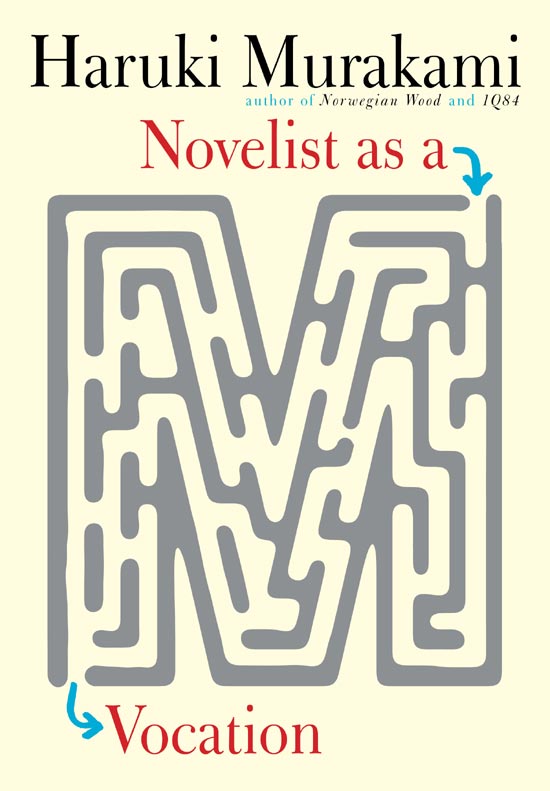
Despite what you might see on bookstagram, the stages of many a literary festival, and many other places, writers are not, and cannot be, friends with each other.
They “are are basically an egoistic breed, proud and highly competitive“, contends Japanese author Haruki Murakami. We’re not here to make friends, we’re here to write books. And if anyone would know, Murakami would. With fourteen novels to his name, no one can say he wouldn’t know.
This is but one nugget of wisdom Murakami shares in his latest title, Novelist as a Vocation, published by Penguin Books, where he writes about being a novelist:
Haruki Murakami’s myriad fans will be delighted by this unique look into the mind of a master storyteller. In this engaging book, the internationally best-selling author and famously reclusive writer shares with readers what he thinks about being a novelist; his thoughts on the role of the novel in our society; his own origins as a writer; and his musings on the sparks of creativity that inspire other writers, artists, and musicians. Readers who have long wondered where the mysterious novelist gets his ideas and what inspires his strangely surreal worlds will be fascinated by this highly personal look at the craft of writing.
RELATED CONTENT
books, Haruki Murakami, writing
Bramble a literary journal for and by disabled creatives
31 October 2022
Bramble is a newly launched quarterly literary journal for, and by, disabled creatives. Founded by Spencer Barberis, and Scout Lee Robinson, past University of Wollongong arts students, Bramble only publishes creative work by disabled writers and artists based in Australia.
RELATED CONTENT
Australian literature, writing
A Bunch of Pretty Things I Did Not Buy by Sarah Lazarovic
28 October 2022
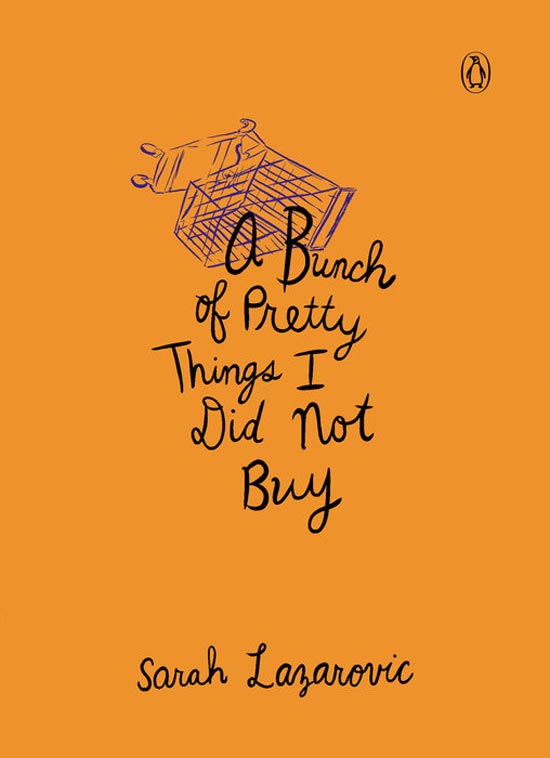
Instead of buying the things she wanted to, Toronto based Canadian writer, illustrator, and artist, Sarah Lazarovic decided to paint the objects of her retail desire instead. A year later she gathered the works together in her new book, A Bunch of Pretty Things I Did Not Buy, which is being published this month by Penguin Random House:
Based on a visual essay that was first published on The Hairpin, A Bunch of Pretty Things I Did Not Buy is a beautiful and witty take on the growing “slow shopping” movement. Sarah is a well-known blogger and illustrator, and she writes brilliantly without preaching or guilt-tripping. Whether she’s trying to justify the purchase of yet another particleboard IKEA home furnishing, debating the pros and cons of leg warmers or calculating the per-day usage cost of big-ticket items, Sarah’s poignant musings will resonate with any reader who’s ever been susceptible to an impulse buy.
If you’re looking for an introduction to the low shopping movement, A Bunch of Pretty Things I Did Not Buy sounds like the book for you.
RELATED CONTENT
art, books, Sarah Lazarovic, trends
Tree Abraham designed the cover of her new book Cyclettes
26 October 2022
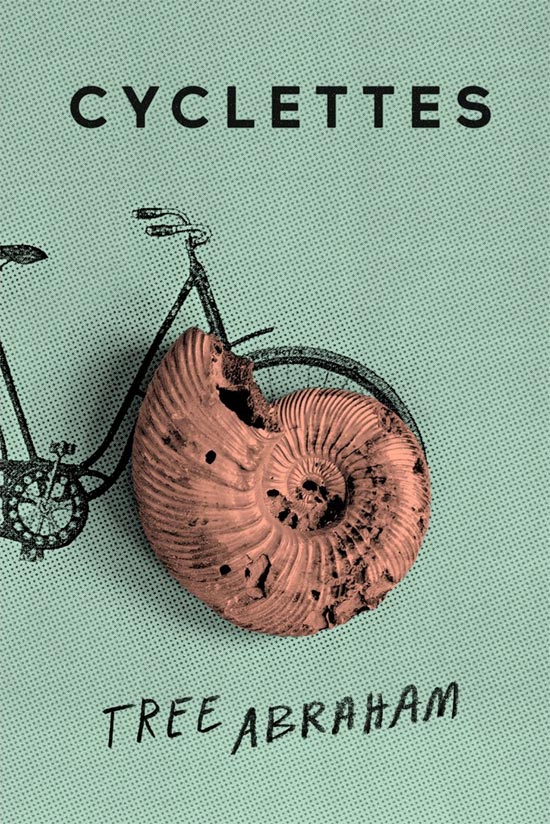
Designing the cover of the book they’ve written must be the dream of many an author. But it is far from a simple undertaking, especially in a world where books are judged by their covers, whether they should be or not. Make a hash of it, and your title might sit unmoved on bookshops shelves.
Canadian born, New York based writer, illustrator, and book designer, Tree Abraham had the opportunity to design the cover for her latest book, Cyclettes, and I think it’s obvious the results speak for themselves.
In an article at Spine, Abraham discusses the design process, and the challenges of creating a cover as an author. Contrary to expectations, being too familiar with the subject matter of a book can present numerous, often unforeseen, difficulties:
If I was only the designer and not the author, this cover brief would have seemed easy. There is an abundance of visual and metaphorical imagery within the book to inspire highly graphic directions. But because of my intimacy with said imagery, it also posed the greatest challenge. I was hyper aware of the interior aesthetic: like a xeroxed zine or old textbook with black and white diagrams and scrap photography. I believed for a cohesive experience, the cover needed to align with the illustrative and typographic style inside, without overwhelming it. I wanted the cover to feel like a shell. Additionally, most of the imagery that I would have excitedly leveraged as a designer was quickly negated because, as the author, I knew it didn’t epitomize the core problematique.
RELATED CONTENT