
Showing all posts in the books category
Lystra Rose’s 2023 Victorian Premier’s Literary Awards speech
7 February 2023
Queensland based Australian author Lystra Rose won the Indigenous Writing Award for her debut novel The Upwelling, at the 2023 Victorian Premier’s Literary Awards, which were presented last week in Melbourne. Take a few minutes to listen to her acceptance speech:
I was the first person in my Indigenous family to be counted as human under Australian law. Let me say that again. When I was born I was the first person in my Indigenous family to be counted human under Australian law.
Remarkable words. Read them again.
RELATED CONTENT
Australian literature, Indigenous literature, literary awards, Lystra Rose
Will Writers Australia succeed where other peak bodies have not?
3 February 2023
Writers Australia is a new peak body to be established as part of the National Cultural Policy, which was released by the Australian federal government last Monday. While the exact functions of Writers Australia — which comes into being in 2025 — are yet to be fully detailed, its stated mandate is to provide direct support to the Australian literature sector.
While hopes are high the proposed new entity will improve the lot of local writers, Writers Australia is by no means the first attempt to establish an Australian peak literature body. There have been several attempts to do similar in the past, with some being anything but successful, as Adelaide, South Australia, based author Jessica Alice, writing for Meanjin, explains:
There are two years until the body will come into operation and those working in the field will remember past attempts to create a national literature body. There was Writing Australia, the unsuccessful attempt to create a peak body for writers centres that was defunct within two years, and more recently the Book Council of Australia debacle that heralded the Brandis era.
In that instance, a national body was established to represent the interests of publishers, agents and booksellers, with $6 million in funds taken from the Australia Council’s operating budget. It faced pushback from the broader literary sector culminating in an open letter signed by high profile figures like Nick Cave and JM Coetzee arguing it was a rush-job initiated without proper sector consultation and a limited terms of reference. The body was ultimately abandoned.
RELATED CONTENT
Australia, Australian literature, politics, writing
The National Cultural Policy and the role of Writers Australia
1 February 2023
Among initiatives announced this week in the Australian federal government’s National Cultural Policy, is the formation of Writers Australia, a body that will, according to the policy document, “provide direct support to the literature sector from 2025.” Writers Australia will be part of a new peak arts investment and advisory body to be called Creative Australia, which will represent an overhaul of the current Australia Council for the Arts.
While the finer details are still to be made public, it is known Writers Australia will, among other things, administer the Prime Minister’s Literary Awards, and make appointments to the (kind of) newly formed role of Australian poet laureate.
It can also be presumed Writers Australia will work to address remuneration for Australian authors, who according to recent research earn about A$18,000 per annum for their work. Australian workers need to earn at least A$25,675 per annum to be living above the poverty line. The income of local writers is a point underlined by Sophie Cunningham, Chair of the Australian Society of Authors (ASA):
“We’re thrilled to see the Government’s affirmation that artists and authors should be paid fairly for their work. This is fundamental to a fair and sustainable arts sector. As I and many other authors made clear in our submissions to Government, authors do not fall under the protection of awards or industrial agreements and, as freelancers, have to negotiate on a case by case basis to be paid fairly. We welcome the recognition of the ASA’s recommended minimum rates of pay in cultural policy.”
While supporting writers and literary organisations through funding, Writers Australia will take a proactive role in boosting incomes for writers and book illustrators, by raising their profile, and growing local and international audiences for their books. One way of achieving this could be to encourage broader promotion of Australian literary awards, in the same way the British publishing industry enthusiastically backs the Booker Prize.
In the meantime poetry can look forward to more prominence in Australia, through the creation of a poet laureate, an appointment Writers Australia will make. There has not been an Australian poet laureate since 1818, when Michael Massey Robinson, a British convict, held the role for about two years.
Poetry is a poorly appreciated form of literature in Australia, with just three and a half percent of local book readers indicating they are inclined to read works of poetry, according to recent research by Amazon Kindle.
Dropbear, a collection of poetry by Melbourne based author Evelyn Araluen, and winner of the 2022 Stella Prize, had sold in the order of fifteen thousand copies as of August 2022. In comparison, Apples Never Fall, by Sydney based novelist Liane Moriarty, was the bestselling book in Australia, with sales of just under two-hundred thousand copies, in 2021.
RELATED CONTENT
Australia, Australian literature, poetry, politics, writing
Sophie Cunningham, Emily Bitto, talk This Devastating Fever
1 February 2023
Australian author, and co-founder of the Stella Prize, Sophie Cunningham, discusses her latest novel, This Devastating Fever (published by Ultimo Press, September 2022), with Melbourne based author Emily Bitto, in a podcast recorded by the Wheeler Centre.
This Devastating Fever, Cunningham’s ninth book, tells the story of an author writing about the life of Leonard Woolf, the husband of British writer Virginia Woolf, and features a curious tie in with the once notorious Y2K bug:
Alice had not expected to spend most of the twenty-first century writing about Leonard Woolf. When she stood on Morell Bridge watching fireworks explode from the rooftops of Melbourne at the start of a new millennium, she had only two thoughts. One was: the fireworks are better in Sydney. The other was: is Y2K going to be a thing? Y2K was not a thing. But there were worse disasters to come. Environmental collapse. The return of fascism. Wars. A sexual reckoning. A plague.
Uncertain of what to do she picks up an unfinished project and finds herself trapped with the ghosts of writers past. What began as a novel about a member of the Bloomsbury set, colonial administrator, publisher and husband of one the most famous English writers of the twentieth century becomes something else altogether.
RELATED CONTENT
Australian literature, books, Emily Bitto, novels, Sophie Cunningham
The Dublin Literary Award 2023 longlist
31 January 2023
Seventy books, published in thirty-one countries, have been named on the Dublin Literary Award 2023 longlist. After Story by Sydney based author and filmmaker Larissa Behrendt, Bodies of Light by Jennifer Down, winner of the 2022 Miles Franklin award, and Cold Enough for Snow by Jessica Au, are among Australian titles to be included.
Formerly known as the International IMPAC Dublin Literary Award, before being renamed in 2015, the Dublin Literary Award was established in 1994 to celebrate excellence in world literature. Awarded annually, novels either written in, or translated into English, can be nominated by participating libraries globally. A shortlist of ten book will be announced in March 2023, with the winner being named later this year, in June.
RELATED CONTENT
books, literary awards, literature, novels
An award for the best book titles? Goodreads has you covered
31 January 2023
Thirty-six books have been recognised by Goodreads in their unofficial best book title award, for, as the name suggests, books with unique and quirky titles. Winners, who are only accorded the honour and glory of being selected, were drawn from books published between August 2022 and January 2023. Here are a few titles to make the cut:
- The World Keeps Ending, and the World Goes On, by Franny Choi
- How Not to Drown in a Glass of Water, by Angie Cruz
- I Want to Die but I Want to Eat Tteokbokki, by Baek Se-hee
- What We Fed to the Manticore, by Talia Lakshmi Kolluri
- The Seven Moons of Maali Almeida, by Shehan Karunatilaka, winner of the 2022 Booker Prize
RELATED CONTENT
Australian authors to be compensated for ebook library loans
28 January 2023
After concerted lobbying by industry representative organisations, such as the Australian Society of Authors, Australian writers will now receive a payment when a library lends out an electronic version of their book.
Authors, illustrators, and editors will be compensated for e-book and audiobook library borrowings for the first time, in a move by the federal government to bring lenders’ rights into the 21st century. A $12.9 million expansion of the annual lending rights scheme over four years will be announced at Monday’s launch of the Albanese government’s national cultural policy.
Until now, authors were only compensated when a library user borrowed a physical copy of their book, as part of the Australian lending rights scheme, which was established in 1975.
RELATED CONTENT
More promotion of Australian literary awards benefits authors
28 January 2023
Louise Adler, director of Adelaide Writers’ Week, talking to Katrina Strickland, editor of Good Weekend, laments the lack of wider excitement generated by literary awards in Australia:
“We adore it when our authors win awards but, actually, often they do not translate into sales,” she says, pointing to the way the UK book industry gets behind the Booker Prize longlisted and shortlisted authors. “When the longlist for the Booker is announced the books on it are heavily promoted, booksellers get behind it, publishers get behind it, and then the shortlist is promoted heavily, too. And there’s lots and lots of discussion about them.”
It’s unfortunate Australian literary awards don’t have quite the same buzz surrounding them as the Booker Prize in the UK appears to. While the shortlists, and winners of prizes such as the Stella and Miles Franklin, make headlines when announced, they soon fall out of the news cycle.
No doubt the larger population of the UK, compared to Australia, makes a difference, and Australian authors recognised by local literary awards see a spike in book sales. Still, I doubt it’s anything like the “Booker boost” that writers named on the long and shortlists — and of course, the winner — of the Booker, enjoy.
RELATED CONTENT
Australian literature, literary awards, literature
The War of the Worlds, invasion literature by H G Wells with an Australian connection
27 January 2023
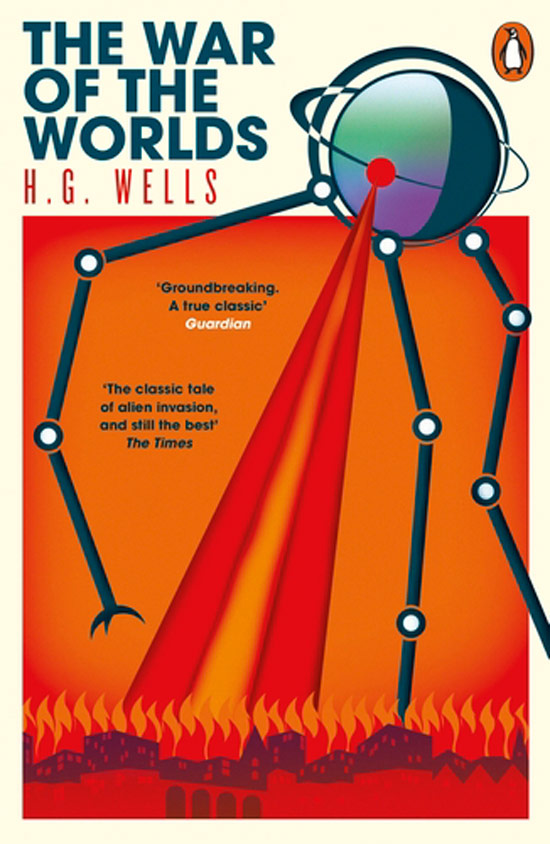
When people think of The War of the Worlds, the novel written by late British author H. G. Wells, and published by William Heinemann in 1898, after being serialised in 1897, they think of science fiction.
Yet the story of the inhabitants of Mars crossing the interplanetary void to invade Earth — incidentally one of the earliest examples of alien invasion in English literature — isn’t only sci-fi and/or fantasy, The War of the Worlds is also an instance of invasion literature.
Also known as invasion novels, invasion literature was common from the later decades of the nineteenth century — following the publication of The Battle of Dorking, written by George Tomkyns Chesney in 1871 — through until the First World War.
Despite being set in England though, Wells drew inspiration for The War of the Worlds from another hemisphere all together, Tasmania, Australia:
Wells later noted that an inspiration for the plot was the catastrophic effect of European colonisation on the Aboriginal Tasmanians; some historians have argued that Wells wrote the book in part to encourage his readership to question the morality of imperialism.
Invasion literature played a part in influencing public opinion in Britain, and other then imperialistic European nations, through their unsettling premises. Stories such as The War of the Worlds, depicting a ruthless invasion of England by a technologically superior enemy, hopefully helped bring home the horrors of colonisation that were being inflicted upon other cultures.
RELATED CONTENT
books, H G Wells, literature, novels, science fiction
Good books gone bad, the impact of audiobook narrators
26 January 2023
Usually a novel’s success hangs in a solid storyline, great characterisation, tension, originality, the list goes on. But as Australian writer and editor Fleur Morrison points out, novels in audiobook format face an additional hurdle when it comes to doing well: their narrator.
In other words, if a reader/listener doesn’t like the delivery or style of the narrator, that will affect their experience of the book. Comments about the audiobook narrator often feature in book reviews I see on Goodreads, and while most thoughts I’ve read have been positive, there’s undoubtedly one or two titles that have scored poorly on account of the narration.
Selecting an audiobook narrator certainly isn’t a matter to be treated lightly.
RELATED CONTENT