
The Ex Talk, by Rachel Lynn Solomon
13 October 2021

How far would you go to save the organisation that has employed you for ten years, a place so beloved, you couldn’t imagine working anywhere else? For Shay, a producer at a radio station in the American city of Seattle, the question seemed like a no-brainer until she was told she must co-host a new show with a colleague, Dominic, whom she detests.
As if that’s not bad enough, she and Dominic need to pose as exes, dispensing relationship advice to their listeners. This is the premise of The Ex Talk (published by Penguin Random House, January 2021), by Netherlands based American author Rachel Lynn Solomon. To the surprise of everyone, especially Shay and Dominic, the show becomes a hit, but as their success grows, the two hosts become ever more uncomfortable with the lie they are forced to live.
The Ex Talk has divided reviewers on Goodreads. Some people feel the story is a tad predictable – would a rom-com be a rom-com if it wasn’t? – while others are, if I may, enamoured by it. I’m yet to partake, so I can’t tell you what I think, but it was the plot outline that caught my eye: would devising story scenarios be the most enjoyable part of writing fiction?
RELATED CONTENT
fiction, Rachel Lynn Solomon, TBR list, writing
Petite Maman, the new feature by Céline Sciamma
12 October 2021
The Sydney Film Festival opens on 3 November 2021, and hopefully heralds a hopefully welcome return to seeing movies at the cinema, after months of COVID enforced lockdowns. To mark this momentous occasion over the next few days, I’ll be posting trailers for some of the films screening at the festival this year.
Petite Maman is the latest feature by French filmmaker Céline Sciamma, director of the exquisitely heartrending Portrait of a Lady on Fire. At first glance Petite Maman appears to be a story about two young girls who become friends, but as we learn one of the girls is the mother of the other, who through some quirk of space-time has moved through time as a child to meet her daughter.
RELATED CONTENT
Celine Sciamma, movies, Sydney Film Festival, trailer
Happy as Larry, by Kaethe Cherney
12 October 2021
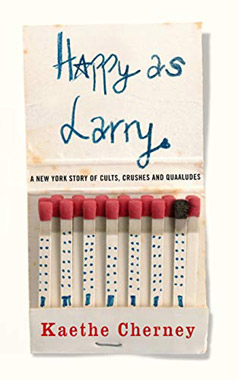
Happy as Larry, or Happy as Larry: A New York Story of Cults, Crushes and Quaaludes, to use its full title, is the debut self-published novel of London based American author and film producer Kaethe Cherney. Quaaludes, in case you’re wondering, was the brand name of a sedative–hypnotic medication intended to treat insomnia, though it was commonly used as a recreational drug in the 1970s and 1980s.
Set in the New York of the nineteen-seventies, the story follows, Saskia, a teenager who finds herself grief stricken following the sudden death of her father, and the subsequent disintegration of her family. Saskia also has to contend with a move from their comfortable home in Gramercy Park, to a not so desirable part of town, and adjust to the new high-school she’s forced to attend.
While Saskia is drawn into a world of partying and drugs, her mother turns to alcohol and takes up with a younger man. Meanwhile while her older sister and brother are lured in a cult, and cut-off contact with the family. Happy as Larry has been praised by reviewers for its keen depictions of a New York that no longer exists, making for a poignant reverie for the nostalgic, or a gritty illustration for those who weren’t there.
RELATED CONTENT
fiction, Kaethe Cherney, TBR list, writing
The Historical Novel Society Australasia shortlist 2021
11 October 2021
The shortlist for the annual Historical Novel Society Australasia historical novel prize has been announced. Presently there are two categories, adult, and children and young adult. Winners will be named on Friday, 22 October 2021.
RELATED CONTENT
historical fiction, literature
Here Out West, the Sydney Film Festival opening feature
11 October 2021
Here Out West, which screens on the opening night of the Sydney Film Festival, on 3 November 2021, is an anthology film, combining eight stories which merge into one feature. Set over the course of a day, in Blacktown, a suburb in the west of Sydney, the story follows events precipitated by a woman who kidnaps her grandchild from a hospital, and goes on the run. Five directors, Leah Purcell, Fadia Abboud, Lucy Gaffy, Julie Kalceff, and Ana Kokkinos collaborated in the production of this feature.
RELATED CONTENT
movies, Sydney Film Festival, trailer
Wild Place, by Christian White
11 October 2021
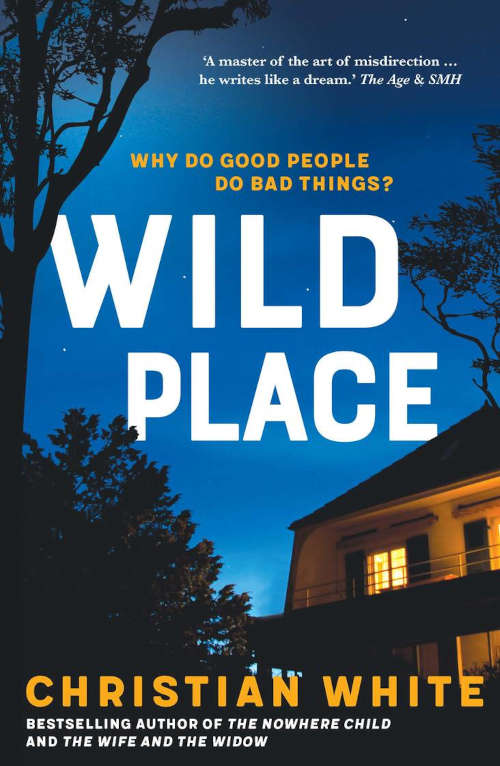
Wild Place (published by Affirm Press, 26 October 2021), the third thriller novel of Melbourne based Australian writer Christian White, has I see from the socials, made it into the hands of a few fortunate advance readers. After reading both The Nowhere Child, and The Wife and the Widow, I can only say I’m eagerly anticipating getting hold of this title.
Set in suburban Melbourne during the late nineteen-eighties, with the world in the grips of satanic panic, Wild Place tells the story a school teacher, Tom Witter, who thinks he can help police investigating the disappearance of a local teenager. Unfortunately for Tom though, detectives are not interested in his assistance.
The missing teenager was last seen in an area known as the wild place, a forest area bordering Tom’s property, which also adds to his curiosity, and indeed concern, about the case. In the past the forest reserve had been popular with locals, but in recent years had developed a far less welcoming, and darker, reputation.
Keen to protect his own children, Tom teams up with the local neighbourhood watch group, and begins his own investigation into what happened. Needless to say, as with all stories set in White’s realms, nothing is as it seems, and doubtless readers can expect to be shepherded some way down a particular path before being stunned by one of White’s trademark twists. I cannot wait.
RELATED CONTENT
Christian White, fiction, TBR list, writing
Is home streaming films the new normal cinema experience?
11 October 2021

Image courtesy of Yousaf Bhutta.
Life in this part of Australia, New South Wales, begins to return to some semblance of normal today. After months of lockdowns many residents will no longer be subjected to the restrictions they’ve become accustomed to recently. Cafes, bars, and cinemas are among a slew of businesses re-opening, which will be welcome news to many people.
While getting out to a cafe, and maybe a bar, is something I’ve been looking forward to, I’m not so sure about going back to the movies. And it’s not because of the possible risks of being seated in a confined space with several hundred people for two to three hours. If the past eighteen months has shown me anything, it is how convenient streaming films online is.
Home streaming films may not offer the big screen experience of a cinema, or the enjoyment of being out with other people, but it’s still going to be hard to walk away from. For one thing, you’re not bound to a schedule. If say you’re streaming the latest James Bond movie, the show starts exactly when it suits you, not someone else.
There’s also advantages I’d never thought of until we started streaming regularly. Unlimited pauses are one. Anything goes; there’s time to grab a snack, take a phone call, text someone, google a point of interest in the film that’s on, or tap in a few notes for the article I need to write for work tomorrow. And then there’s the in your own home comfort of the whole thing.
Imagine no inconsiderate fellow patrons, talking loudly, texting incessantly, scrolling their socials (with the screen set to maximum brightness of course), or making or taking phone calls mid-session without leaving the auditorium (I’ve seen it happen). And let’s not get started on noisy food wrappings, or people who don’t understand allocated seating.
Of course the comforts of our would-be home cinema causes me to feel some guilt. Staying home could have an impact on a cinema’s viability. Staff may have to be let go. Their bottom-line is still being affected even though I may be paying to watch films from said cinema’s stream service, but they’re missing out on my vital for them coffee and pop-corn purchases.
But who knows what might happen? In six months we may have traded the simple joys of watching movies at home for the big-screen, cinema auditorium extravaganza. Regardless, I think the post pandemic lockdown period will be pivotal for the cinema industry. And if the worst comes to the worst, it could be the home cinema will become a permanent feature after all.
RELATED CONTENT
The Man Himself, new music from Gang of Youths
9 October 2021
The Man Himself, new music from Sydney based Australian music act Gang of Youths, I won’t say no to that. A third album is reportedly on the way, but no word yet as to when it’ll arrive.
RELATED CONTENT
Love Your Bookshop Day 2021
9 October 2021
Happy Saturday. Today is Love Your Bookshop Day, and the occasion couldn’t be timelier after many bookshops in some parts of Australia have had to keep their doors closed for months, and contend with a series of lengthy lockdowns that have affected everyone.
RELATED CONTENT
In Moonland, by Miles Allinson
8 October 2021
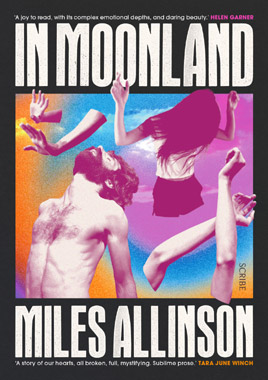
The birth of a child seems a strange time to start delving into the past, but that’s what happens in the second novel of Melbourne based Australian novelist Miles Allinson, In Moonland (published by Scribe Publications, August 2021). Rather than think about his new born daughter Sylvie, Joe is intent on finding out more about his father, Vincent, who died when Joe was seventeen.
Vincent was a temperamental man, kind one minute, aggressive the next, who once spent time at a spiritual retreat in India. After catching up with Vincent’s surviving friends, Joe discovers something happened in India which had a profound impact on Vincent. Despite what Joe learns though, many questions about his father’s life remain unanswered.
At the time of his death, it was suggested Vincent was trying to stage a car accident so he could make an insurance claim, but Joe discovers that may not have been the case after all. In later years, Sylvie narrates the story, as she travels to meet her estranged father Joe, in a country since ravaged by climate change, and governed by an authoritarian leader.
RELATED CONTENT