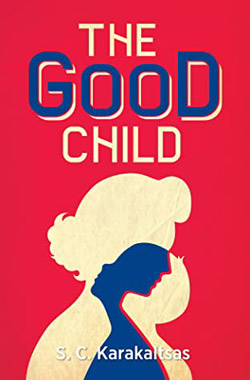
Tom’s a con artist. He might have been the big-wig at a major Australian financial institution, but he’s still a shyster. He’s fleeced thousands of people of their life savings and other assets. But he’s been found out, caught, and is due to have his day in court. Although not directly victim, two other women are caught up in Tom’s web of deception. His seventy-two year old mother, Lucille, and Quin, a former colleague who played a part in enabling Tom.
Lucille and Quin meet on a train bound for Melbourne. Both are en route to Tom’s trial, but at first neither realises who the other is. Lucille is devastated by Tom’s illicit activities. But that’s not all. She’s lost everything. She has no savings, no home, and on top of that, she feels responsible for everything that has happened. Perhaps if she had been less lenient on her son, not so overprotective, things might have turned out differently?
The Good Child (published by Karadie Publishing, 15 November 2021) is the fourth book from Melbourne based Australian author S.C. Karakaltsas. Told from the perspectives of Lucille and Quin, The Good Child poses the oft asked question, if you could say something to your younger self, warn them, tell them to turn left instead of right, would you try? But fanciful thinking is of little help. Both women need to find a way through this quagmire in the here and now.
Red Rocket (trailer), is the latest feature of American independent filmmaker Sean Baker. Mikey (Simon Rex) is a down on his luck former porn actor in search of a new lease of life, though his previous line of work makes looking for a new job a little tricky. Casting for Red Rocket was unconventional to say the least, with the director sometimes approaching people on the street, asking if they’d like to take part.
Network Effect, by American speculative fiction author Martha Wells, won the best novel in the Hugo Awards for 2021. Established in 1953, the Hugos celebrate the best science fiction and fantasy written works – across a number of categories – of the past twelve months.
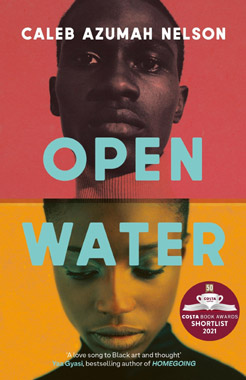
Two people meet in a bar in London. Both are young, both are Black British, and both are artists. She is a dancer, he a photographer. The attraction is instant, and as the two spend ever more time together, their bond only grows. They also connect through shared experiences as people of colour in a place where they are in a minority. Although both were awarded scholarships to private British schools, both felt excluded, and unable to completely fit in.
Despite the passionate love they discover in each other, he hides a trauma, one he struggles to resolve. Partly, perhaps, because he still encounters the violence and fear he previously endured. Every day the two come face to face with racism and vilification on the streets of London. But his struggle, one he cannot articulate even to her, causes him to withdraw, to hide behind silence. She is devastated by the apparent rejection, left reeling and confused.
Open Water (published by Penguin Books Australia, February 2021) is the debut novel of London based British-Ghanaian author and photographer Caleb Azumah Nelson. Written in the second person, with prose that is sometimes described as poetic, Open Water is perhaps more of novella, weighing in at about one-hundred and sixty pages. But don’t make the mistake of thinking the word count detracts from the story’s impact.
In Nine Days (trailer), the first feature of Japanese Brazilian filmmaker Edson Oda, a group of people who take form as unborn souls, vie for the chance to live a life on Earth. Not only must the candidates prove their worthiness, they must wait for a vacancy to open up, in other words, the death of someone else. If they missed out on being selected, they face certain destruction.
It took two years to get rid of all the grog – and the lovely wine rack. I kept it close at hand to remind myself that it’s my choice not to drink, because I could, at any moment, if I wanted. I don’t need that reminder any more. And I’ll try to forget the anniversary, too. Let it all slip by, content in the knowledge that I’ve moved on.
Entries are open for the Minds Shine Bright writing competition, until Monday 28 February, 2022. An initiative created by Melbourne based Australian writer and film maker Amanda Scotney, Minds Shine Bright seeks to encourage excellence in writing, particularly fiction. If you’re a writer of fiction, poetry, or script-writing, looking for some recognition, and a financial incentive, this may be the opportunity you’re looking for.
Can distraction-free devices change the way we write, asks Julian Lucas, writing for the New Yorker. A writing app, a word processor, one that cuts out the clutter, menu bars, formatting options, font choices, and all the impedimenta that might distract us: would we be more productive as writers if that were the case?
But focus mode on an everything device is a meditation room in a casino. What good is it to separate writing from editing, formatting, and cluttered interfaces if you can’t separate it from the Internet? Even a disconnected computer offers plenty of opportunities for distraction: old photographs, downloaded music, or, most treacherous of all, one’s own research. And so, just as savvy entrepreneurs have resuscitated the “dumb” phone as a premium single-tasking communication device, it was perhaps inevitable that someone would revive the stand-alone word processor.
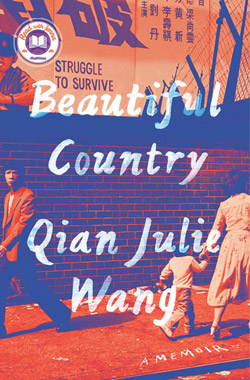
Mei Guo is what Qian Julie Wang’s parents called America, before the family left their native China to start new lives in what they believed to be the beautiful country. Once on the ground though, what they saw and experienced was anything but beautiful. Wang’s parents, who in China held down academic careers, found themselves working in below minimum wage jobs, earning barely enough money to keep a roof over their heads.
Beautiful Country (published by Penguin Books Australia, September 2021) is a no holds barred account of the childhood of New York litigator Qian Julie Wang, as an undocumented immigrant. Here Wang recounts contending with racism, poverty, and loneliness, among other things, while maintaining the façade the family’s papers were in order, she was of American birth, and they were residing legally in the beautiful country.
It may be a cliché to go and say the grass is not greener on the other side, at least not at first, but from this life on the run, Wang rose above every obstacle before her. She studied law while working four part time jobs, and now manages an organisation that advocates for education and civil rights. As a footnote, Wang composed her memoir on a smartphone during her commute to and from work, a detail the time-poor authors among us will find notable.