
November is NaNoWriMo bad writing and vomit texts incoming
7 November 2022
It’s November and that means it is NaNoWriMo (National Novel Writing Month) time. Writers, whether new or established, have thirty days to pen a fifty-thousand word manuscript. That works out to about seventeen hundred words a day. A daunting task for sure, but it wouldn’t be much of a challenge if it were easy.
NaNoWriMo doubtless makes for an enjoyable way to while away cool autumn days for northern hemisphere participants. A Camp NaNoWriMo event is also held in April and July, and might suit writers based south of the equator, who’d rather be away from their laptops, enjoying the spring weather in November.
And while the vast majority of works produced during NaNoWriMo seldom sees the light of day, the event has launched the careers of several authors. But it’s not for everyone, and some writers are critical of NaNoWriMo. They say the tight deadline encourages bad writing, as people scramble to reach the fifty-thousand word target.
It’s one reason science fiction author and game developer, and past participant, Dale Thomas gave up on NaNoWriMo. But Thomas goes further than describing some NaNoWriMo output as “bad writing”. To his mind, vomit texts make for a more apt metaphor:
You see, the big problem I have with the challenge is that it forces me to write fast. Too fast for my liking. I end up vomiting all over my writing application. And because only wordcount matters and the clock is ticking, there is no time to wipe the drool from my mouth, no time to find a damp cloth to clean up the mess. The vomit just sits there, drying out, and day after day I vomit afresh. Layer upon layer of disgusting, half-digested ideas, dripping all over the once pristine white page.
RELATED CONTENT
Casual and on-demand workers feel forced to work if unwell
6 November 2022
Covid has not gone away. In fact there are concerns a new wave of infections may be building. And while those who have the means — including people who can work from home — may be able to stay out of Covid’s way, not all workers are so fortunate. Especially vulnerable are casual and gig-economy workers. If they don’t show for work, they don’t get paid. There is a fear some of these people will nonetheless choose to work, even if they have Covid, simply because they have no choice.
A recent survey conducted by the Australian Council of Trade Unions, found almost forty-percent of casual workers go to work if they are injured or unwell:
It found 37 per cent of workers in insecure jobs — including contractors, casuals, part-time and gig-economy workers — say they’ve worked while injured. Labor market economist Leonora Risse agrees it’s a big problem — and it extends to workers who turn up at work when sick. “We’ve always had some degree of insecure work in the workforce, but this is shining a light on the need to address it,” she says. Dr Risse says that employers may need their workers, but they also need them to be healthy.
I’m not sure what plans Australian governments have if there were to be another major surge in Covid cases, but it seems like lockdowns, and emergency payments for workers stricken with Covid, are off the table. But people feeling compelled to go work, so as to keep a roof over their head? This cannot end well.
Update: Professor Paul Kelly, Australia’s chief medical officer, confirmed in a television interview this morning that Covid infections have increased in the past week.
RELATED CONTENT
Rocket science may be rocket science but Twitter is something else
5 November 2022
American author Robin Sloan’s thoughts — written in April of this year — couldn’t describe the Musk acquisition of Twitter any more succinctly:
An industrialist might soon purchase Twitter, Inc. His substantial success launching reusable spaceships does nothing to prepare him for the challenge of building social spaces. The latter calls on every liberal art at once, while the former is just rocket science.
I don’t know that rocket science is just rocket science, especially reusable rocket science, but running a social network, particularly one the size of Twitter, has to be another matter all together.
Via Clive Thompson.
RELATED CONTENT
Robin Sloan, social media, Twitter
Mastodon isn’t Twitter but it can be Twitter like in good ways
5 November 2022
I’m not quite sure what to expect at Twitter, but I have no plans to depart the platform for now. In the meantime I’ve been looking at Mastodon, a highly geeky alternative to Twitter. To say there’s a learning curve to Mastodon is an understatement.
Once you get used to the differences though between the centralised domain that is Twitter, and the decentralised realms of Mastodon, the experience can be mostly Twitter like, while still being a breath of fresh air.
One thing to bear in mind is most Mastodon instances, or servers, such as aus.social, are operated privately by the individuals who set them up. So if you think Mastodon is your thing, and you’re going to be hanging around, you could consider making a contribution to help with operational costs.
The other challenge for Mastodon’s ability to scale is that it has very scarce resources compared to Twitter. Rather than relying on investors, Mastodon survives on donations, crowdfunding, sponsorships and grants. The platform is free of ads and thus doesn’t collect any of its user’s data. But, its frugality has meant it also has no real way to gain revenue the way other platforms do right now.
RELATED CONTENT
Mastodon, social media, Twitter
Susannah Begbie wins 2022 Richell Prize for Emerging Writers
3 November 2022
Australian doctor Susannah Begbie has been named winner of the 2022 Richell Prize for Emerging Writers, with her manuscript titled When Trees Fall Without Warning.
Her work, When Trees Fall Without Warning, which took ten years to write, is an expertly told, compelling work of commercial fiction. Instantly captivating, with characters alive with personality who ring emotionally true, this is an original and lively narrative that creates memorable insights into a dysfunctional family dynamic. The Richell Prize judges have no doubt that Susannah is a writer with the ability to create an ongoing literary career.
So good to see that ten years of writing looks like it will result in a published work.
RELATED CONTENT
Australian literature, literary awards, Susannah Begbie
The Climate Book by environmental activist Greta Thunberg
3 November 2022
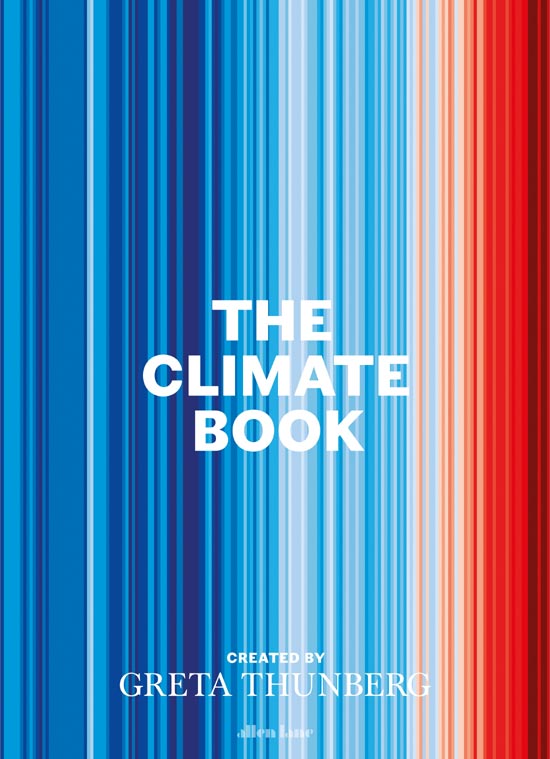
The Climate Book, written by Swedish environmental activist Greta Thunberg, and published this month by Penguin Books, sets out the facts about climate change, and outlines solutions for dealing with it. As Thunberg says, we need to act now, if we want to make a difference.
In The Climate Book, Greta Thunberg has gathered the wisdom of over one hundred experts – geophysicists, oceanographers and meteorologists; engineers, economists and mathematicians; historians, philosophers and indigenous leaders – to equip us all with the knowledge we need to combat climate disaster. Alongside them, she shares her own stories of demonstrating and uncovering greenwashing around the world, revealing how much we have been kept in the dark. This is one of our biggest challenges, she shows, but also our greatest source of hope. Once we are given the full picture, how can we not act? And if a schoolchild’s strike could ignite a global protest, what could we do collectively if we tried?
RELATED CONTENT
climate change, environment, Greta Thunberg
Penguin Random House, Simon & Schuster merger blocked
3 November 2022
The proposed merger of book publishers Penguin Random House and Simon & Schuster has been blocked — at least for now — by the U.S. District Court. The idea, first mooted in late 2020, has drawn the ire of many in the publishing industry, who fear the combined entity, and the influence it could wield, would be detrimental to authors and readers alike.
But it was still a dramatic departure from recent history in the book world and beyond. The publishing industry has been consolidating for years with little interference from the government, even when Random House and Penguin merged in 2013 and formed what was then the biggest publishing house in memory. The joining of Penguin Random House and Simon & Schuster would have created a company far exceeding any rival and those opposing the merger included one of Simon & Schuster’s signature writers, Stephen King, who testified last summer on behalf of the government.
RELATED CONTENT
Emily Bitto wins 2022 Roderick Literary Award with Wild Abandon
3 November 2022
Melbourne based Australian author Emily Bitto has been named winner of the 2022 Roderick Literary Award, with her 2021 novel Wild Abandon.
Two hundred and thirty entries — a record number — were received for the 2022 award. All were of a high standard, which made selecting a shortlist, let alone a winner, difficult, according to Emeritus Professor Alan Lawson, who headed up the judging panel.
A lot of very good books just didn’t make the shortlist. But in the end Emily Bitto’s extremely well-crafted account of a young Australian man’s ‘escape’ to New York and then into the US heartlands after the breakdown of his first serious relationship — a coming of age and into self-knowledge story set against a richly symbolic and allusive account of the decline of civilisations — won the prize.
RELATED CONTENT
Australian literature, Emily Bitto, literary awards
Archibald winning Australian artist Nicholas Harding dies
3 November 2022
British born Australian artist Nicholas Harding died yesterday, aged 66. Harding won the Archibald Prize for portraiture in 2001 with a painting of Australian actor and theatre director John Bell as King Lear. In addition, Harding was named an Archibald finalist a staggering nineteen times, between 1994 and 2020.
RELATED CONTENT
Archibald Prize, art, Australian art, Nicholas Harding
Novelist as a Vocation by Haruki Murakami
1 November 2022
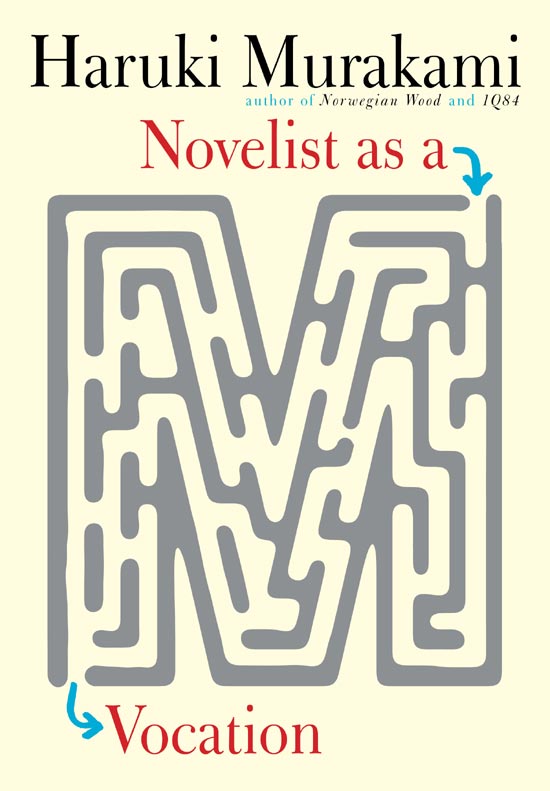
Despite what you might see on bookstagram, the stages of many a literary festival, and many other places, writers are not, and cannot be, friends with each other.
They “are are basically an egoistic breed, proud and highly competitive“, contends Japanese author Haruki Murakami. We’re not here to make friends, we’re here to write books. And if anyone would know, Murakami would. With fourteen novels to his name, no one can say he wouldn’t know.
This is but one nugget of wisdom Murakami shares in his latest title, Novelist as a Vocation, published by Penguin Books, where he writes about being a novelist:
Haruki Murakami’s myriad fans will be delighted by this unique look into the mind of a master storyteller. In this engaging book, the internationally best-selling author and famously reclusive writer shares with readers what he thinks about being a novelist; his thoughts on the role of the novel in our society; his own origins as a writer; and his musings on the sparks of creativity that inspire other writers, artists, and musicians. Readers who have long wondered where the mysterious novelist gets his ideas and what inspires his strangely surreal worlds will be fascinated by this highly personal look at the craft of writing.
RELATED CONTENT