
Earth’s climate change black box
9 December 2021
An aircraft’s black box contains data that may help investigators piece together what caused an accident, and hopefully ensure there isn’t a repeat of whatever went wrong. What then to make of Earth’s Black Box? It is a quadrilateral-like shaped structure that will stand in a geologically stable location, on the west coast of Tasmania, and collect climate data. Like an aircraft flight recorder, the information Earth’s black box stores is intended to one day guide a future civilisation, should global warming spell the demise of ours. Thank you, and have a nice day.
RELATED CONTENT
Working from home is bad for your chess moves, and complicated work tasks
9 December 2021
Reports of a “new” study analysing the performance of chess players who were participating in tournaments, online from home, during the pandemic, and the subsequent impact on their game, were crossing the wires yesterday. I’m not sure such a study is exactly new though, I found reports about similar research dating back to at least a year ago when I went to find out more.
Regardless, it seems the home office may not be the best place for carrying out certain mentally demanding tasks, a finding made after looking at the quality of some chess players moves which apparently were not to up to the usual standard, while they were playing from home:
According to Dr Dainis Zegners: “Chess is, in many ways, is similar to the work of the knowledge society’s office workplaces: the game is strategic, analytical and takes place under time pressure. Cognitive skills used in chess are also used for complicated tasks and strategic decision making such as drafting a legal contract, preparing a tender document or managerial decisions – the kind of tasks that require clear and precise thinking.
The approach some organisations are taking in having employees present in the workplace a few days a week may then be sensible. Come into the office when something taxing needs doing, and then stay home the rest of the time. As long as we don’t have to spend five full days in the office.
RELATED CONTENT
Good Weekend’s Christmas reading guide 2021
8 December 2021
I’m sure we’re going to be seeing a few of this lists over the next few weeks, but the 2021 reading guide from Good Weekend, contains some choice titles, fiction and non-fiction.
RELATED CONTENT
The Beautiful Words, by Vanessa McCausland
8 December 2021
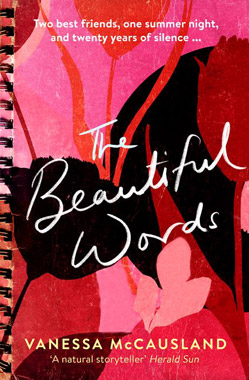
Once inseparable, childhood friends Sylvie and Kase haven’t spoken to each other in decades, following a tragedy at the lighthouse one night when they were teenagers. But when out of the blue, Sylvie is invited to Kase’s fortieth birthday party, she begins to yearn for her lost friendship with Kase, and a life she perhaps may have lived differently.
Set between Sydney’s Palm Beach, and an island near Bruny Island, off the coast of Tasmania, The Beautiful Words (published by HarperCollins Publishers, December 2021), is the third novel by Sydney based Australian author Vanessa McCausland. Sylvie learns Kase has enjoyed success as an author in the intervening years, as have the people she surrounds herself with. But despite Kase’s aura of happiness, the now solitary Sylvie, who feels ill at ease among Kase’s ambitious friends, is certain she can detect a discontent simmering below the surface.
But the reunion does more than disturb the slumbering ghosts of their own pasts, and Sylvie and Kase soon discover their mothers, Franny and Eve, had secrets of their own. But in trying to understand happenings that took place before they were born, Sylvie and Kase must confront events that lead to the disintegration of their once close friendship.
RELATED CONTENT
fiction, TBR list, Vanessa McCausland, writing
Victorian Premier’s Literary Awards 2022 shortlist
7 December 2021
The shortlists for the 2022 Victorian Premier’s Literary Awards were announced yesterday. Prizes of twenty-five thousand dollars are awarded across six categories that include Indigenous writing, fiction, and poetry. A fifteen thousand dollar prize is also awarded for the best unpublished manuscript. It’s my guess anyone whose work is even shortlisted in the unpublished manuscript will not remain unpublished for long. The awards are administered by the Wheeler Centre, and the winners will be named on Thursday, 3 February 2022.
RELATED CONTENT
Australian writing, literature
Australia’s lending rights scheme needs to recognise ebooks
6 December 2021
In Australia, when you borrow a print novel from a library, the author is eligible to receive a small payment, as a compensation for missed book sales. Surprisingly though, if you loan one of their titles through a library ebook service, such as Libby, writers are not recompensed. This is because Australia’s lending rights scheme does not – yet – recognise electronic books and audiobooks, despite – in some cases – an eighty percent increase in ebook lending in recent years. It is a situation Olivia Lanchester, CEO of the Australian Society of Authors, says needs to be rectified.
“If it only remains applicable to the print world, and libraries are increasingly reducing their print collection, then over time our fear is that the payments will go to fewer and fewer Australian authors,” Lanchester said. “We want it to be a broad-based scheme that really captures everyone whose books are being read via libraries.”
RELATED CONTENT
Anna Downes and Christian White discuss their novels
6 December 2021
Australian authors Anna Downes and Christian White discuss their novels The Shadow House, and Wild Place respectively, with Kate Mildenhall. I’ve previewed both titles, but am surprised at the commonalities the two novels share. Listen in on The Readings Podcast. There’s a few little glitches in the playback, but sit tight for a minute and all will be well.
RELATED CONTENT
Anna Downes, Christian White, Kate Mildenhall
Searching for the definition of Vapor Soul music
4 December 2021
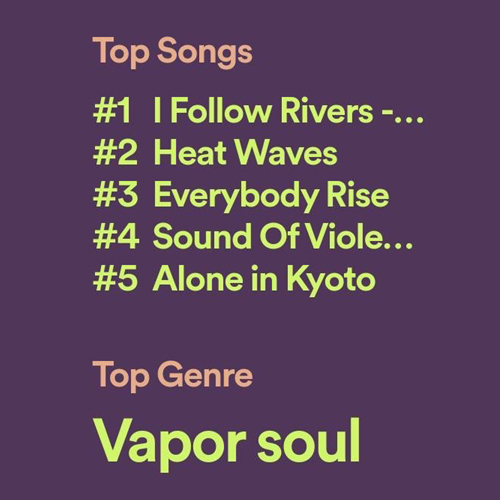
I’ve spent the last few days, since my Spotify Wrapped compilation for 2021 landed earlier this week, finding out what I can about a music genre called vapor soul; or, as I prefer to spell it: vapour soul. According to Spotify Wrapped, vapour soul was the genre I listened to the most over the last twelve months.
That’s fascinating because I had no idea the majority of the music I consumed during 2021 was vapour soul. In point of fact, I didn’t even know vapour soul existed until this week. Yet when I went looking, I found references to vapour soul that were almost four years old. Brilliant. Vapour soul has been a thing for years, but I only find out about it in the closing days of 2021.
But while vapour soul has a history, I still didn’t have a definition. To that end I went straight to the source, Spotify, or more precisely, the Spotify Community Blog. A search yielded a few results for vapour soul, but they were mainly the playlists of members, whose selections included vapour soul tracks. So I cast the net a little further out, where I found an in-depth article at Phases which summarises vapour soul thusly:
From what I can tell, vapor + soul = mellow-sounding/ear-pleasing music featuring fluid sounds, life-giving production and lyrics based in an uncertain or somewhat sad state of mind.
That might describe some of the music I listen to, but glancing at my top five listened-to tracks of 2021, which include The Sound of Violence by Dennis De Laat, I Follow Rivers by Lykke Li, and Everybody Rise by Amy Shark, I couldn’t say they are tracks “based in an uncertain or somewhat sad state of mind.” I decided to keep searching. That took me to an article by Cara Houlton at The Focus, where I discovered there is an apparently related genre known as vapour twitch:
Whilst some Spotify users might only just be seeing the genre vapor twitch for the first time on their Wrapped in 2021, the genre has been appearing since 2019. A micro-genre of electronic music, ‘vapor’ can be best described as having a foggy, ethereal sound, whilst ‘twitch’ adds post-futuristic EDM beats.
There’s another useful definition of vapour. If twitch refers more to post-futuristic EDM beats, then the soul in vapour soul derives – maybe – from soul music, defined here by dictionary.com:
A fervent type of popular music developed in the late 1950s by Black Americans as a secularized form of gospel music, with rhythm-and-blues influences, and distinctive for its earthy expressiveness, variously plaintive or raucous vocals, and often passionate romanticism or sensuality.
I guess I could see a “passionate romanticism or sensuality” in some of the music I’ve listened to in the last year. So far though, I’ve not found a simple, five to ten word, definition of vapour soul that gives me the succinct clarify I crave. Next I tried that veritable favourite stand-by of many, Urban Dictionary:
BS edgy genre made up by an international media services provider of Swedish origin. Artists: unknown.
“Artists unknown” sounds about right, as does BS. I’ll defer to Wikipedia again, where Spotify Wrapped is described as “a viral marketing campaign.” If the goal is to get people talking, then the marketing campaign succeeded. In the end then I still may not fully understand what vapour soul is, but it is kind of cool to be listening to a genre of music that seems to flummox even its adherents.
RELATED CONTENT
What is the best book of the past 125 years?
3 December 2021
Voting is opening until a few seconds before midnight, Sunday, 5 December 2021 (ADST) for The New York Times best book of the past 125 years. Yes, you read that correctly, the past one-hundred-and-twenty-five years. How you chose the best book of the last twelve months is a challenge, if you ask me, let alone the last century and a quarter. Somehow though, thousands of nominations were whittled down to a shortlist of just twenty-five titles. Go now and cast your vote.
RELATED CONTENT
Winners of the Australian Podcast Awards 2021
3 December 2021
Last night the winners of the Australian Podcast Awards were announced, at an event hosted by Sydney’s venerable Ritz Cinema. The Podcast of the Year award went to Private Affairs – which also won Best Fiction Podcast – a show billed as a “romantic-dramedy fiction podcast about a couple learning how to navigate the complexities of an interracial and intercultural relationship.” Former Australian Prime Minister Julia Gillard won The Spotlight Award with her production A Podcast of One’s Own with Julia Gillard, while Tough Love, by Sydney based radio host and musician Linda Marigliano, took out the Best Lockdown Podcast.
RELATED CONTENT