
Showing all posts about Australian literature
New Australian books and TBR ideas, 24 February 2023
24 February 2023
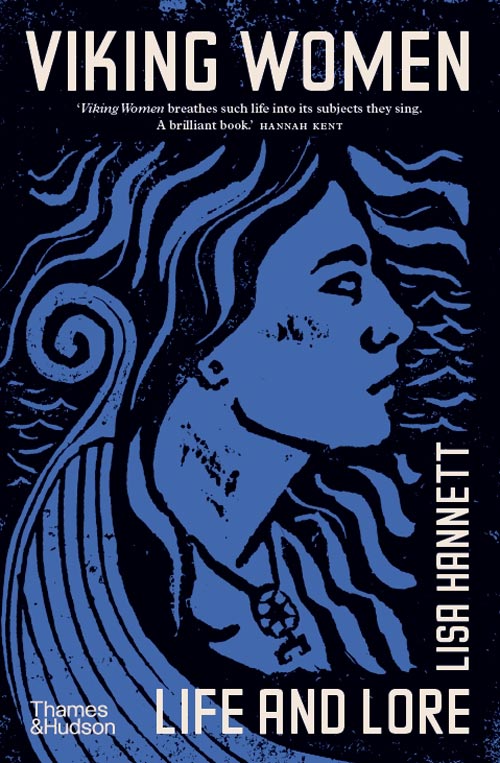
Here’s a selection of Australian written books, either recently published, or in the pipeline, that I’ve spotted in the last week, for the consideration of your TBR list.
- Viking Women by Lisa Hannett, tells the stories of the wives and mothers, girls and slaves, widows and witches, who sailed, settled, suffered, survived, and thrived, in the patriarchal society of the Vikings.
- Desi Girl: On feminism, race, faith and belonging by Sarah Malik, is a collection of short stories exploring the complexities of living between different worlds as a young Pakistani-Australian woman growing up in the west of Sydney.
- Locked Ward by Anne Buist. A psychiatrist discreetly seeking treatment for a sleeping disorder at a private psych facility becomes embroiled in a murder investigation. But not because she was present at the time, but because she knows everyone involved in the case.
- The Albatross by Nina Wan. Primrose is a woman at a personal and professional crossroads in her life, who suddenly decides to take up golf. Despite a shaky start to her game, golfing proves to be a panacea for many of her problems.
- The Heart Is A Star by Megan Rogers. Layla is a middle-aged woman dealing with a failing marriage, a demanding job, her children, an overly dependant lover, and exhaustion. Things only get worse when Layla’s overwrought mother calls to say there’s something pressing about her father she needs to know.
RELATED CONTENT
Anne Buist, Australian literature, books, Lisa Hannett, Megan Rogers, Nina Wan, Sarah Malik
Apartment 303, a new Australian thriller by Kelli Hawkins
23 February 2023
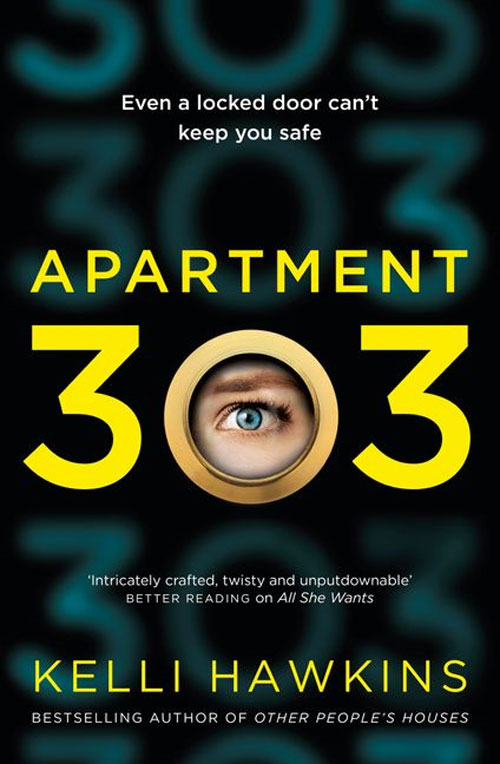
Twenty-something Sydneysider Rory is ready for a prolonged period of isolation. Her job, writing reports for a private investigator, means she doesn’t need to leave her apartment building for work. She has a pet dog to keep her company, and the roof area of the building is a fine place to exercise and walk the dog. Rory is also possessed of a vivid imagination. She has even given backstories, of her own making, to some homeless people, whom she never spoken to, camping over the road.
Lockdown is going to be kind to Rory. But there’s only one thing. The COVID-19 lockdowns are no more. Rory’s confinement is self-imposed. Her fear of the outside world is so intense, she even goes all out to avoid her neighbours. Rory is a woman with a troubled past, and the gilded cage she has created is her only tonic. But the future is about to add to her woes, in Apartment 303, published by HarperCollins Australia, in March 2023, by Newcastle based Australian author, Kelli Hawkins.
When one of the homeless people across the street is murdered, Rory is forced to adjust her relationship with the outside world. She has frequent contact with police investigating the death, and also makes the acquaintance of neighbours for the first time. But not all of the knocks at the door are welcome. And when a chapter of her past, one that Rory would rather forget, comes calling, she begins to feel unsafe in her previously protective home.
Apartment 303 is Hawkins’ third novel, and like her protagonist Rory, Hawkins’ likewise writes reports for a private investigator, between working on manuscripts. And as with many writers of fiction, Hawkins’ own experiences shape her stories. Her debut novel, Other People’s Houses, published in 2021, tells the story of a woman, Kate, who spends her Saturdays inspecting houses listed for sale.
In the same way Rory finds solace by locking herself away from the world, seeing the homes of other families bring comfort to Kate, whose son who died ten years earlier. Hawkins is no stranger to viewing properties either. Between living in Australia, and stints in the United Kingdom, and America, she has been a frequent house hunter, including more recently, in tragic circumstances, following the death of her husband.
Early reviews on Goodreads have described Apartment 303 as “a slower burn thriller”, “a stirring, suburban tale of mystery, suspense and daring”, and “a page-turner”.
Having penned three novels in as many years, Hawkins’ output could be described as prolific, and another novel is probably already in progress. Hawkins has also worked as a graphic designer, political journalist, mystery shopper, and a role as a “staple remover”, in the past. I see plenty of inspiration for more stories in amongst those occupations.
RELATED CONTENT
Australian literature, Kelli Hawkins, novels
Affirm Press to publish One Divine Night by Mick Cummins
22 February 2023
Less than three weeks after winning the unpublished manuscript award in the 2023 Victorian Premiers Literary Awards, former Melbourne based social worker and screenwriter Mick Cummins has been offered a publishing deal by Affirm Press for his novel One Divine Night:
We’re elated to announce that Affirm Press has acquired world rights to One Divine Night by Mick Cummins, who recently won the prestigious Victorian Premier’s Unpublished Manuscript Award, in a deal brokered by Jane Novak Literary Agency. One Divine Nightis a gritty and compelling novel exploring homelessness, independence and the ties that bind. The story follows protagonist Aaron Peters as he becomes estranged from his family, addicted to heroin, and ends up living on the streets of Melbourne but yearning for a different life.
It is anticipated One Divine Night will be in bookshops by late 2023.
RELATED CONTENT
Australian literature, books, Mick Cummins, novels
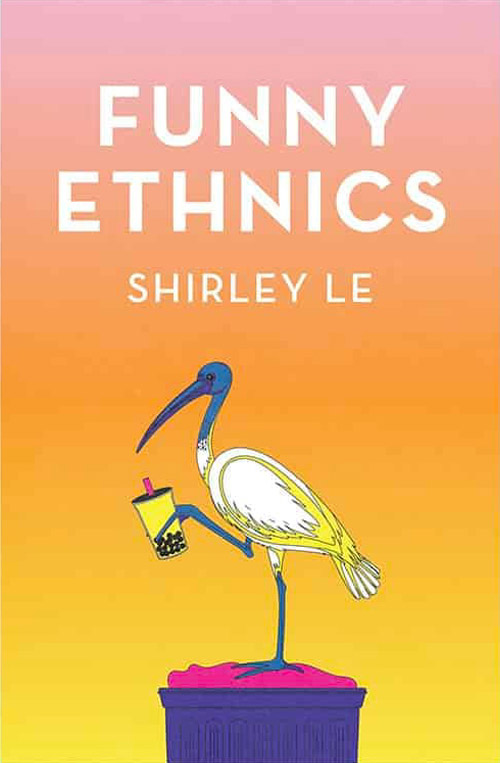
Funny Ethnics, the debut novel of Sydney writer Shirley Le
19 February 2023
Yagoona is a suburb in the southwest of Sydney, located about twenty kilometres from the city’s CBD. An Aboriginal word meaning “now” or “today”, Yagoona was accorded a unique claim to fame in 1971, when it became host to the first McDonald’s hamburger restaurant in Australia.
At this stage I could not tell you whether said hamburger restaurant features in any way in Funny Ethnics (published by Affirm Press in February 2023), the debut novel of Sydney based Australian author Shirley Le, which is also set in Yagoona.
It is possible though, as the story follows the fortunes, and misfortunes, of Sylvia Nguyen, a second generation Vietnamese-Australian, from childhood through to adulthood. Surely it is not unreasonable to assume Sylvia would have hung out at her local Macca’s with friends after school, as was a rite of passage for many Australian teenagers.
But even if Sylvia spent all her school days in the Yagoona McDonald’s, it seems doubtful she would have had much interest in the restaurant’s significance in Australian fast food history. That’s because Sylvia had lofty goals. She aspired to move out of her childhood home, leave Yagoona and Western Sydney behind, and move into a share house, in a world far removed in Sydney’s inner west.
But hardships run in tandem with the dreams. The city is not always welcoming of immigrants. Racism is rife. Sylvia struggles to balance her Vietnamese heritage with her Australian identity.
Whether Sylvia’s experiences mirror Le’s, also a second generation Vietnamese-Australian, is another matter though. The question of how much of her life goes into her writing is something Le says she is often asked. Speaking to Stephen Pham of Liminal magazine in 2018 however, Le said she considered herself a writer of literary fiction rather than autobiography. And in Funny Ethnics, Le seems more interested in taking the ordinary, the apparent hum-drum of day-to-day life, and transforming it into something extraordinary.
While Funny Ethnics is Le’s first novel, her name will be familiar to anyone with an interest in Australian literature. A member of Western Sydney literacy movement Sweatshop, Le’s short stories and essays have been published locally in Meanjin, Kill Your Darlings, Overland, SBS Voices, and The Lifted Brow, among others. Le was also the inaugural recipient of the Affirm Press Mentorship for Sweatshop Writers, together with Arab-Australian human rights activist Sara Saleh.
RELATED CONTENT
Australian literature, novels, Shirley Le
New Australian books and TBR ideas, 17 February 2023
17 February 2023
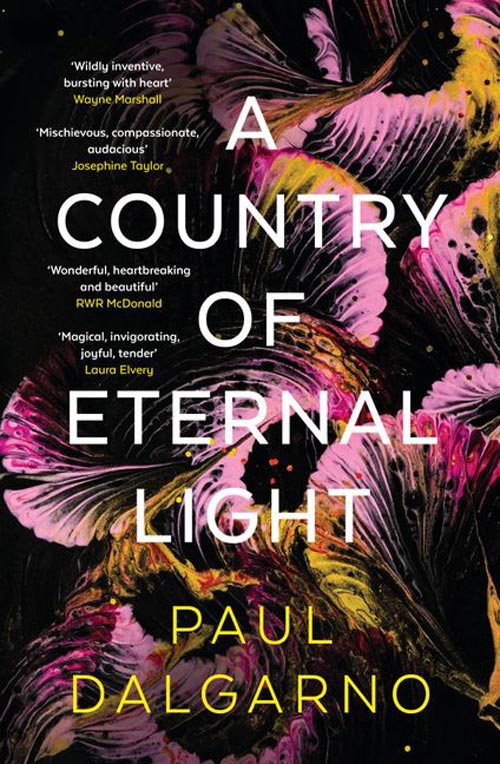
Here’s a selection of recent or upcoming Australian published books to add to your TBR list, that have caught my eye this week.
- The Bookbinder of Jericho by Pip Williams — follow up to 2020’s The Dictionary of Lost Words — a story about twin sisters working in the bindery at Oxford University Press during World War I.
- The Wakes by Dianne Yarwood. Funerals, failing marriages, and a catering business, are the ties that bind five people, to greater or lesser degrees, in Yarwood’s fiction debut.
- Gigorou by Sasha Kutabah Sarago. The beauty assistant, model, and magazine editor recounts her journey to reconcile her conflict with beauty.
- The Messiah’s Bride by Megan Norris. The harrowing story of Stefanie Hinrichs, a survivor of an Australian doomsday cult, who was forced to become the child bride of the cult’s leader.
- A Country of Eternal Light, by Paul Dalgarno. A dead woman travels back and forth through time, and around the globe, as she seeks meaning in life and death.
RELATED CONTENT
Australian literature, books, Dianne Yarwood, Megan Norris, Paul Dalgarno, Pip Williams, Sasha Kutabah Sarago
All That’s Left Unsaid, debut fiction by Tracey Lien
15 February 2023
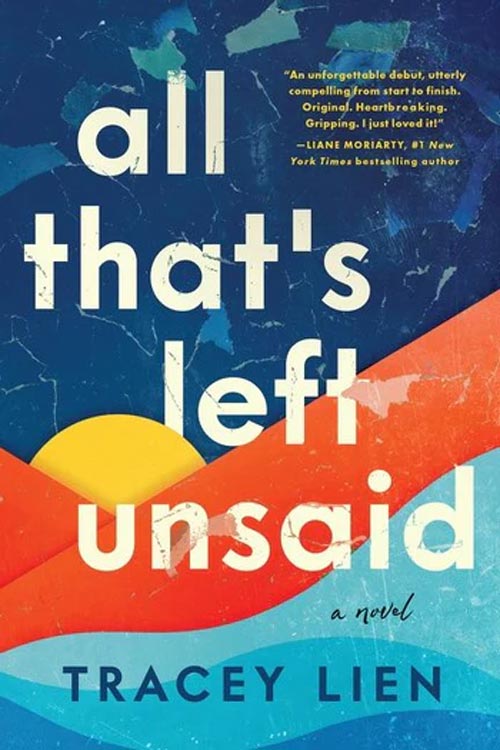
There are ways to begin a writing career, and there are ways to begin a writing career. Your first novel being the subject of a manuscript bidding contest, and then making the shortlist of a major literary award once published, would probably rate as a pretty good start in the eyes of most pundits.
This is what happened to Sydney based Australian journalist and author Tracey Lien, and her novel All That’s Left Unsaid, published in September 2022 by HarperCollins Australia. So intense was enthusiasm for Lien’s manuscript, it was reported no fewer than nine publishing houses slugged it out for the publishing rights.
Frantic auctions for manuscripts are not uncommon, but they’re not exactly every day occurrences either. In 2021, American author Olivie Blake also found herself, and the manuscript of her book The Atlas Six — which she had already self-published — at the centre of a lucrative bidding contest that was sparked on TikTok.
But Lien’s story continues. Soon after being published, All That’s Left Unsaid was shortlisted in the debut fiction category of the 2023 Indie Book Awards. Needless to say, this is a novel that packs a punch. Ky Tran, a young woman is forced to return to Australia after her younger brother, Denny, is murdered in a busy restaurant, in the Sydney suburb of Cabramatta.
Despite the presence of numerous bystanders though, no one seems to know anything about how Denny died. With local police seemingly uninterested in the case, Ky sets about contacting, and talking to, each of the witnesses present when Denny was killed. But All That’s Left Unsaid is more than a murder story.
Lien’s novel lifts the lid on a troubled area of Sydney — also home to a large refugee population — during a difficult chapter in its history. The streets were awash with drugs and violence. Cabramatta is also where Australia’s first political assassination took place, when John Newman, a New South Wales State parliamentarian was killed outside his home in 1994.
Emma Finn, of London based literary agency C&W Agency described Lien’s manuscript as “electrifying and compulsive”, at the time the publishing rights were acquired. One can only wonder what might be next for Lien, and All That’s Left Unsaid. Blake’s novel The Atlas Six is in the process of being adapted for TV, and given interest thus far in Lien’s debut, a screen adaptation hardly seems like a surprise. Time will tell.
The winners of the Indie Book Awards will be announced on Monday 20 March 2023.
RELATED CONTENT
Australian literature, books, literature, novels, Tracey Lien
Astronomy, Sky Country by Karlie Alinta Noon, Krystal De Napoli
14 February 2023
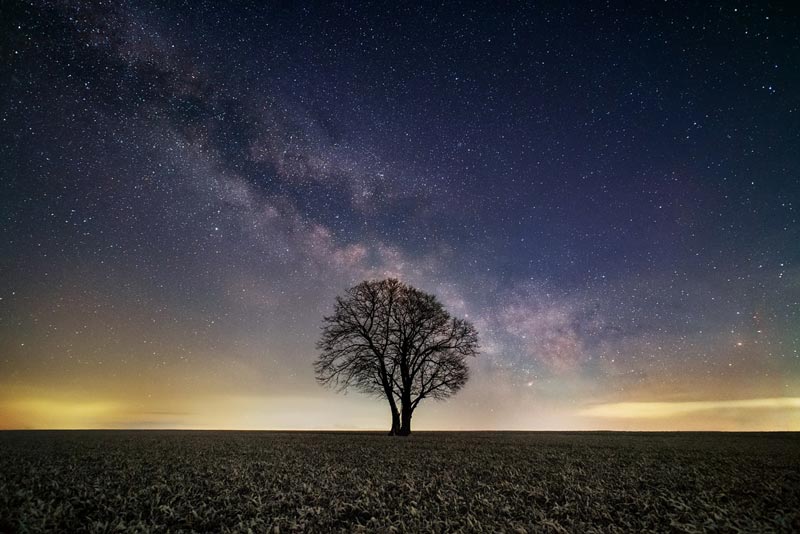
Image courtesy of Evgeni Tcherkasski.
“Aboriginal and Torres Strait Islander people are the oldest scientists in human history.”
Learning this may come as a surprise to readers of Astronomy, Sky Country, written by Karlie Alinta Noon and Krystal De Napoli, and published by Thames & Hudson, winner of the People’s Choice Award in the 2023 Victorian Premier’s Literary Awards.
Because, for instance, were not the Assyro-Babylonians, in Mesopotamia, in south west Asia, documenting their scientific and astronomical research, over three thousand years ago? They were, but Indigenous peoples living in Australia had been making, and recording, astronomical observations tens of thousands of year earlier.
Unlike the Assyro-Babylonians though, who inscribed their knowledge onto tablets and the walls of temples, First Nations Australians recorded information, including astronomical knowledge, differently. Knowledge and stories was passed from generation to generation through word of mouth, cultural rituals, and Songlines.
Songlines were memorised descriptions of pathways or tracks used by Indigenous Australians to guide them from one place to another across country, and included instructions on how to travel, and landmarks to guide their journey. Songlines also contained protocols to observe when crossing other Indigenous peoples’ lands, or country.
But far longer journeys, to destinations a great distance from country, and, on occasions, beyond the Australian continent, required different means of navigation. This is where Indigenous Australians looked to the sky and the stars. This meant travelling overnight when the stars were visible, and when it was also a little more comfortable than trekking through the heat of day.
Torres Strait Islanders, for instance, navigated by a large constellation named Tagai, one of the creator beings. The Tagai group of stars embodies the constellations of Scorpius, the Southern Cross, and Corvus. These three star groups can be seen in the lower left hand quadrant of this constellation map at Nature Noon.
But Tagai was not solely a navigation guide, the constellation also played a role as a timekeeper. Tagai’s movement across the sky as the year progressed, marked the passing of seasons, and acted as a calendar of sorts, indicating times to hunt for food, or harvest crops.
Planets also assisted some Indigenous Australians with navigation, including Venus. Venus was also a part of some Songlines containing cultural lessons and protocols.
Through Astronomy, Sky Country, Karlie Noon, a Gamilaraay astronomer and science communicator, and Krystal De Napoli, a Kamilaroi astrophysicist and educator, bring, through the lens of the cultures of Indigenous Australians, a new understanding to the science of astronomy.
Contemporary astronomical knowledge, for its importance, value, and indeed fascination, is analytical and systematic. Scientists and astronomers of recent centuries have been more concerned with comprehending, and classifying stars as mere stellar objects. Red giant star or red dwarf? What distance are they from Earth, and each other?
But stars are not mere points of light in the night sky. They are also entities that guide, teach, and tell stories. While Indigenous Australians are not the only early cultures to embed legends, stories, and knowledge, in the planets, stars, and constellations, they are among the first.
RELATED CONTENT
astronomy, Australian literature, books, Indigenous literature, Karlie Noon, Krystal De Napoli
Palimpsest by Florina Enache, Australia’s 2022 Novel Prize contender
12 February 2023
Image courtesy of Valerio Errani.
The winner of the 2022 Novel Prize is due to be announced any day now. The award is a collaboration between Australian publishing house Giramondo, and international counterparts Fitzcarraldo Editions in Britain, and New Directions in the United States. Celebrating works of literary fiction that “are innovative and imaginative in style,” the Novel Prize is presented every two years, for unpublished manuscripts, regardless of whether the author has prior published work or not.
The inaugural prize was won by Melbourne based Australian author Jessica Au for her second book, Cold Enough for Snow, in 2020, which also won this year’s Victorian Prize for Literature.
But in 2023 the big question is, can another Australian writer take out the award, and make it two in a row for Australian literature? While that may be wishful thinking, the odds are the same as in 2020, with only one Australian author, Florina Enache, on the 2022 shortlist, for her manuscript Palimpsest. As a coincidence though, another of the Novel Prize 2020 shortlisted writers, Glenn Diaz, a Manila based Pilipino writer, happened to be studying in Australia at the time.
Enache, who like Au calls Melbourne home, was born in Romania, and immigrated to Australia in 2005. Her first book, An-Tan-Tiri Mogodan, published by Adelaide Books in August 2019, is a collection of twelve short stories, depicting ordinary life in a totalitarian regime. An-Tan-Tiri Mogodan went on to be shortlisted in the 2020 NSW Premier’s Literary Awards for new writing.
Totalitarian regimes seem to be a recurring theme in Enache’s work. Palimpsest is set in the days prior to the observance of a holiday called National Day. Participation is mandated by the nation’s oppressive government, and citizens are required to attend observances, referred to as “the great spectacle”, in the capital city.
Should Enache follow in Au’s footsteps and be named winner of the Novel Prize, her manuscript will be published by the three Novel Prize collaborating book publishers. In addition, Enache — or whoever the winner is — will receive US$10,000 in the form of an advance against royalties.
RELATED CONTENT
Australian literature, Florina Enache, literary awards, literature, novels
Hazel Edwards, do not tell me who I cannot write about
11 February 2023
Australian author Hazel Edwards, writing for the Sydney Morning Herald:
I’m not Indigenous. I’m not Muslim. I’m not a refugee. I’m not transgender. I’m not disabled. And I’m not a hippopotamus who eats cake. But as a professional author of more than 200 books across 50 years, I’ve always used diverse characters from varied backgrounds and ages in all my stories. And as a 70-ish, white grandmother, I find this diversity is increasingly being challenged. It seems to me the prevailing literary attitude is that I must not write of other cultures in which I was not raised. The term “cultural appropriation” is being used to silence potential writers.
Not sure how popular I’ll be for saying this, but I think any respectful author who has thoroughly researched their subject matter, and takes a respectful tone, should be able to write on any topic.
RELATED CONTENT
Australian literature, Hazel Edwards, writing
One Divine Night, by Mick Cummins, unpublished manuscript winner
11 February 2023
Image courtesy of Todabasura.
Last week, former part-time social worker Mick Cummins was named winner of the unpublished manuscript prize in this year’s Victorian Premier’s Literary Awards.
While the prize comes with a handy fifteen thousand dollars in cash, the real payoff is the profile the win generates. After One Divine Night was included on the Victorian Premier’s shortlist in December 2022, Melbourne based Cummins says a number of publishers contacted him, asking to see the manuscript.
An approach from a publisher expressing interest in their work is a dream come true for any aspiring writer. More usually, a novice author might spend years trying to get a publisher or literary agent to take an interest in their idea.
The value of recognition like this cannot be overstated. In fact, I’d be willing to bet an unpublished writer, given the choice, would simply prefer to be named winner of an unpublished manuscript award — especially one of the Victorian Premier’s standing — and forego the prize money.
That’s because the majority of past prize winners have eventually seen their work published. Anam, by André Dao, winner of the unpublished manuscript prize in 2021, will be published by Penguin Books Australia in May 2023. Hovering, by Rhett Davis, the 2020 winner, was published by Hachette Australia in 2022.
Cummins’ odds of seeing One Divine Night in print have shortened considerably. Of his manuscript, Victorian Premier’s judges hailed Cummins’ writing as a gritty portrayal of homelessness and substance dependency on the streets of Melbourne:
The manuscript depicts drug abuse, overdose, soliciting and physical violence without relying on stereotypes or cliché. The experience of homelessness in inner city Melbourne — long overdue — is explored with nuance and depth, with elements of the storytelling recalling Mark Brandis The Rip. The relationship between Aaron and his mother is particularly memorable — unexpected yet realistic — providing emotional complexity to the narrative. The character of The Man introduces a dark, almost-crime fiction feel, driving the plot and enabling Cummins to critique (although not quite satire) the predatory nature of established male power.
Despite winning the unpublished manuscript prize, Cummins is no stranger to writing. He has written two plays previously, Window without a View, was staged at Hobart’s now closed Theatre Royal Backspace, and Perfect Madness, which showed at the Carlton Court House in Melbourne.
Cummins has also written number of Australian produced documentary screenplays. These include Thomson of Arnhem Land, The Woodcutter’s Son, and Portrait of a Distant Land. He also wrote screenplays for two docudramas, Monash: The Forgotten Anzac, and Menzies and Churchill at War, which both aired in 2008. Presently, another of Cummins’ scripts, for a film called The Hut, is in pre-production.
In a sense, Cummins’ writing career is the reverse trajectory of many other authors. They will write a book and, perhaps later, see the work adapted to other mediums, usually screen or stage.
When it comes to writing, Cummins started out with stage and screen work, and has now turned to book writing. With the praise One Divine Night has been accorded though, I wouldn’t be surprised to one day see the story as a film or play adaptation. After it has been published a book first of course.
RELATED CONTENT