
Showing all posts about writing
Clive Thompson: how blogging changes the way you think
5 January 2023
American journalist, author, and blogger, Clive Thompson, writing about the benefits of blogging. The audience effect is one of the positives, and will go a long way to sharpening your writing:
But blogging has another benefit, which is that it triggers the “audience effect”. The audience effect is precisely what it sounds like: When we’re working on something that will soon go before an audience, we work far harder than if we’re doing work that’s for our eyes only. For decades, psychologists have documented the audience effect in studies: If you have experimental subjects write out an explanation for other people, for example, it’ll be far longer and clearer and more comprehensive than if you ask them to write it merely for themselves.
RELATED CONTENT
Monique Judge: bring back personal blogging in 2023
5 January 2023
Monique Judge, writing for The Verge:
Buy that domain name. Carve your space out on the web. Tell your stories, build your community, and talk to your people. It doesn’t have to be big. It doesn’t have to be fancy. You don’t have to reinvent the wheel. It doesn’t need to duplicate any space that already exists on the web — in fact, it shouldn’t. This is your creation. It’s your expression. It should reflect you.
I’m all for this, obviously. But as I wrote last month, social media apps have made it so easy to create a web presence (should I even use that term in 2023?), that buying a domain name, and installing a blogging application, seems like a lot of work.
Still to those willing to put in the hard yards, more power to you. And, for a more… succinct call to action, read Start a Fucking Blog, by Kev Quirk.
RELATED CONTENT
README.txt, Chelsea Manning’s partly redacted memoir
4 January 2023
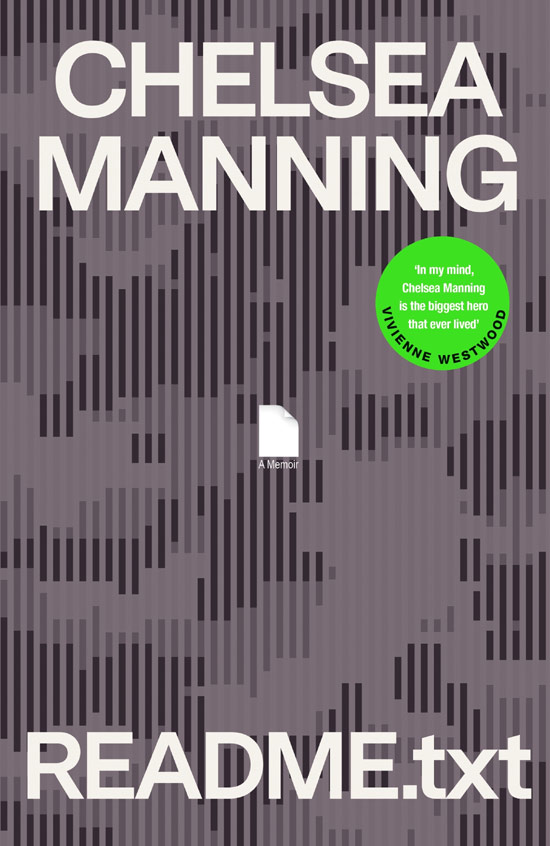
I’m not sure how often books with parts of their text blacked-out — rendering paragraphs, possibly entire pages, unreadable — are ever published, but README.txt, a memoir by former American solider, turned whistle blower and activist, Chelsea Manning, published by Penguin Books Australia in October 2022, is an example.
In 2010, Manning leaked hundreds of thousands of classified U.S. military documents to WikiLeaks, and a number of media outlets. She was later incarcerated for her actions, but only served several years of a thirty-five year sentence the court imposed on her.
In her book, Manning wrote about releasing the classified documents, and her pre-trial jail time, among other things, but a number of pages have been redacted by the publisher, at least in Australia:
Manning feared being sent to Guantanamo as a terrorist. Her publishers simply feared lawyers: three sections of the book, which would appear to describe documents she uploaded, are blacked out.
It seems only a small portion of the book cannot be read as a result, but I wonder if blacking out pages in books in this way, has any effect on their long term value. In the same way, for instance, mint made errors can sometimes make a coin featuring some sort production flaw, more valuable.
Blacked out text would make Manning’s memoir unique in a certain way, possibly making it collectible for that reason. Time will tell.
RELATED CONTENT
books, Chelsea Manning, writing
Ten word creative summaries: a secret sentence, a North Star to write by
22 December 2022
A journalist once told me he could summarise any article he was writing with a sentence of no more than ten words. These ten words, or less, outlined the purpose of the piece he was working on, whether it be five hundred words, or fifty thousand.
If he found himself floundering, or stuck, while writing, he’d refer back to his article outline so as to refocus on the task at hand. He ventured that the ten word outline could be applied to any creative endeavour, be it a painting, a sculpture, whatever. If the basic objective of the project could not be described in ten words or less, something was wrong, he said.
I think he was onto something. Let’s look at an example. If I had been making the 2019 film Portrait of a Lady on Fire, instead of Céline Sciamma, my ten word or less outline for the project might’ve been: “a painter falls in love with her subject.” If I realised, as the supposed filmmaker, that I was losing sight of the story, while trying to tie the myriad other elements of the narrative into a cohesive whole, I could go back to my outline for guidance.
American author Austin Kleon has a similar methodology, though he titles it with a little more pizzazz. He refers to his ten word outline as a secret sentence, and sees it as his “North Star”. Should Kleon need guidance while working on a writing project, he looks to his secret sentence:
Since we both write books, I confessed that with each book I usually have a secret sentence that I write down somewhere but don’t show to anybody. That sentence is sort of my North Star for the project, the thing I can rely on if I get lost. The sentence usually doesn’t mean anything to anyone other than me. And sometimes it’s pretty dumb. (When I was writing Show Your Work! the sentence was: “What if Brian Eno wrote a content strategy book?”)
A sort of star to steer by while writing. I like the sound of that.
RELATED CONTENT
creativity, psychology, writing
Authors back up your manuscript every day, it’s not difficult
19 December 2022
Image courtesy of malcevsasha.
The story about British writer Ann Cleeves losing her laptop, and, in the process, potentially the manuscript of the novel she was currently writing, is enough to give anyone who’s ever written a book nightmares for weeks. Some people devote years to developing their manuscript. Imagine if it were lost — irretrievably — in the blink of an eye?
While Cleeves was reunited with her laptop, it had been run over by a car, and buried under snow for a day or two, in Lerwick, a town in Scotland’s Shetland archipelago.
Cleeves was unsure whether any data could be retrieved from the device, but was thankful she’d emailed herself a copy of the document shortly before misplacing the laptop. “Not too much will be lost,” said Cleeves. Let’s hope so. Let’s also hope Cleeves has a clear memory of what work had not been copied. Losing even a couple of paragraphs could be devastating, especially if an author’s power of recall is not the best. The best part of the story may be lost forever.
But this sort of thing should not happen anymore. Authors no longer handwrite, or use typewriters, to write book drafts. They no longer depend on keeping a handwritten backup of their work. Nor do they need to use carbon-copying, or photocopying to create duplicates. At least they shouldn’t.
Who can forget the scene from Richard Curtis’ 2003 film Love Actually, when pages of the manuscript Jamie Bennett, portrayed by Colin Firth, is working on, blow into a nearby pond?
Why the hell wasn’t Bennett keeping any copies — whatsoever — of his work? More the point, why the hell was Bennett even using a typewriter? Because he sought to be charmingly technophobic? That’s not endearing, that’s foolhardy. Laptops were hardly uncommon in 2003, and were surely a more sensible option for a writer who seemed to be moving about, as Bennett was.
He’d have easily been able to keep a copy of the work-in-progress on a laptop’s hard drive (HD). And for extra peace of mind, he could have transferred copies to a thumb drive or two. Thumb drives had been around for a couple of years by that stage. But you don’t need me to tell you that.
Of course it could be argued Bennett had other things on his mind at the time we saw him. A recent relationship breakdown. Emerging feelings for the woman, Aurélia, who was looking after his villa in France. Not to mention the part the manuscript blowing into the pond played in the fledgling romance between Jamie and Aurélia. But rom-com movies aside, word processors, and other writing apps, make backing up documents as valuable as a manuscript easy.
No writer should find themselves in the situation either Cleeves or Bennett did. Because there are plenty of simple, secure backup options. Dropbox and OneDrive, for example, are among numerous cloud storage services. If you prefer to keep your work within the four walls of your home, setting up a separate backup folder on your HD isn’t difficult. Regularly copying that backup folder, and its contents, to a couple of thumb drives, which you keep somewhere safe, is an additional safeguard.
And although not the most secure, there’s the aforementioned method of emailing yourself copy of the manuscript file. It’s better than nothing. Preferably that’s a password protected document, and your email account is with a reputable web/cloud based provider.
Leaving a single copy of your manuscript on your computer HD is leaving all your eggs in one basket. Sadly though, I suspect there are plenty of writers who still do not understand this. But failing to back up work isn’t down to a lack of backup options, it’s more down to a lack of routine. For many authors, making copies of their work files may not be a part their work routine. If that’s you, change that conduct today. Make it the last thing you do at the end of each writing day.
Add “backup work files” to your daily to-do list now.
RELATED CONTENT
Can an algorithm assess the quality of a novel manuscript?
18 December 2022
It pays to follow Australian scientist and writer Dr Karl Kruszelnicki (aka Dr Karl) on Twitter (as long as Twitter continues to permit such behaviour), especially if you are writing a novel.
The other day he posted a link to an article published in 2014, about a literary algorithm that is apparently capable of quickly assessing the quality of an unpublished novel manuscript. The article expounds upon research conducted (PDF) by Stony Brook University into the matter:
Regarding lexical choices, less successful books rely on verbs that are explicitly descriptive of actions and emotions (e.g., “wanted”, “took”, “promised”, “cried”, “cheered”, etc.), while more successful books favor verbs that describe thought-processing (e.g., “recognized”, “remembered”), and verbs that serve the purpose of quotes and reports (e.g,. “say”). Also, more successful books use discourse connectives and prepositions more frequently, while less successful books rely more on topical words that could be almost cliche, e.g., “love”, typical locations, and involve more extreme (e.g., “breathless”) and negative words (e.g., “risk”).
Fascinating, no? Remember though, don’t let the algorithm write the book, let it guide you in writing the book. But if you wish to avoid algorithms all together, look at the way Irish author Sally Rooney — for one — does things.
RELATED CONTENT
publishing, science, technology, writing
The Bulwer-Lytton Fiction Contest for awful novel opening lines
18 December 2022
Not a literary award at all, more of an anti-literary award really, the Bulwer-Lytton Fiction Contest (BLFC), which has been running since its inception at San Jose State University in 1982. But unlike the literary awards we are more familiar with, the Bulwer-Lytton recognises terrible writing, and envisages the worst possible opening sentences to what will be awful novels.
Joe Tussey, from Daniels, in the U.S. state of West Virginia, was named winner in the 2022 adventure category, for this opener:
“Hoist the mainsail ye accursed swine” shouted the Captain over the roar of the waves as the ship was tossed like a cork dropped from a wine bottle into a jacuzzi when the faucet is wide open and the jets are running full blast and one has just settled into the water with a glass of red wine to ease the aches and pains after a day of hard labor raking leaves from the front yard.
The BLFC accepts nominations, the usual categories, including fiction, crime, and young adult, in the form of the worst paragraph you can devise, all through the year.
RELATED CONTENT
humour, literary awards, literature, writing
British authors worse off than lowly paid Australian authors
11 December 2022
Australian authors are not alone when it comes to struggling to make a living from their writing. English-French author Joanne Harris, also chair of the management committee of the British Society of Authors, writing for The Guardian, says British authors have seen their earnings go backwards in the period from 2006 to 2022:
When the ALCS first ran its survey of author incomes in 2006 it found that the median self-employed income of a full-time author was £12,330. In 2022 — a year in which multiple publishers have posted record profits while freelancers in all professions are still reeling from the impact of Covid-19, Brexit and rising living costs — the median full-time income has fallen to £7,000. That’s a drop of more than 60% when accounting for inflation.
Unsurprisingly, there are British authors who are considering giving-up writing, and finding other ways to make a living.
But a quick look at those numbers. In 2006, £12,330 equated to about A$30,750. I used an exchange rate from December 2006, where one British pound equated to about two dollars and fifty cents in Australian currency. Today’s rate is closer to one dollar and eighty cents, according to xe.com.
At around the same time, December 2006, the minimum wage in Australia was not quite A$27,000 per annum. So an annual salary of A$30,750 wouldn’t have been too bad (well…), at least in Australian terms. But today £7,000 equates to a paltry A$12,633. That figure again: A$12,633. Then go and contrast that number with the present minimum Australian wage of about A$42,000.
Considering the lowest earning writers in Australia, being literary authors, make A$14,500 a year, describing the position the majority of British authors find themselves in, as dire, seems like an understatement to say the least.
RELATED CONTENT
Joanne Harris, literature, writing
Never revisit your past that includes NaNoWriMo manuscripts
7 December 2022
British journalist and writer Tim Jonze on participating in NaNoWriMo 2021, meeting the fifty-thousand word target in the requisite thirty days of November, and then… reading the work — for the first time — a year later:
Well, it’s been a year since NaNoWriMo. Could this book really be as bad as I imagined? Amazingly, the answer is no.
It is much, much worse.
Aside from the fact I could not meet the average 1,667 daily word requirement, to successfully complete NaNoWriMo, reading what I’d written, would be the other reason why I’d not take part.
RELATED CONTENT
books, events, literature, writing
Literary authors are among the lowest paid Australian writers
6 December 2022
The recently released results of a survey of Australian authors and writers make for sobering reading. If you’re considering a writing career, you ought to sit down before reading on. With rare exceptions, most Australian authors need at least one other job to make their writing ambitions feasible.
Income per annum varies according the nature of their writing, anywhere from about A$27,000 for educational writers, down to A$14,500 for literary authors. Bear in mind the minimum annual salary in Australia is a little over $42,000, based on a rate of A$21.38 per hour.
Education authors earned the highest average income from their practice as an author ($27,300), followed by children’s ($26,800) and genre fiction ($23,300) authors. Even though these figures are above the overall average for authors, they are not enough to live on, to support a family, or to pay rent or a mortgage. At the other end of the spectrum are poets, who earned an average of $5,700 from their creative practice. Literary authors earned $14,500, which is a decrease in real terms since 2015.
In case you’re wondering, literary authors are likely the sort of author anyone who wants to write wants to be. They also tend to be winners of literary awards including the Stella Prize, Miles Franklin, SPN Book of the Year, and Patrick White Award. And yet they only earn about a third of the Australian minimum wage for their craft.
RELATED CONTENT