The shortlist for the 2022 Hazel Rowley Fellowship has been published. Created in memory of late British born Australian writer and biographer Hazel Rowley, the fellowship supports Australian writers of biographies. Authors submit ideas to the organisers, who select what they consider to be the best proposal. This year though, the field seems particularly tight:
We had an extremely strong field of applications this year, with a wide range of biographical subjects. This made the shortlisting hard,’ said Della Rowley, Hazel’s sister. ‘We received a large number of high-quality proposals. Perhaps as a result of COVID-19 lockdowns, writers were busy thinking about good topics for biographies.
The winner will be announced on Wednesday 2 March 2022.
A list of sixty-two books written by women of colour, put together by South-Korean born American author R.O. Kwon, for inclusion on your to-be-read list for 2022.
A gift for people who have everything? Could well be. Sydney based writer Ashley Kalagian Blunt, has a suggestion. What’s one thing we like talking about, apart from ourselves? Our favourite story. If someone took the time to read a book you especially like, and then sat down with you for an hour or so to discuss it, wouldn’t that be enjoyable? It doesn’t have to be a book though. A movie or an album also works. I think it’s true, experiences make the best presents.
Applications for the Faber Writing Academy 2022 scholarships are open for authors of non-fiction works. On offer are courses taking writers through the process of planning and writing a manuscript, and pitching their idea to a publisher or literary agent. Applications close on Saturday 29 January 2022.
The Northman, trailer, the latest feature from American filmmaker Robert Eggers, is a dark, brooding affair, set in tenth century Iceland. There’s some star power here, the cast includes Nicole Kidman, Ethan Hawke, Alexander Skarsgård, Willem Dafoe, and Björk. Eggers has a penchant for horror themed stories, and while it doesn’t look like there’s too much bump in the night stuff, there’s gore aplenty.
Applications are open for the 2022 black&write! Writing Fellowships, an initiative to support the work of First Nations writers across Australia. Two fellowships are awarded annually, and are accompanied by a cash prize, assistance with developing a manuscript, and an opportunity to publish work with Hachette Australia. Applications close on Wednesday 2 February 2022.
Killing Katie: Confessions Of A Book Club, the debut play of late Sydney based Australian scriptwriter Tracey Trinder, takes theatre goers into the sometimes murky world of book clubs. Think book clubs are groups of likeminded novel aficionados, happily swapping notes about their latest reads? Think again.
Trinder’s play lifts the lid on bitter internal politics, feuding, and murder, after the straight talking, bold Katie, joins a readers group convened by Robyn. Unhappy with Katie’s unseemly exuberance, Robyn plots to remove her from the club, with unforeseen dire consequences.
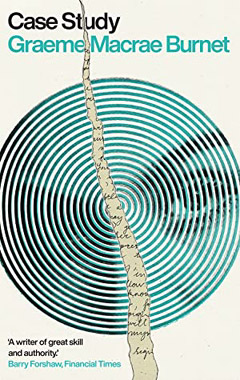
If Case Study (published by Text Publishing, 19 October 2021), the fourth novel of Glasgow based Scottish author Graeme Macrae Burnet, were a movie — and who knows, it might yet be — based upon video or film clips, it would be called a found footage story. The found footage technique is commonly seen in horror films, but it be could argued there’s elements of horror in Burnet’s latest work.
The literary equivalent of found footage is epistolary, where a story is told through a series of letters, or other written works, of which Case Study is an example. Martin Grey, who lives in present day Clacton-on-Sea, contacts the author after finding five diaries written by his cousin some fifty years earlier, under the pen name Rebecca Smyth. The journals detail her dealings with Collins Braithwaite, a therapist, who is remembered for his unconventional practise methods.
Rebecca’s sister Veronica, who had been a patient of Braithwaite’s for two years, killed herself, and Rebecca has no doubt the therapist was responsible. After creating a fictitious identity, and new persona for herself, Rebecca likewise becomes a patient of Braithwaite, in order to find out more about him. As the author reads the journals though, he comes to realise the intrinsically straight-laced journal writer was becoming ever more delusional, as she increasingly wrapped herself up in her free-spirited alter-ego.
Know when you over-revise: those new to writing should overwrite just “to get a familiarity with their particular world. We have to learn our individual symptoms” of over-revision. “For me,” Saunders says, “the symptom is the humour goes out of it.”
In writings of mine there’s always the temptation to go into great detail about settings and environments. It seems to me if I over-revise, or cut out superfluous information, I know I’ve gone too far in doing so if the story loses its soul, or becomes too dry. But Saunders is right, overwriting is a great way to become familiar with the backdrop to the story you’re writing.