
Seen, read, and heard, books, film, TV, and music March 2024
27 March 2024
Long time readers of Kottke have doubtless seen his semi-regular media diet posts, where he writes about the movies and TV shows he’s seen, plus books he’s been reading. Kottke is a voracious consumer of media if those posts are anything to go by.
In comparison, my consumption is far more modest. Maybe it’s because I have a minimum of two to three hours away from screens daily, and/or I spend too much time daydreaming.
Still, dimming the lights during the quiet remains of the day, and taking in a movie or TV show, and afterwards, a book, is always something to look forward to.

The Miseducation of Cameron Post is a 2018 film directed by Desiree Akhavan, starring Chloë Grace Moretz, as the titular character. After learning Cameron has a girlfriend, her conservative aunt and guardian sends her away for gay “conversion” therapy at a religious institution. I watched this twice, as I found the first viewing unsettling to say the least.
Also unsettling and confronting is Nitram, by Justin Kurzel, which delves into the mind of the person responsible for Australia’s largest mass-shooting in 1996, at Port Arthur, in Tasmania.
Tully, directed by Jason Reitman in 2018, stars Charlize Theron as Marlo, who is struggling to raise a family after the birth of her third child. Reluctantly she hires a night nanny named Tully. Despite some early misgivings about Tully, the two quickly develop a close bond.
Knives Out, made in 2019 by Rian Johnson, sees Daniel Craig playing a James Bond like role that not the least bit James Bond (thankfully). Craig portrays Benoit Blanc, a private investigator, who tries to piece together the apparent suicide of a wealthy family patriarch. If whodunits are your thing, this is not to be missed.
I’ve also found time to look at Nemesis, a documentary produced by the ABC, which looks at the last three Coalition party Prime Ministers of Australia. What can I say? Once a politician, always a politician? And, we may wear the same stripes, but that doesn’t mean we like each other. Even if politics isn’t your thing, this is still fascinating viewing.
I’ve also been tuning into Universe, a documentary by British physicist Brian Cox. There’s no missing the similarities to Cosmos: A Personal Voyage, made by Carl Sagan in the early 1980’s. Compared to Cosmos, Universe does plod a little, but Cox’s enthusiasm, indeed joy, for the gargantuan entity we reside in, is nothing short of infectious.
Most people probably know Cox played keyboards in British dance/electronica act D:Ream, and their 1993 track Things can only get better, perhaps remains one of the band’s best known tracks. But you may not know that Cox later conceded the song was misleading and scientifically inaccurate. The universe, despite being a mere baby, is already in an inexorable, albeit protracted, decline. Things are certainly not getting better…
Turning to novels, I’ve recently read Chai Time at Cinnamon Gardens, by Sydney based author and lawyer Shankari Chandran, which won the 2023 Miles Franklin literary award for Australian fiction. I’m not really into crime fiction, but couldn’t put down The Housemate, by Melbourne writer Sarah Bailey.
Likewise, Funny Ethnics by Shirley Li, set across the west and inner west of Sydney, which I wrote about here last year. I’m currently reading Before You Knew My Name, by Jacqueline Bublitz, a story about two women, one alive, one dead, whose fates become intertwined in New York.
The Triple J Hottest 100 was broadcast two months ago, but I’m still sifting through the countdown for tracks to add to my playlists. At present though I have Paint The Town Red, by Doja Cat, and The Worst Person Alive, by G Flip, on repeat. Also State Violence State Control, by Arnaud Rebotini, which was on the soundtrack for Mark Raso’s 2014 film Copenhagen.
RELATED CONTENT
An app that points to centre of the Milky Way galaxy
26 March 2024
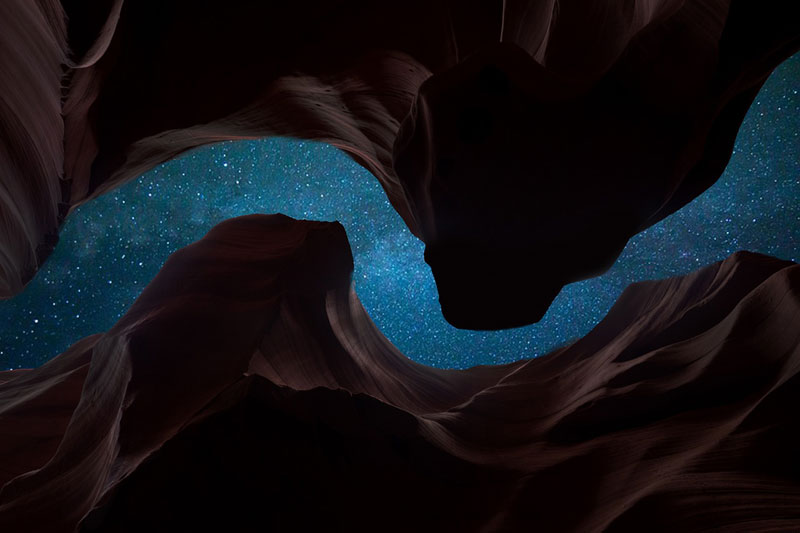
Image courtesy of Pexels.
Tangentially related to my previous post… product designer and technologist Matt Webb has created an app, named Galactic Compass (link to Apple app store), that points to the centre of the galaxy.
When on the (far less light polluted) NSW Central Coast, I can kind of look down from the tail of the constellation Scorpius (the scorpion), and be observing the right patch of the night sky.
When back amongst the super bright lights of Sydney though, that can be a little trickier. Like, find a star, any star, let alone the Scorpius constellation.
Read also Galactic Compass’ origin/development story, the app was built with help from ChatGPT.
RELATED CONTENT
artificial intelligence, astronomy, Milky Way, science, technology
A patch for computer software one light-day away on Voyager 1
25 March 2024
One of the computers on NASA’s deep space probe Voyager 1 is experiencing some sort of malfunction, with recent signals from the probe containing no usable data. Mission engineers are apparently confident the problem can be resolved, even though Voyager 1 is almost a light-day distant, meaning it’ll take time to apply a fix:
Because Voyager 1 is more than 15 billion miles (24 billion kilometers) from Earth, it takes 22.5 hours for a radio signal to reach the spacecraft and another 22.5 hours for the probe’s response to reach antennas on the ground. So the team received the results of the command on March 3. On March 7, engineers began working to decode the data, and on March 10, they determined that it contains a memory readout.
Although Voyager 1, and deep space counterpart Voyager 2, have left the solar system and are in interstellar space, it is estimated it will take Voyager 1 another three hundred years to reach the Oort cloud. The vastly scattered debris, rocky remnants of the formation of the solar system, that constitutes the Oort cloud, may extend more than two light years from the Sun. That’s about half way to the nearest star system, Alpha Centauri.
So to be truly beyond the solar system, I imagine the Voyager probes will need to clear the Oort cloud first. We might be waiting sometime for that to happen. It’s incredible the way mission controllers can keep tabs on deep space missions though, and trouble shoot, and perhaps remedy problems, despite their distance from the Sun.
About twenty years ago, scientists were puzzled by changes in the trajectories of deep space probes Pioneers 10 and 11. Somehow both craft, then located in the Kuiper belt, which is situated beyond the orbit of Neptune, appeared to have slowed down slightly. All sorts of theories were advanced to account for the anomaly, including the idea that gravity may be behaving in ways not seen before.
After analysing gargantuan quantities of data, mission engineers determined that heat loss was having a subtle influence on the movements of the probes, in that it was acting a little like a brake. Contact with both vessels had been lost by that stage, so even if a fix could have been devised, it unfortunately could not have been applied.
RELATED CONTENT
astronomy, science, technology
To go where no one has gone before, the limit of the universe
22 March 2024
German animation and design studio Kurzgesagt have been producing excellent informative and educational videos for what seems like half the lifespan of the universe. Let’s hope Peak-Kurzgesagt is a situation that never comes to pass.
Their latest video, the Paradox of an Infinite Universe, covers some heady ground; the concept of a physical edge, or boundary, to the universe. If we could somehow reach such a region, could we press our hand against it, as we can a garden wall? Hmm…
RELATED CONTENT
Stalkerware users should be watching themselves, not others
21 March 2024
Sydney based Australian author Kerri Sackville, writing for The Sydney Morning Herald, on the subject of stalkerware, insidious apps that track the activities of a person you want to keep tabs on:
But I had nothing to gain from spying on him because I already knew what to do. In intimate partnerships, the desire to spy can only mean one of two things: that something is terribly wrong in your relationship, or that something is terribly wrong with you. If it’s the former, the solution is not to dig up answers; the solution is to get out of the relationship.
But trust, or lack thereof, isn’t necessarily why people use stalkerware apps. They sometimes also seek to control and coerce those they are monitoring. To them, it has little to do with trust. It’s more about rampant entitlement. They somehow feel as if they have every right to spy on someone, and as such are completely oblivious to the wrong they are doing.
Something is indeed terribly wrong with such people.
RELATED CONTENT
privacy, security, smartphones, technology
Weather forecasting has improved, sadly weather apps remain oddly deficient
20 March 2024
Four day weather forecasts are now as accurate as one day forecasts from thirty years ago. That’s good news. Access to accurate weather information is perhaps more vital than many of us can appreciate.
Weather forecasting has come a long way. In 650 B.C. the Babylonians would try to predict weather patterns based on cloud patterns and movements. Three centuries later, Aristotle wrote Meteorologica, discussing how phenomena such as rain, hail, hurricanes, and lightning formed. Much of it turned out to be wrong, but it represents one of the first attempts to explain how the weather works in detail.
But more of this data needs to be ported through to the weather apps on our smartphones. I don’t know if it’s me, but the number of times I’m caught outside somewhere, in what I call “off-app” rain — that is, where no rain whatsoever is predicted for hours, if not days — seems to be increasing.
RELATED CONTENT
Apple cans electric car project, steps up focus on AI
29 February 2024
Mark Gurman, writing for Bloomberg:
Apple Inc. is canceling a decadelong effort to build an electric car, according to people with knowledge of the matter, abandoning one of the most ambitious projects in the history of the company.
Apple workers involved in the EV project will move to the artificial intelligence division (AI). I’m no expert in matters Apple, but the electric car project never seemed to feel quite right for the company.
RELATED CONTENT
artificial intelligence, technology, trends
The time may be now for you, but not someone else
31 January 2024
Well, here we are, the first month of 2024 is at an end. Time is certainly passing by. Or is it? Does time even really exist? In their latest video, Kurzgesagt takes a closer at the idea of time. Spoiler: time may not quite be what you think…
When you move through space, you are also moving through the block. This means time passes differently for different people, depending on how they move through space relative to each other. And this also means that what someone perceives as “now” is a certain cut along the block — a cut that will depend on how fast they are moving. So what you think is “now” is really only your now — there are many different “nows” in the universe and all of them are equally real. This also means there is no universal past or future.
This is heavy…
RELATED CONTENT
So Close to Home, debut novel of Mick Cummins, has been published
6 December 2023

Mick Cummins, the Melbourne based former social worker and screenwriter, who won the unpublished manuscript award in the 2023 Victorian Premiers Literary Awards, has had his debut work, So Close to Home, published by Affirm Press.
The manuscript was originally titled One Divine Night. Cummins said a number of publishers contacted him after winning the unpublished manuscript prize earlier this year.
RELATED CONTENT
Australian literature, literary prizes, Mick Cummins
Question 7, a memoir by Richard Flanagan
3 November 2023
Question 7 is the latest title from Tasmania based Australian author Richard Flanagan. Although Question 7 is a memoir, it sounds more like an action/thriller title:
By way of H. G. Wells and Rebecca West’s affair through 1930s nuclear physics to Flanagan’s father working as a slave labourer near Hiroshima when the atom bomb is dropped, this genre-defying daisy chain of events reaches fission when Flanagan as a young man finds himself trapped in a rapid on a wild river not knowing if he is to live or to die.
Flanagan won numerous literary awards for his work, including the Booker Prize, and the Australian Prime Minister’s Literary Prize.
RELATED CONTENT