
Showing all posts about writing
Only in 2114 can books in the Future library be read
30 September 2022
Since 2014, The Future Library, located in the Deichman Library in Oslo, Norway, has been going about assembling a collection of one hundred manuscripts, at the rate of one work per year. When the library reaches capacity, in 2114, the collection will be made available to one thousand people who have purchased certificates allowing them, or a descendent, access to the writings.
The ‘Silent Room’ where the manuscripts are to be kept is built using wood from the original trees felled to make way for the trees planted for the project. Katie Paterson has been working with the architectural team to design this part of the new public library. The collected works will be on display but the manuscripts will not be available for reading.
The library, which is the brainchild of Scottish visual artist Katie Paterson, has so far invited prominent authors, including Margaret Atwood, Han Kang, and Ocean Vuong, to submit manuscripts. I like the idea, but I’m not sure about having to wait almost one hundred years to read what’s in the collection, even if I knew I’d still be around by then.
RELATED CONTENT
The 2022 National Young Writers Festival
23 September 2022
The 2022 National Young Writers’ Festival (NYWF) runs from Thursday 29 September, through to Sunday 2 October, both in Newcastle, Australia (about one hundred and sixty kilometres north of Sydney), and online.
NYWF is so-called Australia’s largest gathering of young writers, with artists bringing their craft from all around (cities, regional, rural and our beloved regular cohort from Aotearoa). We showcase work in both new and traditional forms including zines, comics, blogging, screenwriting, poetry, spoken word, hip hop, music, journalism, autobiography, comedy and prose.
RELATED CONTENT
Australia, events, literature, writing
Publishing contract morality clauses may be unfair to authors
26 August 2022
Finding a traditional publisher for a novel is becoming ever more difficult. For one thing, aspiring — being unpublished — authors, are up against who knows how many other hopeful novelists. They also have to contend with a shrinking pool of publishing houses, as the industry appears to be going through a consolidation, which is seeing many smaller and independent publishers absorbed by larger players.
Even authors with several published works to their name, are reporting waits of up to a year to hear back about a pitch. But adding to the woes of many authors, emerging and established, are so-called morality clauses some publishers are including in their agreements.
In short, if a writer fails to meet a certain standard of behaviour, they may lose any advances or royalties they’ve received. The problem author advocates — such as the Authors Guild — have with morality clauses are the sometimes vague definitions of inappropriate or wrong conduct.
These contract provisions allow publishers to terminate a book contract, and in many cases even require the author to repay portions of the advance already received, if the author is accused of immoral, illegal, or publicly condemned behavior. Publishers insist they need the clauses to protect themselves in the event an author’s reputation becomes so tarnished after the book contract is signed that it will hurt sales. But most of these clauses are too broad and allow a publisher to terminate based on individual accusations or the vague notion of “public condemnation” — which can occur all too easily in these days of viral social media.
People should be held accountable for wrong-doing, but everyone is entitled to proper due-process. The concern is morality clauses, particularly where the definition of inappropriate or wrong behaviour is poorly defined, could be used unfairly against some authors.
RELATED CONTENT
Publishing your book online, Ted Gioia lists the reasons why
25 August 2022
American author Ted Gioia intends to publish his next book on Substack, an online publishing platform. This really is worth a read for anyone considering self-publishing a novel.
The Internet may be a curse in many regards, but it has given me direct contact with my readers. I cherish that. Things that once took a year now happen instantaneously. Instead of getting feedback from one editor, I learn from thousands of people, many of them very smart with useful things to say. The whole process is energized, streamlined, and turbocharged.
RELATED CONTENT
novels, publishing, Ted Gioia, writing
Rejected authors finding publishers, film deals, on TikTok
19 August 2022
TikTok is proving to be a fertile ground for new music acts looking for a lucky break, with the video hosting app kick-starting the careers of numerous musicians so far.
And authors are also cashing in. Many writers who struggled to find publishers previously, are sometimes finding themselves at the centre of bidding wars between rival publishing houses, after taking a novel idea to TikTok to gauge interest in the premise.
American writer Alex Aster is an example, and in 2021 signed a lucrative publishing deal, and later film rights, for her YA novel Lightlark.
Aster didn’t expect much, especially when she checked in a few hours later to see that her post had only clocked up about 1,000 views. Maybe the books world was right, she thought. Maybe there wasn’t a market for Lightlark, a young adult story she had been writing and rewriting for years, to no interest from publishers. The next day, however, she woke up to see her video had been viewed more than a million times. A week later, Lightlark had gone to auction and she had a six-figure deal with Amulet Books. Last month, Universal preemptively bought the film rights for, in her words, “more zeros than I’ve seen in my life”.
Aster conceded an element of luck was involved though, describing the TikTok algorithm that eventually propelled her to success as “finicky”. Here’s hoping the algorithm will favour other writers.
RELATED CONTENT
books, publishing, social media, writing
Book plotlines tropes and clichés a publisher may reject
13 August 2022
The world is full of writers and the stories they’d like to write. American author Joseph Epstein, writing for the New York Times, quotes research suggesting eighty-one percent of Americans think they “have a book in them”. That’s a lot. Unfortunately, aspiring writers vastly outnumber book publishers, meaning many manuscripts stand to go unnoticed and unpublished.
It might not seem like much help, but Strange Horizons — a magazine publishing speculative fiction — once put together a list of the types of sci-fi stories that they’ve seen submitted too often, and subsequently did not feature. I suspect they’re not the only publishers seeing such ideas either. Knowing what might be rejected then, might help you write something that won’t be.
RELATED CONTENT
books, novels, science fiction, writing
Ann Mossop new Sydney Writers Festival artistic director
1 August 2022
Ann Mossop has been appointed as the new artistic director of the Sydney Writers’ Festival. Mossop, who has been behind a string of events in Sydney, has a long association with the writers’ festival:
Festival Chair Mark Scott said, “Ann Mossop comes to Sydney Writers’ Festival with a career programing cutting-edge public conversations at the Sydney Opera House for the Ideas at the House series, Festival of Dangerous Ideas, All About Women and recently as the Director of the Centre for Ideas at UNSW Sydney. Ann also has a long association with the Festival, sitting on the board from 1995–2000 and was part of the committee that established Sydney Writers’ Festival as an independent entity in 1998.”
RELATED CONTENT
2022 Melbourne Writers Festival program
29 July 2022
The 2022 Melbourne Writers Festival program was unveiled last Tuesday by MWF artistic director Michaela McGuire. Between Thursday 8 September 2022, and Sunday 11 September, over two-hundred-and-fifty storytellers from across the world will gather in Melbourne, Australia, and after several years of COVID imposed lockdowns, this year’s event is aptly themed ambition:
Reading is the ultimate act of ambition; the boundless ambition of the curious mind. Ambition to learn, to inhabit another person’s life and experience the world from their point of view. To grasp the limitless possibilities that literature affords us, the solace it has given, the joy it still has to offer.
RELATED CONTENT
events, literature, Melbourne, writing
Beat writer’s block and meet deadlines with AI writing apps
28 July 2022
Far from usurping writers of fiction, AI writing programs, such as Sudowrite, could aid authors, particularly those bogged down with writer’s block, and facing looming deadlines, says Josh Dzieza, writing for The Verge:
Lepp, who writes under the pen name Leanne Leeds in the “paranormal cozy mystery” subgenre, allots herself precisely 49 days to write and self-edit a book. This pace, she said, is just on the cusp of being unsustainably slow. She once surveyed her mailing list to ask how long readers would wait between books before abandoning her for another writer. The average was four months. Writer’s block is a luxury she can’t afford, which is why as soon as she heard about an artificial intelligence tool designed to break through it, she started beseeching its developers on Twitter for access to the beta test.
In other words, AI writing programs could act as ghostwriters, of a sort, who are paid — in kind at least — but never acknowledged for their contribution.
RELATED CONTENT
Mal Peet’s Beck, a book finished posthumously by another author
6 July 2022
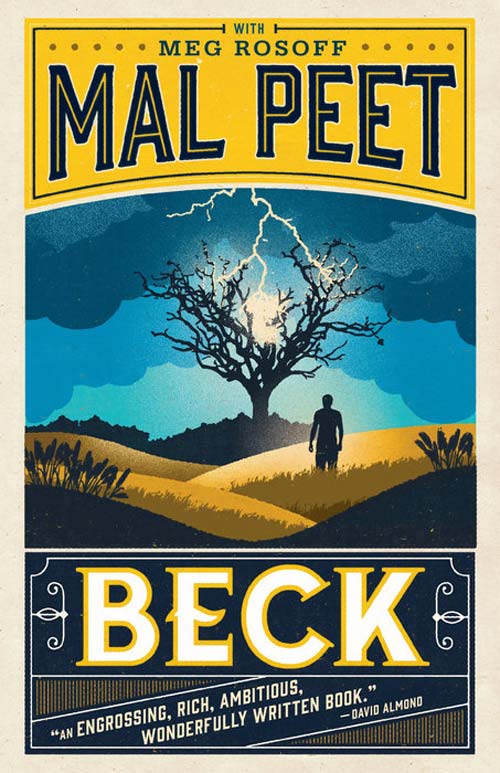
When late British author Mal Peet died in March 2015, his final novel, Beck, remained unfinished.
In a phone call Peet made to friend and American born, London based writer, Meg Rosoff, shortly before his death, he expressed a desire to finish writing Beck, but didn’t think he’d be able to. At that point Rosoff offered to step in.
At the time of their conversation, Rosoff knew nothing about the novel, or how much progress Peet had made. But this posthumous collaboration paid off. Beck was well received. In August 2016, the Sunday Times named Beck their Book of the Week, describing it as “powerful, shocking, uplifting, funny and beautifully written.”
But this is not the first time one person’s novel has been finished by another, because of death or incapacitation. Realising illness would prevent him finishing works in The Wheel of Time series of fantasy books, late American author Robert Jordan, prepared extensive notes, allowing Brandon Sanderson to conclude the fifteen book series.
British writer Siobhan Dowd died in 2007, before A Monster Calls, which she was working on at the time of her death, was finished, a task that Patrick Ness took on.
In some cases though the quantity of notes written by a deceased author have been enough for another to create books from scratch. The works of British author J. R. R. Tolkien are a case in point. After Tolkien’s death in 1973, his son Christopher wrote a number of Tolkien novels including, The Silmarillion and The Fall of Númenor.
Despite the success some have enjoyed, taking over another author’s part-finished manuscript remains a process fraught with difficulty. How exactly can one writer step into the shoes of another? How do the creative visions of two artistic people align? And perhaps, most crucially, how does one author assume the voice of another?
It was a question Rosoff grappled with, when picking up Beck where Peet left off. But the solution soon came to her: “the answer, I discovered, is not to.” It seems then, if an author is sufficiently in synch with the person whose work they are continuing, a book finished posthumously by another author can do well.
RELATED CONTENT