
Asterix and the Griffin, book thirty-nine in the Asterix series
13 November 2021

Although René Goscinny and Albert Uderzo, the original creators of the popular Asterix comic book series are no longer with us, their work continues. Jean-Yves Ferri and Didier Conrad, who have been writing and illustrating the stories since 2013, have recently published Asterix and the Griffin, book thirty-nine in the series.
RELATED CONTENT
Can turning to the light side of the force change the world?
13 November 2021
Can the light side of the force (à la the Star Wars universe) change the world? Washington D.C. based American author Stephen Kent, writer of How the Force Can Fix the World, believes some of the core principles of the Star Wars stories – hope, humility, and balance among them – can be of help to humanity in times of uncertainty.
We’re living in a time of unprecedented and rapid change. An age of chaos. Democracies are in decline worldwide. Dictators are ascendant. Civic organizations are crumbling. People feel lonelier and more rudderless than in any other time in recent history. We’ve tried to slow down, and in some cases we, like Anakin, have tried stop the change, but failed at every turn. The fears that come with living in an age of disruption have produced public anger, and that anger has swelled movements of hate.
And for those who are strong with the force, American journalist and editor Meg Dowell recently interviewed Kent about the book and its concepts, on the Followers of the Force Podcast.
RELATED CONTENT
Klara and the Sun and AFs. What are AFs, and why are they needed?
12 November 2021

WARNING: while there are no explicit spoilers here (for instance I don’t describe how Klara and the Sun ends) this article does give away some story points…
Klara, the titular character of Kazuo Ishiguro’s 2021 novel Klara and the Sun, is an AF. She is an artificial friend. AFs are robots that are able to walk, talk, think, and perceive the world around them. In the near-future universe Ishiguro has crafted in his eighth novel, AFs, who appear to be similar in appearance to humans, are highly intelligent companions for teenagers. Despite their human-like qualities though, AFs are easily distinguishable from people. But Klara is said to differ from her AF contemporaries by way of her keen perception and curiosity.
As narrator of the story, Klara often describes in great detail what she sees, or hears, even if she doesn’t always fully comprehend what she has witnessed. Early in the story, as she sits in the display window of a store selling AFs, she watches two older people – a man and a woman – run into each other on the outside street. Their joy at meeting for what may be the first time in decades, is palpable, but Klara is confused by the obvious pain the two people also appear to experience.
While then we may be walking into a future where children will one day have keenly smart and perceptive android-like friends, the question remains as to why there is a need for AFs in the first place. In an introduction to the story’s plot on the Klara and the Sun Wikipedia page, we are told children are schooled at home by tutors through tablet devices (objects Klara refers to as oblongs). For this reason, families who can afford it, buy an AF for their housebound children, as opportunities to socialise with people the same age are said to be limited. But is that really the case?
Soon after coming into the service of a teenage girl called Josie, Klara meets many of her (human) friends at a gathering called an interaction party, hosted by Josie’s mother. The name alone suggests such gatherings are standard, but not necessarily. The dynamic among Josie’s guests implies most the teenagers know each other well. While interaction parties, by virtue of their name, sound like regular affairs, that the event takes place at Josie’s house is notable. For one thing, she lives in a remote region, restricting opportunities to interact with people her age.
But what of her friends? Do they also live in similar circumstances? It seems unlikely every last one does, meaning many would be able to see other teenagers living nearby, outside of schooling hours, thus negating the need (and cost) of an AF. It is also obvious Klara is something of a novelty to some of Josie’s friends. While they’re familiar with AFs, and the attributes of models like Klara, few have actually seen one before. This suggests AF ownership is an exception, most people don’t need them, as they probably live relatively close to others.
For instance, at one point Klara travels with Josie and her mother, Chrissie, to the city where they stay at the apartment of a family friend. While there are vaguely alluded to significant problems in the world Klara and Josie inhabit, they have not resulted in a mass exodus from large urban centres, nor their abandonment. People continue to live and work in cities as usual. Those residing in remote areas then do so by choice. And while we know Josie is ill, and may not get out as much as other teenagers, the need for a carer for her alone would not be reason enough to fill the world with AFs.
It is through this illness – the unfortunate side effect of what seems to be a common genetic modification procedure some teenagers go through – we come to realise Chrissie, Josie’s mother, has another possible purpose in mind for Klara. But again this idea is not the usual intended function of an AF. We’re still left wondering why there is an apparent wide need for AFs such as Klara. Might they then be there to undertake tasks or parental obligations that some parents are unable, or unwilling, to fulfil themselves? For example we know Klara acted as a chaperone at times.
When Rick visited the bedbound Josie in her room, Klara was told to always be present. While she sat with her back to Josie and Rick, Klara could still hear what they were saying and doing. When once asked to leave Josie’s room during one of Rick’s visits, Klara initially resisted, saying she’d been “instructed to ensure against hanky-panky.” But that directive had been issued by the ever-present, live-in, housekeeper, Melania. If she, and by extension Chrissie, was so concerned about “hanky-panky”, surely Melania could’ve been present during Rick’s relatively short visits.
So far there’s little an AF can do that another person – be it a friend, or family member – couldn’t. Josie certainly had plenty of both in her life. Perhaps then AFs were a vanity item. Something you had to have, so you stood apart from other people. A must have, though ultimately dispensable, gimmick. Or was an AF’s unswerving loyalty and devotion the reason they came into being? Like an artificial intelligence chatbot, “someone” who’s always there, who’s always ready to listen, and someone who is never offended no matter how badly they are treated?
What a world to live in…
RELATED CONTENT
The Colour Room, a film by Claire McCarthy
12 November 2021
The Colour Room (trailer), by Australian filmmaker Claire McCarthy (The Waiting City) re-tells the story of British ceramic artist Clarice Cliff, portrayed by Phoebe Dynevor, who was intent on becoming a designer, something unheard of for a woman living one hundred years ago. “The modern woman is forward thinking, not backward thinking.”
RELATED CONTENT
Claire McCarthy, film, trailer
The Sentence, by Louise Erdrich
12 November 2021
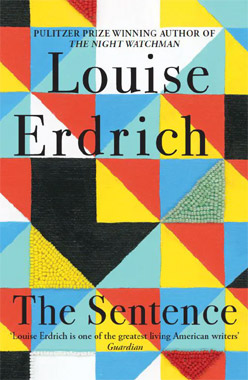
The Sentence (published by Hachette Australia, November 2021), written by Minnesota based American author Louise Erdrich, is a book set in a bookshop. A bookshop with a difference though. The independent bookshop, also located in Minnesota, is haunted by a ghost. And not any old ghost either. No, the shop has become the afterlife abode of Flora, who happened to be the store’s most irritating customer during her (regular) lifetime.
Now she’s back, and back to stay, unless a way can be found to get rid of her. To this shop comes Tookie, a new employee, who’s recently been released from prison after serving a ten year sentence. She’s looking for stability and normality in her life, and has even gone so far as to marry, Pollux, the now former police officer who originally arrested her many years earlier.
Set during a turbulent chapter in the city’s recent history, with Black Lives Matter protests, and the Covid pandemic, Tookie learns she has one year to somehow extricate Flora from the shop. But Tookie has her work cut out for her. The intentions of Flora, who must have a few scores she wants to settle, soon move from the annoying to the sinister…
RELATED CONTENT
fiction, Louise Erdrich, TBR list, writing
Licorice Pizza, a film by Paul Thomas Anderson
11 November 2021
Licorice Pizza (trailer), directed by American filmmaker Paul Thomas Anderson, seems like the sort of holiday fun many people are looking forward to. The coming-of-age comedy drama starring Alana Haim and Cooper Hoffman, along with Bradley Cooper, Sean Penn, and Maya Rudolph, among others, is set to open in Australian cinemas on Boxing Day, 26 December 2021.
RELATED CONTENT
film, Paul Thomas Anderson, trailer
The Deep, by Kyle Perry
11 November 2021
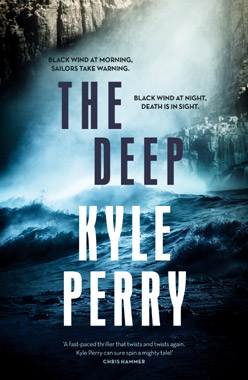
A rugged coastline. A treacherous, turbulent, ocean. An air current so deadly locals call it the black wind. A remote village, home to the Dempsey family for generations. A family who has a made a name and livelihood for themselves as fishers and drug dealers. And then there are the names. Mackerel. Ahab. Blackbeard. It’s a nautical blend of ingredients indeed.
Such is the setting for The Deep (published by Penguin Books Australia, July 2021) the second novel of Burnie, Tasmania, based Australian writer Kyle Perry. But the inhabitants of Shacktown, on the Tasman Peninsula, wake to a troubling mystery one day. A young relative of the Dempsey’s, Forest, who disappeared seven years earlier, aged six, and long assumed to be dead, along with his parents, Jesse and Alexandra, has inexplicably appeared on a nearby beach.
A cross tattooed onto Forest’s back suggests he has been in the captive custody of Blackbeard, a rival drug lord who is intent on muscling into the illicit Dempsey family operation. But Mackerel and Ahab are reluctant to help the family deal with Blackbeard. Mackerel is on prison release, and any misstep will see him incarcerated again, while Ahab wants to turn his back on the family’s shady business ventures…
RELATED CONTENT
fiction, Kyle Perry, TBR list, writing
Sydney Science Fiction Film Festival 2021
10 November 2021
Yay, live, in person, events are returning. The Sydney Science Fiction Film Festival kicks off tomorrow, Thursday 11 November 2021, at the Actors Centre Australia in the Sydney suburb of Leichhardt, and concludes on Sunday 14 November. Not in NSW? No problem. A virtual event is running until 25 November 2021, catering for sci-fi fans elsewhere in Australia.
RELATED CONTENT
Dymocks 2021 Book of the Year shortlist
10 November 2021
Australian book retailer Dymocks have unveiled the shortlist for their 2021 Book of the Year award. Titles to make the cut include Apples Never Fall by Liane Moriarty, Who Gets to be Smart by Bri Lee, and one of the inspirations behind the name of this very website, Klara and the Sun, by Kazuo Ishiguro. The winner will be announced later in November.
RELATED CONTENT
Bri Lee, Kazuo Ishiguro, Liane Moriarty, literature
Cloud Cuckoo Land, by Anthony Doerr
10 November 2021
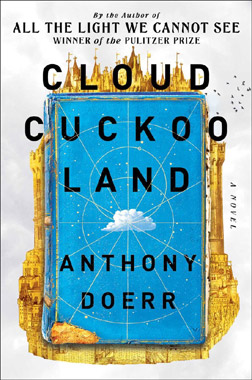
Sometimes I find the synopsis of a book so intriguing I feel compelled to write about it for that reason alone. Cloud Cuckoo Land (published by Simon & Schuster, 2021), written by American author Anthony Doerr, is such a novel. The first point of interest are the settings. Constantinople, now Istanbul, in past times the capital of several large empires, is one.
Here a teenage girl called Anna lives, in the lead up to the fateful 1453 siege of the city, and final remnant of the Byzantine Empire. In her spare time, she reads a book, the story of Aethon, a man who yearned to become a bird, so he could fly to a better place. The next setting is five hundred years later, in Idaho, where Zona, a woman in her eighties, is preparing a group of children to take part in a play based on Aethon’s story. The final setting is somewhere in interstellar space, where Konstance, a resident born on a generational colony ship, is transcribing the story of Aethon, after he father recited it to her.
And here we come to the second point of interest, an ancient story that links people living centuries apart, people keeping – in their own way – Aethon and his story alive, many centuries after its original telling. While the nature of the story appeals to me, like any book, it’s not for everyone, if the comments of some GoodReads members are anything to go by.
RELATED CONTENT