
Showing all posts about history
Before cars arrived there was no such thing as jay walking
11 August 2022
Streets and roadways used to be the purview of people on foot, not motor vehicles, writes Clive Thompson. Jaywalking — whereby a pedestrian can be penalised for not crossing a street at the correct location — he tells us, is a misdemeanour created by the car industry.
If you travelled in time back to a big American city in, say, 1905 — just before the boom in car ownership — you’d see roadways utterly teeming with people. Vendors would stand in the street, selling food or goods. Couples would stroll along, and everywhere would be groups of children racing around, playing games. If a pedestrian were heading to a destination across town, they’d cross a street wherever and whenever they felt like it.
Maybe the solution, and to return roads to people on foot, is to lay down light rail or tram tracks on the streets. I was in the centre of Sydney recently where a number of once busy traffic thoroughfares are now light rail routes through the city.
Aside from trams trundling along the way every few minutes, pedestrians largely have free rein. The light rail lines have quite transformed parts of Sydney’s CBD in the last few years.
RELATED CONTENT
GeoCities, in their gloriously bold colours by Cameron Askin
9 August 2022
For those who came in late, GeoCities was a little like Instagram. Sort. Of. Members signed up for an account, chose a “city” to inhabit based on the content they wished to post, and went about designing a personal website the best way they knew how.
Usually gratuitous quantities gif animations, and sometimes eye-watering combinations of bright (read: garish) colours adorned these websites. For good measure, music, in the form of tinny sounding MIDI files was also the go. And from 1994, until GeoCities was shuttered in 2009, we used to love to hate the GeoCities webpages. They were after all the antithesis of “real” website design, but now they’re gone, we miss them. Sort of maybe.
But Melbourne based web designer Cameron Askin has bought the essence of the old personal websites back to life at Cameron’s World. GeoCities websites may not have always been easy on the eye, but they sure as hell could not be called bland, something you can’t always say of today’s web.
In an age where we interact primarily with branded and marketed web content, Cameron’s World is a tribute to the lost days of unrefined self-expression on the Internet. This project recalls the visual aesthetics from an era when it was expected that personal spaces would always be under construction.
RELATED CONTENT
Michael Spitzer: 40000 years of music history in 8 minutes
6 August 2022
Because music is so accessible today we’re drowning in it, says Michael Spitzer, professor of music at the University of Liverpool. That’s a far cry from a few hundred years ago when people attended, at best, two recitals in their lifetime, and music went unrecorded until 1877 when Thomas Edison invented the phonograph.
But the arrival of the phonograph is only a small part in the story of music. Changes in the way music was performed, and the instruments created to make that possible, evolved as we moved away from our hunter-gatherer roots, and eventually began living in towns. Spitzer’s recounting of forty-thousand years of musical development, in the space of eight minutes, is fascinating.
If you’re looking at the broad picture of the evolution of sapiens, then the epochs are hunter-gatherer, farming community, and then the founding of cities and city-states. Each of these epochs is associated with mentalities. So, hunter-gatherers tended to be nomadic. And if you’re essentially journeying through a landscape, what you don’t do is carry heavy instruments. Music has to be portable, ideally, just a voice or if not, a very light flute or a small percussive instrument. And if you look at the music that is played by the Cameroon Pygmies, every time they play a piece, it sounds different. It’s very much music of the moment.
Now, what changes when you invent farming? You settle down. And your whole mindset becomes fixed on the circle of the seasons, the circle of life. And you invent repeatable work. And the structure of the work becomes as cyclical as life itself. You invent a circle in music, invent musical rituals. And once music migrates from the farm to the town, certain changes happen. Instruments can become heavy because you start to set quite permanent roots into the town. You create heavy instruments like bells and gongs, but also very delicate ones like harps and lutes which would be damaged over a journey.
RELATED CONTENT
Somerton Man identified as Carl ‘Charles’ Webb
3 August 2022
Derek Abbott, a professor at the University of Adelaide, claimed last week to have identified the so-called Somerton Man, perhaps bringing a close to one of the most intriguing, and lingering, Australian mysteries of the twentieth century.
In December 1948, the body of a man thought to be about forty, was found at Somerton beach in Adelaide, capital of South Australia. His body showed no sign of trauma. He was not carrying any identification, nor were there missing person reports for anyone matching his description.
In the months following his death, a suitcase containing some of his possessions was located, but offered no clues as to who he was. A scrap of paper, bearing the words tamam shud, was found concealed in clothing the man owned. The fragment was later found to have been torn from a page of a book of poems titled Rubaiyat of Omar Khayyám, originally written in the twelfth century.
It was all enough to send the rumour mill into overdrive. People variously believed Somerton Man to be a spy, a displaced war veteran who’d made his way to Australia, or a jilted lover who’d presumably somehow taken his own life at the beach one night.
South Australian police exhumed Somerton Man’s body in May 2021, to further their investigation, but Abbott had been making progress separately. Working with Colleen Fitzpatrick, an American genealogist, he concluded the man to be Carl “Charles” Webb, an electrical engineer from Melbourne.
While mystery still surrounds the circumstances of his death, Abbott believes Webb may have travelled to Adelaide to see his ex-wife, who moved there after the pair separated several years prior.
RELATED CONTENT
Australia, crime, history, technology
Restored colourised 100 year old film of well known cities
30 July 2022
Taking one hundred year old film footage found in the Prelinger Archives, YouTuber NASS has added colour and ambient sound to create an eight minute slice-of-life glimpse of cities across Europe and America, as it was in the 1920s.
New York, Chicago, San Francisco, London, Berlin, Stockholm, Copenhagan, Amsterdam, Nice, Geneva, Milan, and Venice, are featured, along with Paris, and some aerial footage of the French capital. Today that would be as simple as sending a drone up, but one hundred years ago the undertaking would have required a little more planning.
The novelty of being on camera, in an age when cameras were still something a novelty, is also apparent. In one segment a police officer appears to be amused at being filmed, as does a boy in another part of the clip. Today a film crew on the street would probably go virtually unnoticed.
RELATED CONTENT
A trailer for The Princess a documentary by Ed Perkins
27 July 2022
Directed by British documentary maker Ed Perkins, The Princess, trailer, which opens in Australian cinemas on Friday 12 August 2022, looks at the life of Diana, Princess of Wales.
Made up mostly of archival footage, in a similar style to Asif Kapadia’s 2010 documentary Senna, The Princess also examines the lasting influence Diana’s life, and death, had on the British monarchy.
RELATED CONTENT
documentary, Ed Perkins, film, history, trailer, video
Illustrations from Stamma on the Game of Chess 1818 edition
22 July 2022
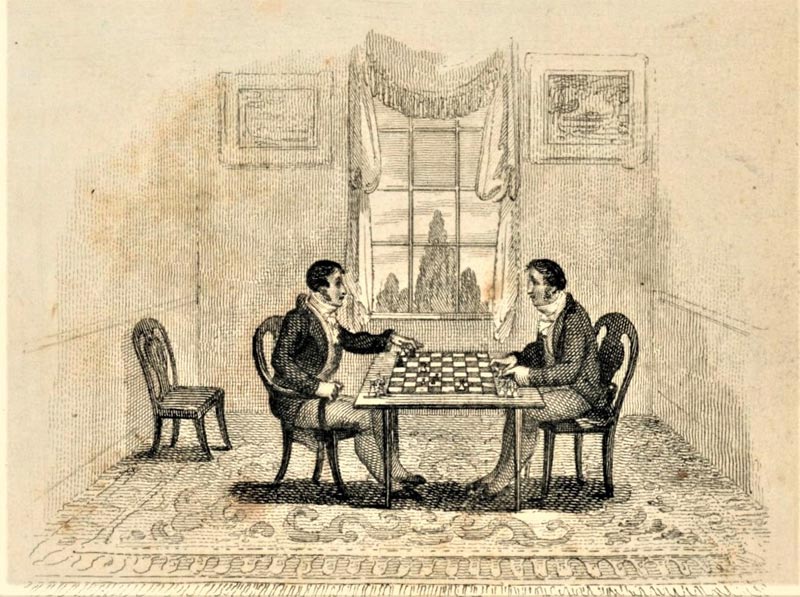
Wednesday 20 July may have been Miles Franklin day in Australia — being the occasion the winner of the annual prestige literary award is announced — but it was also International Chess Day. Also known as World Chess Day, 20 July marks the day International Chess Federation was established in 1924, although International Chess Day didn’t come into being until 1966.
In honour of the beloved checkered board game, the University Of Wisconsin Milwaukee Special Collections have posted images from the 1818 edition of Stamma on the Game of Chess, which contained numerous illustrations of game openings and critical situations. Much of the text was written by Philipp Stamma, and edited by William Lewis, who were eighteenth century chess masters.
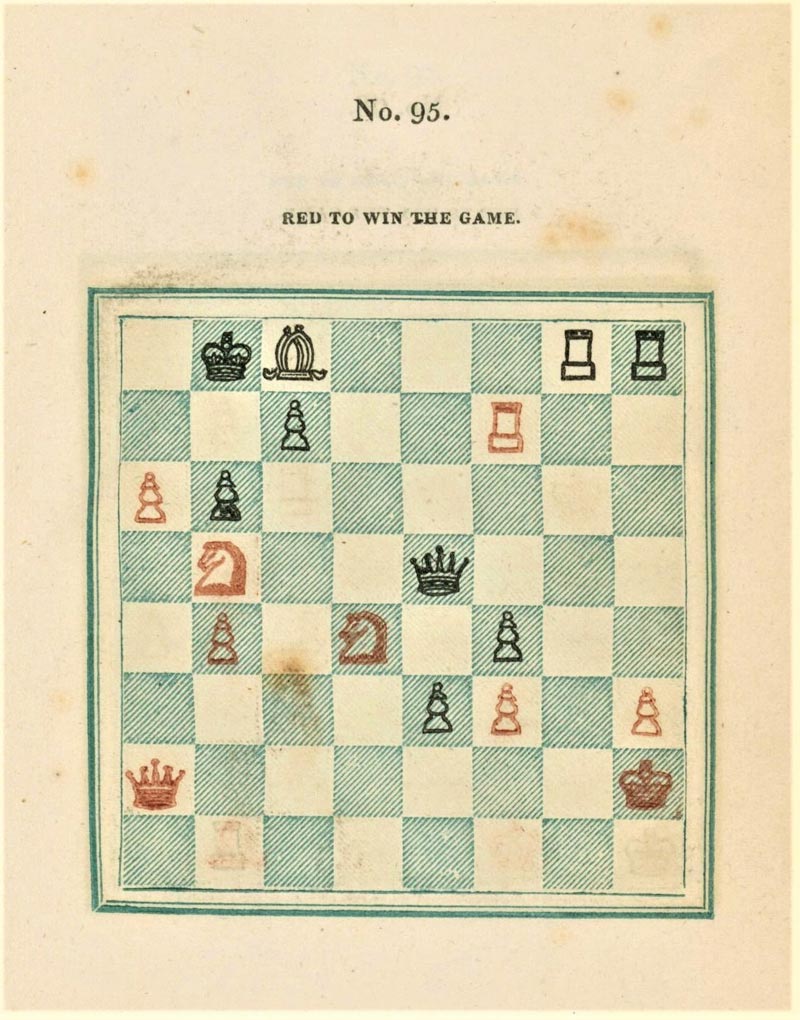
Although I play from time to time, I’m not the biggest chess aficionado you’d ever meet, but I was intrigued to learn game pieces were often coloured red and black, rather than the white, or ivory, and black pieces I’m more familiar with. There’s an interesting, though brief, discussion about red chess pieces here.
RELATED CONTENT
chess, games, history, illustration
Astronomers call for James Webb Space Telescope to be renamed
21 July 2022
While the images being collected by the newly operational James Webb Space Telescope have been stunning, some people are questioning whether the telescope should be named in honour of James Webb. Webb was NASA administrator from 1961 until 1968, and during his tenure he oversaw preparations for the early Apollo Moon flights.
But some astronomers and scientists are calling for NASA to rename the space telescope in light of allegations Webb persecuted LGBTQIA+ people, during, and before, his time as NASA administrator.
The telescope’s name has been criticised by many scientists amid allegations that Webb was linked to persecution of LGBTQ+ people in the 1950s and 1960s. The Lavender Scare witch-hunt resulted in the mass dismissal of gay and lesbian people from the US government service in the mid-20th century.
To date NASA has refused to yield, claiming there is no evidence supporting the allegations against Webb.
In September last year, NASA announced it would not change the telescope’s name. “We have found no evidence at this time that warrants changing the name of the James Webb space telescope,” NASA’s current administrator Bill Nelson said in a statement in September.
RELATED CONTENT
Iconic Sydney Park chimneys to be further restored
20 July 2022

Anyone going anywhere near Sydney Park, in Sydney’s inner west, will have seen the iconic old chimney stacks rising skyward from the corner of Sydney Park road, and the Princes Highway. If you’ve not been to the area, you’ve possibly seen photos of the chimneys on Instagram, where who knows how many thousands of such images reside.
The chimneys are part of a long closed brick manufacturing facility, which began operating at the site in the 1870s. Having restored two of the heritage listed stacks several years ago, Sydney City Council is embarking on a project to further preserve the four chimneys, while making the area of the park they are located in more accessible to the community.
The Sydney Park brick kiln and chimney precinct contains substantial remains from the brick making industry that once dominated the area. Shale was extracted from deep pits, crushed and pressed into green bricks that were fired in the large kilns.
RELATED CONTENT
Why do young people in old photos look old?
19 July 2022
This is something I’ve often wondered about. I’m looking at a photo portrait that might be one hundred years old, of a person who is, or was, aged about twenty at the time the photo was taken. Despite their obvious youth, they still somehow look… old. Why should that be though? It’s a question that Michael Stevens, host of Vsauce, explores in a recent video.
The phenomenon of people who seem to be older at a younger age, is something Stevens calls retrospective aging. People today, he tells us, are aging at a slower rate than those who came before us. Lifestyle and nutrition changes, better healthcare, less smoking, and even the wider spread use of sunscreen, all make a difference. But there’s more to it, as Stevens explains.
As to the one hundred year photo of the twenty year old, who indeed looks twenty and not thirty-five, but still seems old, is something I call the illusion of age.
Compare photography of a century ago with the casual nature of selfie snaps today. One hundred years ago cameras were not as ubiquitous as they are today. Back then, having your photo taken was an occasion. People dressed elegantly. Put on their best clothes. Suits, evening dresses. Tidied up their appearance. People also tended to pose more formally, and seldom smiled. They looked serious. Not to mention their hairstyles, which also suggest a bygone era. All of those factors could combine to present someone in a more mature, older, light.
Then there’s the fact we know said photo is a century old. We’re looking at someone we know, were they still alive, would be aged well over one hundred. The image, the illusion, of an old person, therefore presents itself in our minds. The young person — unfortunately — looks old to our eyes.
RELATED CONTENT