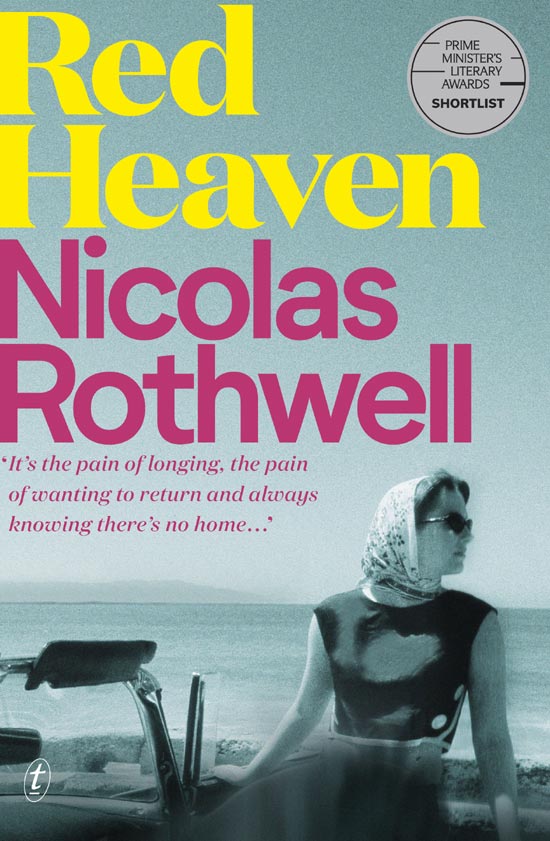
It begins in the late 1960s in Switzerland, as the boy’s ideas about life are being shaped by two rival influences. These are his so-called aunts — imperious, strong-willed, ambitious — both exiles, at the mercy of outside political events; both determined to make the boy into their own heir, an inheritor of their values. In self-contained episodes, each set in an alpine grand hotel, we see one aunt and then the other educate their protégé.
Serghiana, the ‘red princess’, is the daughter of a Soviet general, a producer of films and worshipper of art, a true believer. Ady, a former actress and singer, is a dilettante and cynic, Viennese, married to a great conductor: in her eyes, all is surface, truth a mere illusion. Memory and nostalgia — the aunts’ gifts to the boy, gifts of obligation — are the purest expression of love allowed them. Gradually he comes to understand the shadows in their past. Their stories stay with him, guiding his path through adolescence, until he can absorb the influences of the wider world.
Winners in other categories of this year’s awards include Human Looking, a collection of poetry by Andy Jackson, and The Gaps, by Leanne Hall, which won in the young adult category.
In Twitter’s early days, the original one-hundred-and-forty character limit per tweet was a test of a micro-blogger’s ability to be succinct yet informative. It may have been harsh, but the more you thought about the seemingly restrictive limit, the easier it became to craft compelling tweets. One-hundred-and-forty characters forced users to be to the point, and not waste a single character in doing so.
But the increase, across most languages, to two-hundred-and-eighty characters, in November 2017, seemed like the striking of a happy balance. Twitter still felt like a micro-blogging platform, while giving members a little more latitude in their tweets.
Then last winter it was reported Twitter was trialling a notes function. Members would have been able to append a text file — containing two-thousand-five-hundred words — to a tweet. That seemed liked a sensible idea, as I wrote in June. People without a website or blog, would be able to make Twitter the focus of their web presence, without having to get involved in the effort of maintaining a website. And anyone who didn’t want to read what was effectively a two-thousand-five-hundred word tweet, could simply scroll through to the next item in their feed.
News today of a proposed four-thousand character limit doesn’t mean people still can’t skip past any tweet they don’t want to read. But it is a game changer. Yet the real question is: why is this happening in the first place? To increase user engagement? Of that, I’m not sure. For me Twitter has always been a place where I can scan the main feed looking for stories of interest. And if something takes my interest, I can click through for more on the story, by way of the embedded link in the tweet.
And what of interactions with other users? A two-hundred-and-eighty character tweet limit surely helped keep conversations ticking over. How will discussion fare now people can make sprawling contributions to the discourse? Will anyone hang around to read whatever is tweeted?
One thing is certain, if the four-thousand character tweet limit is adopted, Twitter will cease being a micro-blogging platform — which is what made it so popular in the first place — and become something else altogether.
When the ALCS first ran its survey of author incomes in 2006 it found that the median self-employed income of a full-time author was £12,330. In 2022 — a year in which multiple publishers have posted record profits while freelancers in all professions are still reeling from the impact of Covid-19, Brexit and rising living costs — the median full-time income has fallen to £7,000. That’s a drop of more than 60% when accounting for inflation.
Unsurprisingly, there are British authors who are considering giving-up writing, and finding other ways to make a living.
But a quick look at those numbers. In 2006, £12,330 equated to about A$30,750. I used an exchange rate from December 2006, where one British pound equated to about two dollars and fifty cents in Australian currency. Today’s rate is closer to one dollar and eighty cents, according to xe.com.
At around the same time, December 2006, the minimum wage in Australia was not quite A$27,000 per annum. So an annual salary of A$30,750 wouldn’t have been too bad (well…), at least in Australian terms. But today £7,000 equates to a paltry A$12,633. That figure again: A$12,633. Then go and contrast that number with the present minimum Australian wage of about A$42,000.
Considering the lowest earning writers in Australia, being literary authors, make A$14,500 a year, describing the position the majority of British authors find themselves in, as dire, seems like an understatement to say the least.
Scientists have proposed a dazzling new mission to travel to the stars that is inspired by the elegant flights of seabirds, such as albatrosses, reports a new study. The interstellar concept mission would harness shifting winds generated by the Sun in order to accelerate a spacecraft to as much as 2 percent the speed of light within two years, allowing it to soar into the vast expanse beyond our solar system.
But two percent the speed of light, a velocity that would take some time to attain anyway, isn’t all that speedy considering the vast distances between celestial objects, such as the Sun, and the nearest star to us, Proxima Centauri.
If we round off the speed of light at 300,000 kilometres (km) per second, two percent of that is six thousand km per second. That’s 360,000 km per minute, and 21,600,000 km per hour. 518,400,000 km per day. If my maths is on spec — not always guaranteed — the journey to Proxima Centauri, some 40,208,000,000,000 km distant, would take 77,561 days, or about 213 years.
On the other hand, if Pluto is an average of 5,300,000,000 km from Earth — sometimes it is closer, sometimes more distant — it would take about ten days to travel there. Assuming such speeds could be attained at relatively close proximity to the Sun, that is. This method of deep space travel seems reasonable for reaching points in and near the solar system, but might be out of the question for interstellar voyages carrying people.
The Lost King, trailer, tells the story — in its own way — of British writer Philippa Langley, and her relentless work to find the body of English King, Richard III, who died at the Battle of Bosworth Field, in the English county of Leicestershire, in 1485.
There’s some serious British talent involved here. Veteran filmmaker Stephen Frears — whose previous work includes My Beautiful Laundrette, The Queen, Tamara Drewe (where I saw him speak at a screening thereof in Sydney in 2011), and Philomena — directs.
How to Replace the Sky: New York based Australian artist and illustrator Matt Huynh explores his relationship between technology and his work.
I probably won’t stop using new devices to make and share my work any time soon. My habits and instincts have been shaped too much by what the gadgets need me to do. But maybe that would all change if only I could shape my tools to suit me instead.
And in the same week ChatGPT lands, and, who knows, stands to change the way we do anything and everything.
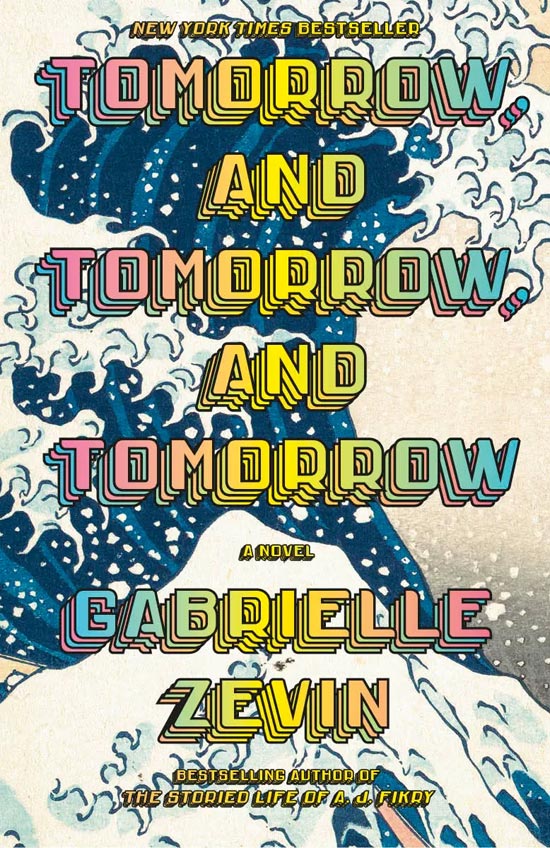
On a bitter-cold day, in the December of his junior year at Harvard, Sam Masur exits a subway car and sees, amid the hordes of people waiting on the platform, Sadie Green. He calls her name. For a moment, she pretends she hasn’t heard him, but then, she turns, and a game begins: a legendary collaboration that will launch them to stardom. These friends, intimates since childhood, borrow money, beg favors, and, before even graduating college, they have created their first blockbuster, Ichigo. Overnight, the world is theirs. Not even twenty-five years old, Sam and Sadie are brilliant, successful, and rich, but these qualities won’t protect them from their own creative ambitions or the betrayals of their hearts.
One of the games created by the characters in the novel, EmilyBlaster, has since become an actual game. Zevin’s book is on my TBR list, hopefully I get to it over the summer break.
Goodreads members cast near on six million votes, in seventeen categories, for their favourite titles in the annual poll of books published in the last year.
“The perception of glamour is merely a marketing tool that we take advantage of when it suits us. The reality of a creative life is workdays that never finish, crippling imposter syndrome, and the juggling act of trying to find a way to make your living in the gig economy,” said Crowe.
Among the eleven ACCTA Awards haul for the Elvis Presley biopic, were best director, best film, best lead actor, going to Austin Butler in the title role, and best supporting actress to Olivia DeJonge, for her portrayal of Priscilla Presley.