Gender Queer: A Memoir, a graphic novel written and illustrated by American cartoonist and author Maia Kobabe, has been removed from the shelves of a Queensland library, according to a 9News report. Local police have since referred the publication to the Australian Classification Board (ACB), following a complaint that the book contains pornographic material.
Following a four-day investigation, Queensland Police confirmed to 9news.com.au they flagged Gender Queer: A Memoir to the ACB on Thursday for review. Gender Queer, which includes illustrations of masturbation, sex toys and oral sex, is written by Maia Kobabe, a nonbinary author from California. The 2019 graphic novel is centred on coming out to friends and family.
Despite being removed from the shelves at Logan Central Library, Kobabe’s book is still is available on request. The ACB said it was not usually standard practice to classify publications that Australian libraries made available, and that Gender Queer had not been referred to them previously.
To mark its twenty-fifth anniversary, Britain’s Baillie Gifford literary prize, which recognises excellence in non-fiction writing, is holding a Winner of Winners Award to select the best title — the best of the best, if you like — among the past twenty-four winners of the prize.
Riffing on this idea, Jason Steger, literary editor for Australian newspapers The Age, and The Sydney Morning Herald, suggests the Miles Franklin Literary Award could do likewise to commemorate its seventieth anniversary in 2027. The Booker Prize also did something similar in 2008, for their fortieth anniversary, with the Best of the Booker.
Steger put forward the proposal in his weekly newsletter The Booklist last week. A special panel of judges could create a shortlist of perhaps a dozen past Miles Franklin winners, with a public vote to determine an overall victor:
Like the Booker, choosing a shortlist and a public vote would seem the optimum way to go if the Miles were to do it. A panel of judges would have to be chosen and they could pick perhaps a 10- or 12-book shortlist. And then the likes of you and me would have our say.
Selecting a crème de la crème winner would be a big ask, as would drawing up any shortlist, but anything that boosts interest and excitement in Australian literature can only be a good idea.
Before she lost her job, Anja sold antique furniture at an auction house in Melbourne, capital of the Australian state of Victoria. The pieces she prepared for sale though were more than mere objects to her. These aged items of furniture, and bric-a-brac, were possessed of intricate histories. Imagine the stories each could tell, were they able to speak.
Perhaps it was partly this fascination with the past that lead Anja to lease a ramshackle old cottage, on a naval base on the Mornington Peninsula, to the south of Melbourne. The cottage’s isolation makes for the ideal place to retreat from the world, something she is seeking right now. Being sacked is not the only misfortune to befall Anja. Her mother died recently, and her marriage also failed.
The cottage is in need of attention, and Anja thinks fixing up the old place could be the beginning of something new. It might also help her keep her sanity. Anja finds a new job, and goes about making a home of the cottage. But strange things seem to be happening, and Anja comes to believe she is not alone on the grounds of the cottage.
She begins looking for answers. Like the history of the antiques she once obsessed over, Anja learns the cottage also has something of a history, a somewhat dark one, at that. Do these alleged past events — which the reader is given glimpses of by way of classified defence department reports — have any connection to what Anja thinks is happening now?
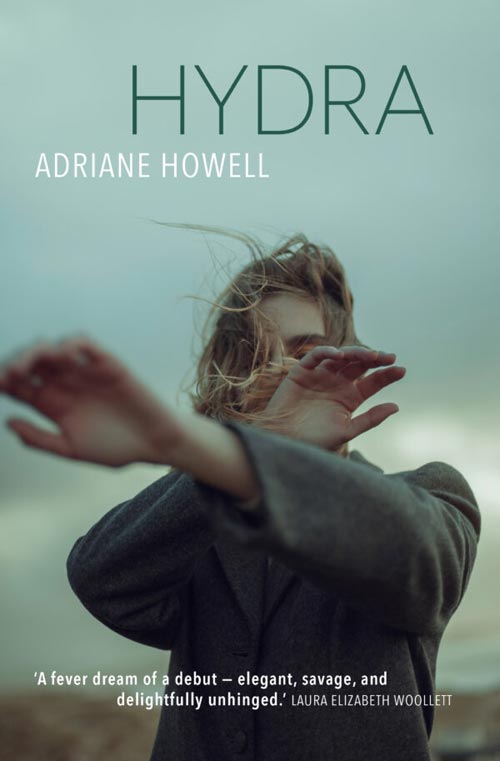
But Anja is a troubled person, and may not be the most reliable of narrators. Hydra, published by Transit Lounge in August 2022, is the debut novel of Melbourne based Australian author and arts worker, Adriane Howell. Howell is also the co-founder of Gargouille, a literary journal she established with Sarah Wreford in 2014.
Hydra, which has been longlisted for the 2023 Stella Prize, has variously been described as mystery, thriller, and literary horror. Anyone looking for slasher variety gore though, may be disappointed. The real horror in Hydra perhaps lies in the protagonist’s struggle to maintain her sanity, and keep a grip on reality.
A ten year high school reunion goes horribly awry, after a tidal wave transforms the venue into an island, leaving old students of an all-girls school stranded. Will the former school-mates co-operate, or will tensions and rivalries from their school days resurface and overwhelm them?
Emily Browning and Caitlin Stasey, star in the Amazon Prime produced Australian TV series, Class of ’07, trailer, created and directed by Kacie Anning, which goes to air on Friday 17 March 2023.
The 2023 Penguin Literary Prize shortlist, consisting of six manuscripts by new and emerging Australian writers of literary fiction, has been unveiled:
The Elementals by Liz Allan
The Boy Who Wept Rabbits by Benjamin Forbes
Falling and Burning by Michael Krockenberger
Jade and Emerald by Michelle See-Tho
Nothing Like The Sun by J.N. Read
The Guggenheim by Heather Taylor-Johnson
The winner, to be named on Thursday 15 June 2023, will win a cash prize, and have the opportunity to see their work published.
Diane was awarded $20,000 for her proposed biography of the relationship between Ngarrindjeri woman Louisa Karpany, née Kontinyeri (c1840–1921) and George Mason (1811–1876), sub-Protector of Aborigines at Wellington, South Australia.
Created in 2011 to honour the memory of late Australian writer Hazel Rowley, the fellowship is awarded annually to support the work of Australian biographers. Unlike many literary awards, the Hazel Rowley Literary Fellowship is awarded to a writer based on a biography proposal, rather than an already completed, published work.
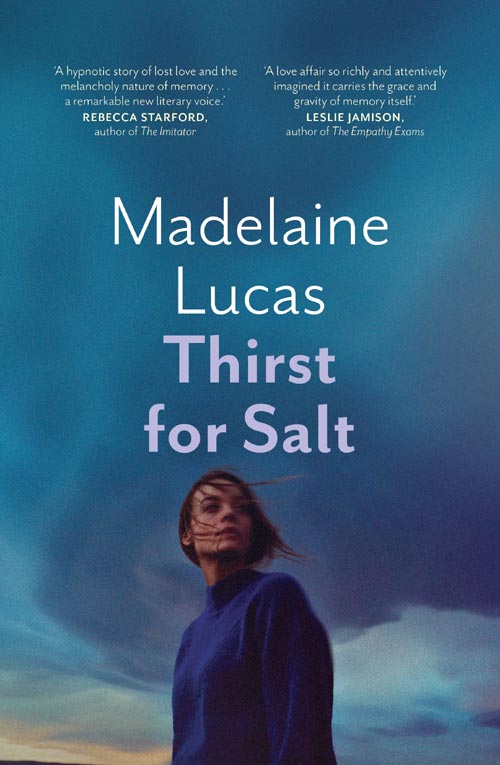
It was the title of Thirst for Salt, published by Allen & Unwin in April 2023, the debut novel of New York based Australian author Madelaine Lucas, that initially piqued my curiosity.
What did the name refer to? Was it a reference to the setting of the story, an isolated coastal town called Sailors Beach. Was the thirst for salt a desire to be near the water, to be swimming in the ocean? Or might the title describe a penchant for things salty, and the partaking of a taste sensation both sweet and sour?
Perhaps a thirst for salt is summation of the romantic relationship central to the novel. The affair a woman in her early twenties has with a man almost twenty years her senior.
She meets Jude, at the beach, after she is stung by a jelly-fish. He takes her home to tend her wound, and there it begins. But Jude soon reveals himself as a far from ideal lover and partner. He is manipulative, demanding, and evasive. He, for instance, refuses to introduce his girlfriend to his family and friends.
But these red flags, these warnings of toxic character flaws, are indiscernible when in the throes of love. They are brushed off, explained away, with an offhanded apathy. It is only in reassessing the relationship more than a decade later when she — the narrator of Thirst for Salt goes unnamed — understands just how much was not right.
But Lucas’ novel is not only a meditation of a romantic relationship. The narrator also ponders her relationship with her mother, and a childhood spent moving from place to place, without the presence of a father.
This is not a book for readers looking for fast paced action, or, for that matter, quotation marks accompanying the speech of the novel’s characters. Thirst for Salt is a contemplative exploration of deep, and complex feelings. It is the recounting of a journey some of us will be familiar with. One we are ambivalent about, but one that is often unforgettable. Perhaps now the idea behind the name of the novel begins to become apparent.
She says the impact of the Stella, on writers and readers, grows exponentially over time. The criteria for the prize are to recognise original, excellent, and engaging books; it is open to works of fiction, nonfiction and, as of last year, poetry. Worth $60,000 to the winner, short-listed authors receive $4000 each. Analysis of data in the week after the prize winner is announced shows a 200 per cent increase in sales.
Literary prizes have always been a great form of book promotion, maybe the best in my view, and I’ve always thought every nominee, from the time they’re included on a prize longlist, is a winner. This is why it would be great if there were more excitement, more profile around local literary prizes, as is the case with the Booker Prize in the United Kingdom.
I read last week that Grimmish, originally a novel self-published by Michael Winkler, which was shortlisted in the 2022 Miles Franklin award, sold fifteen hundred books, as a result of being listed. While any sales of a book are good news, fifteen hundred units seems to be on the lower side. Is Australia really a nation averse to books?
Over fifty percent of books published in 2020 in the United States, were written by women, says Joel Waldfogel, an economist at the University of Minnesota:
By analyzing data from Goodreads, Bookstat, Amazon, and the National Library of Congress, Waldfogel found that women’s share of published titles increased from around 20% in the 1970s to over 50% by 2020. This likely displaced some male authors, but the change wasn’t just that male authors were replaced by female authors. Rather, the whole industry grew, and by 2021, female-authored books sold more copies on average than those written by men.
While I couldn’t immediately locate data regarding books published by gender in Australia, the trend here is mirrored, to a degree, in terms of reviews of books published by women, and non-binary writers. According to the Stella Count, fifty-five percent of books reviewed in Australian newspapers and magazines, in 2020, were written by women.
I’m not sure if that means more Australian books were written by women than men in 2020, but these numbers suggest that might be the case.
A few weeks ago film production company Warner Brothers announced plans to make a raft of new movies based on the Lord of the Rings volumes, written by J.R.R. Tolkien. Many of these new movies will be set several hundred years before events depicted in the films Peter Jackson made between 2001 and 2003.
The news is no doubt exciting for fans of the books written by Tolkien, and the movies made by Jackson. But do we really need another slate of Lord of the Rings films? Have we not seen enough of fire breathing dragons, giant spiders, and enormous armies that threaten to crush the heroes?
There are plenty of other stories that could be adapted to film, and many of them are Australian novels. On top of that, there’s a stack to choose from. So here we go, my list of five Australian books to adapt to film instead of Lord of the Rings stories.
The Shut Ins by Katherine Brabon
The Melbourne based author wrote her second novel, The Shut Ins in 2021. Set in Japan, Brabon explores hikikomori, a phenomenon where mostly young Japanese men completely withdraw from society. Some of them might spend years confined only to a room in their parent’s house, barely even seeing their family.
The Shut Ins centres on Hikaru Sato, a man in his late twenties, who has locked himself in his room. One day by chance, his mother Hiromi, meets Mai, an old high school friend of Hikaru. Hiromi implores Mai to help lure her son out his room. But Mai has her own troubles. She has recently married, and both her husband, J, and family, expect to her give up her career and have children.
Another character, Sadako, meanwhile, works as a hostess, and entertains J during his regular business trips to Tokyo. It is doubtful Mai is aware of their liaisons. In a separate timeline several years later, an Australian writer, researching the hikikomori phenomenon, travels around Japan. As she moves from place to place, she corresponds by email with a Japanese man, a former hikikomori.
Although he now lives in America, he has returned to Japan for a holiday. The split timelines, and the uncertainty as whether anyone in the latter timeline is connected to those of several years earlier, would make The Shut Ins a compelling film.
Loveland by Robert Lukins
Robert Lukins is another Melbourne based author, whose second novel, Loveland, was partially inspired by the cover of Bruce Springsteen’s 1982 album, Nebraska.
May, an Australian woman, has travelled to Loveland, in the US state of Nebraska, following the death of her grandmother, Casey, whom May barely knew. May is also escaping an abusive husband, who wants her to sell Casey’s property as soon as possible.
As May readies the house for sale, she learns Casey likewise sought to escape her old life by coming to Loveland. In fact she has more in common with her late grandmother than she realises, and like Casey, May comes to realise Loveland might be able to offer her a new beginning.
Loveland is slow burning, though suspenseful drama, delivering an outcome certain to leave filmgoers guessing right up to the final frame.
Every Version of You by Grace Chan
Climate change and poverty have rendered the real world unbearable by the latter part of the twenty-first century. Many people have taken to residing virtually, in a digital domain known as Gaia. Their bodies never leave their apartments, but in Gaia, their digital avatars roam free, carrying on what passes for a normal life.
This how a young woman Tao-Yi, and her boyfriend, Navin, largely exist. When a new technology emerges allowing people to permanently upload their minds to Gaia, and live forever as a digital avatar, a choice must be made. To live in an increasingly inhospitable environment, or escape into the digital utopia that is Gaia.
Navin thinks being permanently fused to Gaia is a great idea. Tao-Yi is far from certain. Her mother meanwhile, wants no part of the virtual realm, and prefers to remain in the almost abandoned real world, with her memories of living in Malaysia. Every Version of You would be a treat for fans of science-fiction and speculative fiction films.
Picnic at Mount Disappointment by Melissa Bruce
Sydney based Victorian born author Melissa Bruce’s 2017 debut will sate the appetite of people looking for a coming of age story, and those who still feel an affinity with the eighties. Fifteen year old Lucy is uprooted from her comfortable inner-city life in Melbourne, to move to a small town in rural Victoria.
Adjusting to living on a horse farm, at the foot of Mount Disappointment, is not easy. Lucy has to contend with a step-mother she hardly knows, a situation not helped by her father who is often away, travelling for work. She also must get used to a new high school, where she has no place on the pecking order, while looking out for her younger brother, who is also struggling to adapt.
But Lucy soon learns to ride horses, make new friends, and finds a boyfriend. And as her growing confidence turns to bravado, Lucy is quickly confronted by new challenges and threats. Bruce’s novel is written in alien to the eighties tweet styled stanzas, which would add zest to any screenplay for Picnic at Mount Disappointment.
The Wife and the Widow by Christian White
I’m not sure The Wife and the Widow, the second novel by Victoria based Australian author Christian White, could be adapted for the screen. To go into why would give away one of the most spectacular twists seen recently in fiction. In short though, this is the story of two women, a wife, Abby, and a widow, Kate.
Kate has travelled to an island off the coast of Victoria, following the murder of her husband, who was possibly leading a double life. The killing has shocked the island’s small, tight knit, community. Abby, meanwhile, is beginning to suspect her oddly behaving husband may be a murderer.
But it is only as Kate and Abby slowly draw towards each other, that the truth about their husbands come to light. I have no doubt an adept screenwriter could bring The Wife and the Widow to cinemas. It would be worth the effort if it worked, because the twist, when revealed, will leave audiences dumbfounded.
No more Lord of the Rings, please…
My list of Australian novels that could be adapted to film is by no means exhaustive. It could easily have been far longer, but I think the point is clear: there are plenty of new, original stories, written here in Australia, that would make great movies.