
Cars with manual transmissions are becoming fewer and fewer
27 August 2022
Cars with manual transmissions are sadly going the way of the dodo… but who am I to complain, so is working from an office block for many people.
I learned to drive in a manual, though I did my first drive in an automatic, around an empty shopping centre parking lot one Sunday afternoon. At one point I could change gears on a manual without using the clutch, it was quite easy once you knew what to do.
As Matt Crisara writes for Popular Mechanics though, automatic transmission vehicles are becoming better, and, really, manuals are quite needless.
Being able to drive a manual car is about so much more than the simple joy of being in control of a machine. Most of my sense of accomplishment came from navigating the steep curve of learning how to drive a stick shift with my dad at my side — it’s not something you master overnight. I’m not ashamed to mention that it took me a few sessions in a parking lot to get the fundamentals down. Now, fewer kids are going to have this chance as manuals become harder and harder to find.
RELATED CONTENT
Bits of Saturn, a Twitter account posting Cassini probe images
27 August 2022
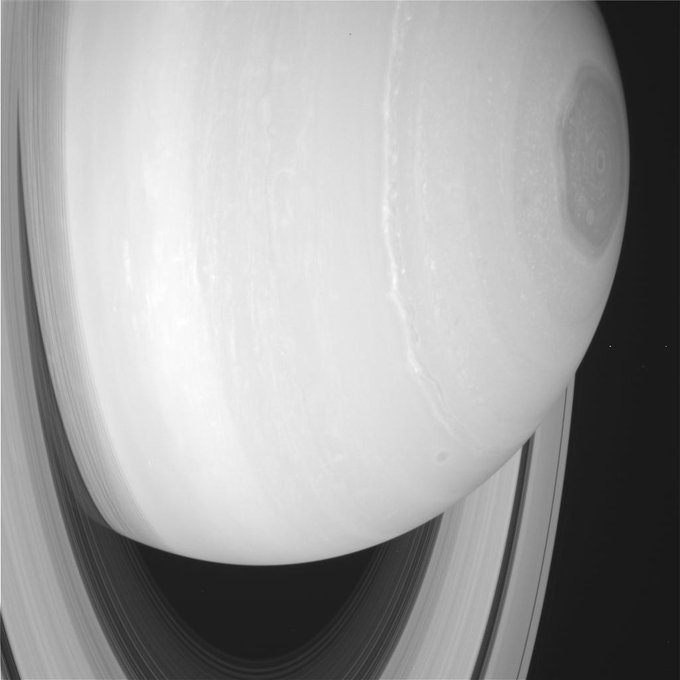
Speaking of Twitter, while a number of accounts may be automated or bots, they’re not all bad. Bits of Saturn, which posts raw images of the ringed planet, taken by NASA’s Cassini probe, between 2004 and 2017, is one you should follow.
RELATED CONTENT
Peiter Zatko’s whistleblowing Twitter report may not help Musk
27 August 2022
Earlier this week a whistleblower complaint to the United States Congress made by Peiter Zatko, who was head of security at Twitter until his departure in January, was made public. Some commentators saw Zatko’s report as a damning insight to the management of the social media service, which supported Elon Musk’s decision to abandon his takeover bid for the social networking service:
The disclosure, sent last month to Congress and federal agencies, paints a picture of a chaotic and reckless environment at a mismanaged company that allows too many of its staff access to the platform’s central controls and most sensitive information without adequate oversight. It also alleges that some of the company’s senior-most executives have been trying to cover up Twitter’s serious vulnerabilities, and that one or more current employees may be working for a foreign intelligence service.
Mike Masnick, writing for Techdirt, in a detailed analysis of Zatko’s complaint, suggests the report in fact backs Twitter’s position, and may not be the legal leg-up Musk is seeking. Musk, who claims Twitter did not reveal the true extent of spam accounts on the platform, launched legal proceedings against the company in July.
But, as Masnick points out, Musk’s lawsuit has nothing to do with spam accounts on Twitter:
The first and most important thing to remember is that, even as Musk insists otherwise, the Twitter lawsuit is not about spam. It just is not. I’m not going to repeat everything in that earlier story explaining why not, so if you haven’t read that yet, please do. But the core of it is that Musk needed an escape hatch from the deal he didn’t want to consummate and the best his lawyers could come up with was to claim that Twitter was being misleading in its SEC reporting regarding spam. (As an aside, there is very strong evidence that Musk didn’t care at all about the SEC filings until he suddenly needed an escape hatch, and certainly didn’t rely on them).
Musk insists Twitter claimed only five-percent of accounts on the platform were spam or fake. But the five-percent number derives from so-called mDAU accounts, being monetizable daily average users, which Twitter defines as a “valid user account that might click through ads and actually buy a product”. The mDAU accounts sound like a rarefied group of members, but the spam count only applied to them, not the platform as a whole.
Except it’s Musk here who is using clever wordplay to distract and mislead everyone. As we’ve described over and over again, the 5% number that Musk repeats in these screenshots is about mDAU. The 5% number is what Twitter reports is the amount of spam they believe incorrectly gets counted in mDAU. It’s Musk who keeps pretending the 5% number implies spam across the entire platform, which Twitter has never said it does. As we’ve explained multiple times now, Musk is trying to distract by pretending that the 5% claim is about spam on the entire platform. It never has been. It has always been an estimate of the amount that makes it through and is still counted in the mDAU. That is clear to anyone who’s actually read Twitter’s filing (both in the Chancery Court and at the SEC).
Masnick’s article is a longer piece, but well worth the read for anyone with an interest in Musk vs Twitter.
RELATED CONTENT
Elon Musk, social media, Twitter
From woe to go Triple J ratings rebound in latest survey
26 August 2022
Last time I wrote about listener survey ratings for local and alternative music Australian radio station, Triple J, the news was not good for the broadcaster. Results of survey four for 2022, conducted between Sunday 22 May and Saturday 25 June, and released on Tuesday 5 July, showed a sharp fall in the number of people tuning in.
The findings of survey five though, where radio listeners were polled between Sunday 10 July and Saturday 13 August, revealed a jump in audience numbers, among Sydneysiders aged 18 to 24.
Australia’s national youth broadcaster Triple J has seen a noticeable bump in its key 18-24 demographic in the fifth radio survey of the year, after struggling with its core audience in Sydney for most of 2022. The latest survey has seen the broadcaster more than double its 18-24 audience share, leaping from 4.4 per cent to 9.6 per cent of all listeners in that age group.
Despite the overall increase of listeners in the 18-24 demographic, Triple J’s breakfast and morning shows saw a decrease in audience numbers.
RELATED CONTENT
Publishing contract morality clauses may be unfair to authors
26 August 2022
Finding a traditional publisher for a novel is becoming ever more difficult. For one thing, aspiring — being unpublished — authors, are up against who knows how many other hopeful novelists. They also have to contend with a shrinking pool of publishing houses, as the industry appears to be going through a consolidation, which is seeing many smaller and independent publishers absorbed by larger players.
Even authors with several published works to their name, are reporting waits of up to a year to hear back about a pitch. But adding to the woes of many authors, emerging and established, are so-called morality clauses some publishers are including in their agreements.
In short, if a writer fails to meet a certain standard of behaviour, they may lose any advances or royalties they’ve received. The problem author advocates — such as the Authors Guild — have with morality clauses are the sometimes vague definitions of inappropriate or wrong conduct.
These contract provisions allow publishers to terminate a book contract, and in many cases even require the author to repay portions of the advance already received, if the author is accused of immoral, illegal, or publicly condemned behavior. Publishers insist they need the clauses to protect themselves in the event an author’s reputation becomes so tarnished after the book contract is signed that it will hurt sales. But most of these clauses are too broad and allow a publisher to terminate based on individual accusations or the vague notion of “public condemnation” — which can occur all too easily in these days of viral social media.
People should be held accountable for wrong-doing, but everyone is entitled to proper due-process. The concern is morality clauses, particularly where the definition of inappropriate or wrong behaviour is poorly defined, could be used unfairly against some authors.
RELATED CONTENT
The sound of the Perseus galaxy cluster black hole
25 August 2022
NASA have again been applying sound, or musical notes, to the data they’ve collected from objects in the universe — a process called sonification — this time a black hole located about two-hundred-and-forty million light years away in the Perseus galaxy cluster.
People have variously likened the droning sound produced by the black hole to wailing ghosts or grumbling, hungry, stomachs. Somehow I think of water draining down a plughole.
The Perseus galaxy cluster is intriguing of itself being, according to Wikipedia, one of the most massive objects in the known universe, containing thousands of galaxies immersed in a vast cloud of multimillion-degree gas. I doubt we’ll be sending our star ships too close to that cluster…
RELATED CONTENT
Publishing your book online, Ted Gioia lists the reasons why
25 August 2022
American author Ted Gioia intends to publish his next book on Substack, an online publishing platform. This really is worth a read for anyone considering self-publishing a novel.
The Internet may be a curse in many regards, but it has given me direct contact with my readers. I cherish that. Things that once took a year now happen instantaneously. Instead of getting feedback from one editor, I learn from thousands of people, many of them very smart with useful things to say. The whole process is energized, streamlined, and turbocharged.
RELATED CONTENT
novels, publishing, Ted Gioia, writing
Trailer for 6 Festivals by Macario De Souza
24 August 2022
6 Festivals, trailer, is the latest feature from Australian filmmaker Macario De Souza:
Maxie, Summer and James share a deep bond and love for music. When James receives a devastating diagnosis, the friends throw themselves into a whirlwind of festivals in an attempt to escape reality.
De Souza’s debut was his 2007 documentary, Bra Boys, about the surf culture at Sydney’s Maroubra Beach, and a local gang called the Bra Boys, whose name derived from the last three letters of Maroubra. De Souza co-directed Bra Boys with Sunny Abberton, who founded the gang with his brothers Koby, Jai, and Dakota.
RELATED CONTENT
film, Macario De Souza, Sunny Abberton, trailer, video
Queer Podcasts, a directory of global LGBTQIA+ podcasts
24 August 2022
Ram Smith, whom I once worked with, has recently launched Queer Podcasts, a directory aggregating LGBTQIA+ podcasts from around the world onto a single platform.
RELATED CONTENT
Interview with Frank Prentice Titanic crew survivor
24 August 2022
An incredible interview with the late Frank Prentice, who worked as a storekeeper on doomed ocean liner Titanic. He recalls the ship stopping after being struck by the iceberg that led to its eventual sinking, though he didn’t feel any impact.
Prentice also talks of convincing a woman, Virginia Clark, to board a lifeboat even though she was reluctant to leave without her husband. When Prentice finally leapt from the ship, seconds before it sank, he swam through waters and was later pulled onto the lifeboat Clark was aboard.
RELATED CONTENT