
Showing all posts about books
Everyone and Everything, the debut novel of Nadine J. Cohen
4 July 2023
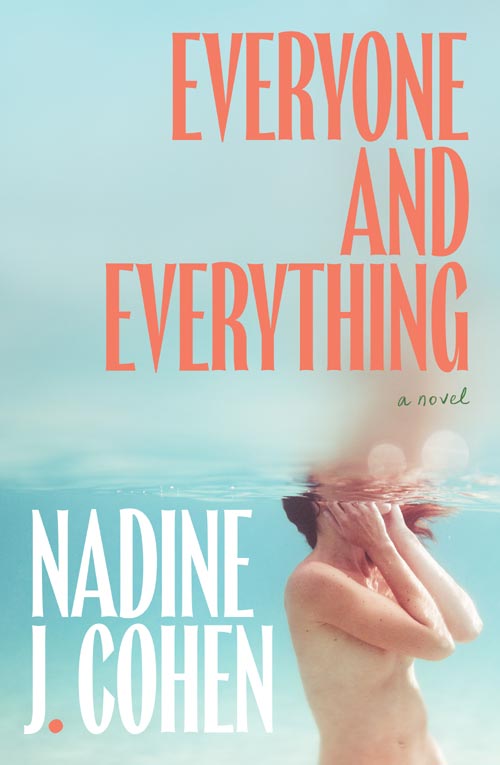
Book cover of Everyone and Everything, written by Nadine J. Cohen.
Just as well I still check in on Twitter. If not, I’d have not found what I found out about Sydney based refugee advocate, and Australian writer, Nadine J. Cohen. First up her Twitter account has been suspended, and second, her debut novel, Everyone and Everything, is being published later this year.
The Twitter ban came after an apparently off-colour joke on her page was brought to the notice of the powers that be at the social networking service. I saw a screen capture of the tweet in question, and yes, strictly speaking, the comment could be deemed inappropriate. However its tone has been taken completely out of context.
I’m surprised Twitter even looked sideways at Cohen’s tweet. Compared to some of what I see there now, it’s hardly offensive. Fingers crossed sense that prevails, and her account is reinstated, though that might be asking a lot. But back to Everyone and Everything, which arrives in bookshops on Tuesday 5 September 2023.
According to the book’s Sydney based publisher Pantera Press, Cohen’s debut will make you laugh, cry and call your sister:
When Yael Silver’s world comes crashing down, she looks to the past for answers and finds solace in surprising places. An unconventional new friendship, a seaside safe space and an unsettling amount of dairy help her to heal, as she wrestles with her demons — and some truly terrible erotic literature.
Early reviews sound promising. John Birmingham, he of He Died with a Felafel in His Hand fame, said “this book gave me all the feelings.” I read He Died with a Felafel in His Hand years ago, and have the film adaptation queued for viewing on my streaming service.
Australian radio and TV host, Myf Warhurst, whom I mentioned yesterday, was also approving of Cohen’s first novel:
This brilliant book doesn’t shy away from the rough stuff, exploring the complexity and brutality of life, all the while maintaining a grip on to the occasional simple joy and beauty of it all. I was cackling away at Nadine’s unique perspectives one minute, and sobbing the next. A magnificent debut!
That’ll do me. I’ve added Everyone and Everything to my TBR list.
RELATED CONTENT
Australian literature, books, literary fiction, Nadine J. Cohen
One in three Britons would rather read a book this summer
4 July 2023
Who said no one reads books anymore?
While television remains the preferred method of summertime “escape” in Britain, with just over one in two people tuning in, reading comes in as the next best means of putting the worries of the world aside. This according to data released by the London based Publishers Association:
Second only to watching TV (54%), 33% of respondents say that books offer them the best form of escapism when they are having a bad day. This is ahead of streaming TV (32%), looking at social media (27%), listening to radio (24%), going to the pub (21%), going to the cinema (16%) and listening to a podcast (14%).
In other good news for authors in Britain, 2022 was a bumper year for book sales, with a record six-hundred and sixty nine million physical books being sold, an increase of four percent on 2021.
RELATED CONTENT
Love & Pain, Ben Gillies, Chris Joannou tell their Silverchair story
4 July 2023

Book cover of Love & Pain, written by Ben Gillies and Chris Joannou.
Wednesday 27 September 2023 will be a red letter day for fans of erstwhile Australian indie rock act Silverchair. That’s the day Love & Pain, a book co-written by Ben Gillies, the band’s drummer, and bass player Chris Joannou, is set to be published by Hachette Australia. That Gillies and Joannou are behind this book is what makes it so compelling, as, to date, not a lot has been heard from former members about their time in the band.
So much has been written about Silverchair over the years but very little has been said by the band’s members. In Love & Pain, childhood friends Ben Gillies (drummer) and Chris Joannou (bass player) tell us tales about growing up across the road from each other and starting in Silverchair, wild stories from the peak of their days in the spotlight, and the ups and downs of how their lives have panned out since.
RELATED CONTENT
Australian literature, Australian music, Ben Gillies, books, Chris Joannou, music
Leslye Headland to direct The Seven Husbands Of Evelyn Hugo film adaptation
4 July 2023
Well over a year after a screen adaptation of Taylor Jenkins Reid’s 2017 novel The Seven Husbands Of Evelyn Hugo was announced, American filmmaker and screenwriter Leslye Headland has been named as director. Reid’s work of historical fiction spent over a year on The New York Times best seller list, after becoming a TikTok sensation in 2021.
The story recounts the life and times of Hollywood Golden Age star Evelyn Hugo, who, at age 79, grants a rare interview to an unknown journalist, Monique Grant. The now reclusive Hugo promises to reveal all to Grant, much to the chagrin, and envy, of Grant’s better known contemporaries. While Grant is as surprised as anyone else at being chosen, Hugo has a reason for selecting her.
So far there is no word on who will be cast, but earlier this year fans of the novel were clamouring for Jessica Chastain to take the role of redhead Celia St. James, Hugo’s foil and friend.
RELATED CONTENT
books, film, Leslye Headland, novels, screen adaptations, Taylor Jenkins Reid
Rare Harry Potter first edition book might sell for £5000
3 July 2023
A first edition print of Harry Potter and the Philosopher’s Stone, the first book in the Harry Potter series, published in 1997, will be auctioned later this week and may fetch up to five thousand pounds. A British collector of books and memorabilia, who died recently, had purchased the title, which was one of a print run of five-hundred copies, from a library for thirty pence.
First edition books, as the term suggests, are the first published copies of a book, and as such are often of interest to book collectors.
RELATED CONTENT
books, Harry Potter, publishing
Vale British actor Julian Sands, star of A Room with a View
29 June 2023
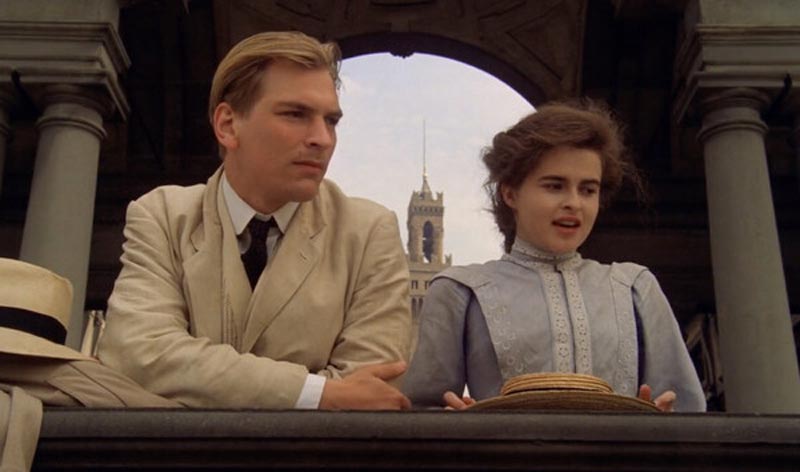
Julian Sands and Helena Bonham Carter, in a still from A Room with a View.
The remains of British actor Julian Sands, who had been missing since January this year, after setting off on a hike on Mount Baldy, in California, were located earlier this week. Sands’ disappearance sparked a large search effort, which was hampered by dangerous storms in the region.
Sands was a prolific film and television actor. His credits include The Killing Fields, The Phantom of the Opera, Ocean’s Thirteen, and The Girl with the Dragon Tattoo, to name a few. His breakthrough role however is considered to be that of George Emerson, in the 1985 film adaptation of late British author E. M. Forster’s 1908 novel, A Room with a View.
Made close to forty years ago now, the romance drama, set in Italy and England, was the intersection of an amazing array of acting and production talent. Acclaimed producers James Ivory and the late Ismail Merchant, who collaborated under the banner of Merchant Ivory, produced and directed. Late German novelist Ruth Prawer Jhabvala, wrote the screenplay.
As George Emerson, Sands played a love interest of protagonist Lucy Honeychurch, portrayed by compatriot actor Helena Bonham Carter, which was likewise seen as her breakout role. George was pitched against another of Lucy’s suitors, Cecil Vyse, played by Daniel Day-Lewis, in what was also one of his earlier film performances.
Veteran British actor Maggie Smith portrayed Charlotte Bartlett, Lucy’s older cousin, and chaperon during their trip to Italy. Smith and Bonham Carter would later work together in some of the Harry Potter films. Judy Dench featured in a supporting role as a novelist called Eleanor Lavish.
Denholm Elliott as George’s father, Rupert Graves as Lucy’s brother Freddy, and Simon Callow, as a vicar, Mr Beebe, also featured. New Zealand opera singer Kiri Te Kanawa sang O mio babbino caro, an aria from Italian composer Giacomo Puccini’s 1917 comic opera Gianni Schicchi, on the soundtrack.
While Sands appeared to not be nominated for any awards for his performance in A Room with a View, the film won in three categories in the 1987 Oscars, and four in the British Academy Film Awards in the same year. For anyone wishing to learn more about Sands’ work and career though, A Room with a View, is an essential, and excellent, starting point.
RELATED CONTENT
books, E. M. Forster, film, Helena Bonham Carter, Ismail Merchant, James Ivory, Julian Sands
Entries open for 2023 Australian Prime Minister Literary Awards
27 June 2023
The awards span six categories fiction, non-fiction, young adult literature, children’s literature, poetry, and Australian history, with prizes of up to one hundred thousand dollars awarded per category. Entries are open to citizens or permanent residents of Australia, for titles published or released in 2022, and close on the afternoon of Tuesday 25 July 2023.
Winners will be announced later in the year. Read more here.
RELATED CONTENT
Australian literature, books, literary awards
The best self-help book advice distilled into one blog post
25 June 2023
There are a million self-help books in the world, all filled to the brim with suggestions and methods to somehow make your life easier, better, or happier. But if you’re looking for the type of self-help these titles offer, which one — of the multitudes — do you choose?
Chris Taylor, writing for Mashable, may have saved you a lot of time. Time, you know, that can be invested in making desired improvements, instead of being wasted reading novel length books *.
Taylor has put in the hard yards on your behalf, by reading dozens of such books, and distilling the best of their often overlapping wisdom into a single blog post. Talk about breaking the job down into those much lauded baby-steps.
* this also leaves time to read actual novels instead.
RELATED CONTENT
The Man Who Invented Vegemite, a book by Jamie Callister
21 June 2023
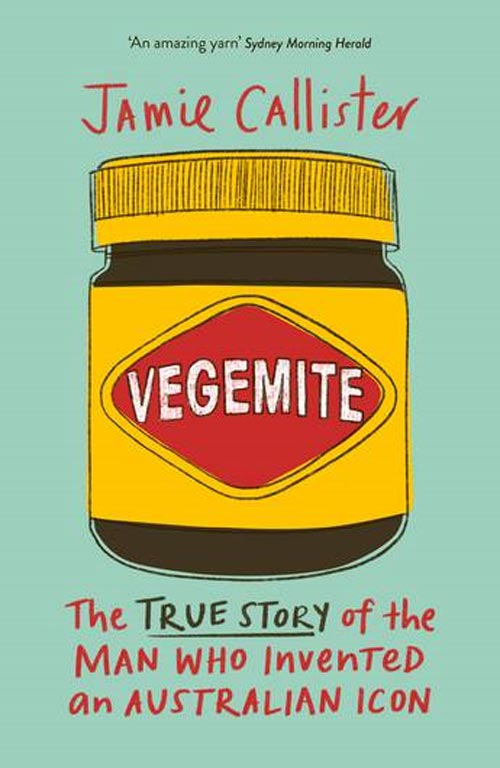
Book cover of The Man Who Invented Vegemite, written by >Jamie Callister.
Strewth, it’s been one hundred years since Australia’s favourite yeast extract, Vegemite, hit the shelves of grocery shops. Although similar (sort of…) to Marmite, which came along in 1902, Vegemite was developed by Cyril Callister, a Melbourne chemist and food technologist in 1922.
In 2012, Jamie Callister, the grandson of Cyril wrote a book, The Man Who Invented Vegemite, to mark what would have been the ninetieth anniversary of Vegemite. And now, ten years later, it looks like the book has been republished to commemorate a century of the viscous, dark brown — and might I add — delicious, spread’s presence in the world.
RELATED CONTENT
Australia, books, food, history, Jamie Callister
The Voice to Parliament Handbook, what an Indigenous voice means
21 June 2023
Australians will be participating in a referendum sometime in the next six months to decide whether a change should be made to the constitution, to create an Aboriginal and Torres Strait Islander Voice. Such a Voice would take the form of an independent body made up of Indigenous Australians.
Delegates of this body, who would not be elected members of parliament, would be tasked with advising the Australian government and parliament on matters pertaining to Aboriginal and Torres Strait Islander peoples. Their input however would not be binding.
Changes to the Australian constitution are never simple or straightforward. The process, and discussion, involved in making amendments, can be confusing and unsettling. To better understand the purpose of the Voice, and what it means, Hardie Grant have published a book called The Voice to Parliament Handbook.
Written by Thomas Mayo, a Torres Strait Islander, and Uluṟu Statement advocate, and journalist Kerry O’Brien, with illustrations by cartoonist Cathy Wilcox, the handbook aims to answer some of the more commonly asked questions about an Indigenous Voice to the Australian parliament:
A handy tool for people inclined to support a ‘yes’ vote in the referendum, The Voice to Parliament Handbook reflects on this historic opportunity for genuine reconciliation, to right the wrongs and heal the ruptured soul of a nation. This guide offers simple explanations, useful anecdotes, historic analogies and visual representations, so you can share it among friends, family and community networks in the build-up to the referendum.
RELATED CONTENT