
Trailer for Triangle of Sadness, a film by Ruben Ostlund
23 December 2022
Triangle of Sadness, trailer, the latest feature from Swedish filmmaker Ruben Őstlund, he of Force Majeure fame, looks like a lot of fun. Sort of.
A group of rich and powerful people set sail on a yacht under the command of the captain (Woody Harrelson). It’s all plain sailing until a storm hits, and then things get messy, really messy. Passengers vomit en masse, toilets block and overflow, and then some of those aboard end up marooned on a desert island. A kind of Gilligan’s Island, but on steroids maybe.
Late South African actor Charlbi Dean stars as Yaya, an Instagram influencer, who has been given free passage in exchange for promoting the vessel. She’s accompanied by her boyfriend Carl (Harris Dickinson), a fashion model. For those who can stomach tossing seas, Triangle of Sadness can be seen in Australian cinemas from Monday 26 December 2022.
RELATED CONTENT
Charlbi Dean, film, Ruben Ostlund, trailers, video
Ten word creative summaries: a secret sentence, a North Star to write by
22 December 2022
A journalist once told me he could summarise any article he was writing with a sentence of no more than ten words. These ten words, or less, outlined the purpose of the piece he was working on, whether it be five hundred words, or fifty thousand.
If he found himself floundering, or stuck, while writing, he’d refer back to his article outline so as to refocus on the task at hand. He ventured that the ten word outline could be applied to any creative endeavour, be it a painting, a sculpture, whatever. If the basic objective of the project could not be described in ten words or less, something was wrong, he said.
I think he was onto something. Let’s look at an example. If I had been making the 2019 film Portrait of a Lady on Fire, instead of Céline Sciamma, my ten word or less outline for the project might’ve been: “a painter falls in love with her subject.” If I realised, as the supposed filmmaker, that I was losing sight of the story, while trying to tie the myriad other elements of the narrative into a cohesive whole, I could go back to my outline for guidance.
American author Austin Kleon has a similar methodology, though he titles it with a little more pizzazz. He refers to his ten word outline as a secret sentence, and sees it as his “North Star”. Should Kleon need guidance while working on a writing project, he looks to his secret sentence:
Since we both write books, I confessed that with each book I usually have a secret sentence that I write down somewhere but don’t show to anybody. That sentence is sort of my North Star for the project, the thing I can rely on if I get lost. The sentence usually doesn’t mean anything to anyone other than me. And sometimes it’s pretty dumb. (When I was writing Show Your Work! the sentence was: “What if Brian Eno wrote a content strategy book?”)
A sort of star to steer by while writing. I like the sound of that.
RELATED CONTENT
creativity, psychology, writing
The shortlists for the 2023 Oscar Awards have been announced
22 December 2022
Ahead of nominations being announced on Tuesday 24 January 2023, the Academy of Motion Picture Arts and Sciences has unveiled the shortlists for the ninety-fifth Oscar Awards.
While there’s the usual suspects, the various sequels, prequels, and remakes, Avatar: The Way of Water, The Batman, Fantastic Beasts: The Secrets of Dumbledore, Jurassic World Dominion, and Top Gun: Maverick, among them, it’s pleasing to see other titles making the cut.
Included here are The Quiet Girl, Return to Seoul, Joyland, and The Blue Caftan, which feature in the International Feature Film category. This is always a focus for me, as we often see films that go against the grain, and tell stories that are not so familiar.
The Oscars ceremony will take place on Sunday 11 March 2023, though it’ll be Monday 12 March sometime, in this part of the world.
RELATED CONTENT
NSW Labor party to pay musicians $250 for live shows at publicly funded events
21 December 2022
Should they form government at the state election in March 2023, the NSW state Labor party will mandate a minimum payment of A$250 for musicians performing at any event or show in NSW that has received public, or government, funding.
The $250 flat fee will be a condition of a contract by a business or other entity that accepts a government grant for a show or event. While there is currently no guarantee that artists will receive a minimum fee for performing at events funded by public money in New South Wales, a Chris Minns-led government aims to change things.
This is a step in the right direction. A$250 may not be much, once musicians have deducted their various overheads, but it’s something. And worth far more than the trite line that artists doubtless hear often: “but performing (gratis) at our event will give you some great exposure.”
Heck, it’s even a line that’s been spun on me sometimes here at disassociated. Do I need/want exposure? Sure. But I also need income, to, you know, make a living.
RELATED CONTENT
artists, arts, Australian music, music
How adorbs, 500 new Scrabble words for your playing inspo
21 December 2022
To see the pace at which the English language is evolving, though I’m not sure evolving would be everyone’s verb of choice — change, or even devolution, might better fit the bill — look no further than the latest batch of words that can now be used in popular word game Scrabble.
Some five hundred words have been added to latest edition of The Official Scrabble Players Dictionary, says David Astle, writing for The Brisbane Times. Among them are adorbs, convo, dox, inspo, jedi, stan, sitch, and thingie.
Despite the fanfare, however, you may stand in oppo (another intake) to such skeezy (repulsive) additions, yelling ixnay (slang term for veto) at this whole thingie (yep, that’s in too). Pushed to shove, you may even succumb to grawlix (the sweary symbols of cartoons), yet 500 new words represent less a bleak day for English than a chance to embiggen your Scrabble ammo, amirite? And your score.
RELATED CONTENT
entertainment, games, language, trends
Authors back up your manuscript every day, it’s not difficult
19 December 2022
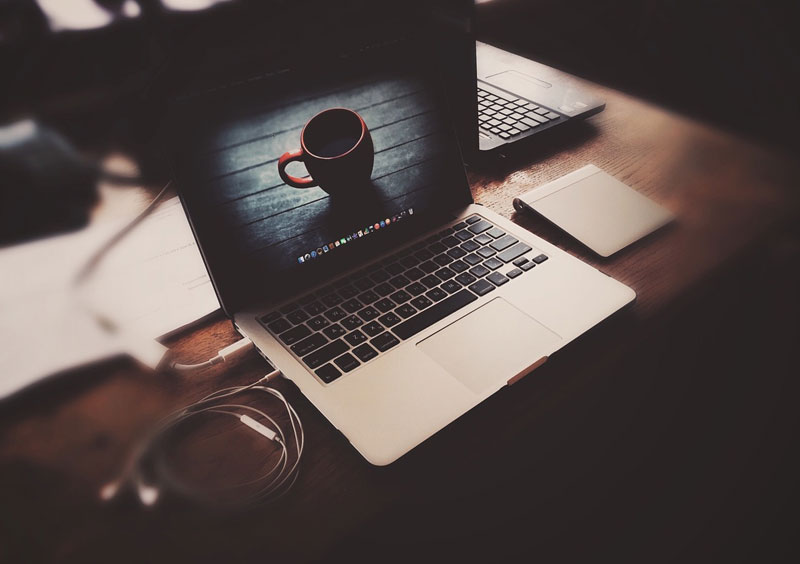
Image courtesy of malcevsasha.
The story about British writer Ann Cleeves losing her laptop, and, in the process, potentially the manuscript of the novel she was currently writing, is enough to give anyone who’s ever written a book nightmares for weeks. Some people devote years to developing their manuscript. Imagine if it were lost — irretrievably — in the blink of an eye?
While Cleeves was reunited with her laptop, it had been run over by a car, and buried under snow for a day or two, in Lerwick, a town in Scotland’s Shetland archipelago.
Cleeves was unsure whether any data could be retrieved from the device, but was thankful she’d emailed herself a copy of the document shortly before misplacing the laptop. “Not too much will be lost,” said Cleeves. Let’s hope so. Let’s also hope Cleeves has a clear memory of what work had not been copied. Losing even a couple of paragraphs could be devastating, especially if an author’s power of recall is not the best. The best part of the story may be lost forever.
But this sort of thing should not happen anymore. Authors no longer handwrite, or use typewriters, to write book drafts. They no longer depend on keeping a handwritten backup of their work. Nor do they need to use carbon-copying, or photocopying to create duplicates. At least they shouldn’t.
Who can forget the scene from Richard Curtis’ 2003 film Love Actually, when pages of the manuscript Jamie Bennett, portrayed by Colin Firth, is working on, blow into a nearby pond?
Why the hell wasn’t Bennett keeping any copies — whatsoever — of his work? More the point, why the hell was Bennett even using a typewriter? Because he sought to be charmingly technophobic? That’s not endearing, that’s foolhardy. Laptops were hardly uncommon in 2003, and were surely a more sensible option for a writer who seemed to be moving about, as Bennett was.
He’d have easily been able to keep a copy of the work-in-progress on a laptop’s hard drive (HD). And for extra peace of mind, he could have transferred copies to a thumb drive or two. Thumb drives had been around for a couple of years by that stage. But you don’t need me to tell you that.
Of course it could be argued Bennett had other things on his mind at the time we saw him. A recent relationship breakdown. Emerging feelings for the woman, Aurélia, who was looking after his villa in France. Not to mention the part the manuscript blowing into the pond played in the fledgling romance between Jamie and Aurélia. But rom-com movies aside, word processors, and other writing apps, make backing up documents as valuable as a manuscript easy.
No writer should find themselves in the situation either Cleeves or Bennett did. Because there are plenty of simple, secure backup options. Dropbox and OneDrive, for example, are among numerous cloud storage services. If you prefer to keep your work within the four walls of your home, setting up a separate backup folder on your HD isn’t difficult. Regularly copying that backup folder, and its contents, to a couple of thumb drives, which you keep somewhere safe, is an additional safeguard.
And although not the most secure, there’s the aforementioned method of emailing yourself copy of the manuscript file. It’s better than nothing. Preferably that’s a password protected document, and your email account is with a reputable web/cloud based provider.
Leaving a single copy of your manuscript on your computer HD is leaving all your eggs in one basket. Sadly though, I suspect there are plenty of writers who still do not understand this. But failing to back up work isn’t down to a lack of backup options, it’s more down to a lack of routine. For many authors, making copies of their work files may not be a part their work routine. If that’s you, change that conduct today. Make it the last thing you do at the end of each writing day.
Add “backup work files” to your daily to-do list now.
RELATED CONTENT
Should Elon Musk step down as Twitter head? VOTE NOW
19 December 2022
Twitter boss Musk is conducting another of his famous polls. This time he is asking Twitter members whether he should step down as head of the social media service. He says he will accept a YES outcome, should that happen. We’ll see. Meantime, go ahead and vote, though I hate to think what will happen to anyone who votes yes… they’ll probably be banned from Twitter for life.
The poll closes at about 10PM this evening AEST.
RELATED CONTENT
Elon Musk, social media, Twitter
Black hole stars, a weird cosmic entity and Soundgarden song
18 December 2022
Black hole stars, sometimes called quasi-stars, were a hypothetical star that may have existed in the earliest days of the universe, up to about half a billion years after the Big Bang.
They were larger — far larger — than any star known to be present in the universe today, and were capable of outshining entire galaxies. And, as the name suggests, they were part black hole. We know some stars become black holes at the end of their lives, but for the two to somehow co-exist, star and black hole, without one destroying the other? How can such a thing even happen?
In 1927, British-Indian scientist J. B. S. Haldane, in an essay titled Possible Worlds wrote the oft quoted sentence: “now, my own suspicion is that the universe is not only queerer than we suppose, but queerer than we can suppose.” It was Haldane’s way of saying we’re unlikely to ever make sense of the universe, no matter how much we learn about it. Black hole stars, in their bizarre weirdness, only add to the wonder.
And, as a bonus, American rock/grunge act Soundgarden’s 1994 track, Black Hole Sun, written by the late Chris Cornell, takes on a whole (er, no pun intended) new meaning in this context.
RELATED CONTENT
astronomy, music, science, video
Can an algorithm assess the quality of a novel manuscript?
18 December 2022
It pays to follow Australian scientist and writer Dr Karl Kruszelnicki (aka Dr Karl) on Twitter (as long as Twitter continues to permit such behaviour), especially if you are writing a novel.
The other day he posted a link to an article published in 2014, about a literary algorithm that is apparently capable of quickly assessing the quality of an unpublished novel manuscript. The article expounds upon research conducted (PDF) by Stony Brook University into the matter:
Regarding lexical choices, less successful books rely on verbs that are explicitly descriptive of actions and emotions (e.g., “wanted”, “took”, “promised”, “cried”, “cheered”, etc.), while more successful books favor verbs that describe thought-processing (e.g., “recognized”, “remembered”), and verbs that serve the purpose of quotes and reports (e.g,. “say”). Also, more successful books use discourse connectives and prepositions more frequently, while less successful books rely more on topical words that could be almost cliche, e.g., “love”, typical locations, and involve more extreme (e.g., “breathless”) and negative words (e.g., “risk”).
Fascinating, no? Remember though, don’t let the algorithm write the book, let it guide you in writing the book. But if you wish to avoid algorithms all together, look at the way Irish author Sally Rooney — for one — does things.
RELATED CONTENT
publishing, science, technology, writing
Barbie by Greta Gerwig, a very 2001: A Space Odyssey trailer
18 December 2022
What prompts you to see a movie? An interest in the story? Because you liked the book and are hoping against hope the film adaptation is going to be ok? Maybe you’re a fan of the director, or one of the lead actors? But what about the trailer? Would viewing a trailer — in isolation, without knowing anything about the film — be enough to inspire you to watch a given title?
The teaser/trailer for Barbie, the latest feature from American filmmaker Greta Gerwig, starring Margot Robbie and Ryan Gosling, might just the trailer that does it for me…
RELATED CONTENT