
The Bulwer-Lytton Fiction Contest for awful novel opening lines
18 December 2022
Not a literary award at all, more of an anti-literary award really, the Bulwer-Lytton Fiction Contest (BLFC), which has been running since its inception at San Jose State University in 1982. But unlike the literary awards we are more familiar with, the Bulwer-Lytton recognises terrible writing, and envisages the worst possible opening sentences to what will be awful novels.
Joe Tussey, from Daniels, in the U.S. state of West Virginia, was named winner in the 2022 adventure category, for this opener:
“Hoist the mainsail ye accursed swine” shouted the Captain over the roar of the waves as the ship was tossed like a cork dropped from a wine bottle into a jacuzzi when the faucet is wide open and the jets are running full blast and one has just settled into the water with a glass of red wine to ease the aches and pains after a day of hard labor raking leaves from the front yard.
The BLFC accepts nominations, the usual categories, including fiction, crime, and young adult, in the form of the worst paragraph you can devise, all through the year.
RELATED CONTENT
humour, literary awards, literature, writing
Seeing G, when John Berger donated half his Booker Prize money to the British Black Panthers
15 December 2022
Seeing G, a short documentary produced by the Booker Prize organisation, and British writer Jo Hamya, explores a fascinating chapter in literary award history. In 1972, British author and poet John Berger, was named the Booker winner for his novel G, also written in 1972.
During his acceptance speech though Berger caused — or is said to have caused — controversy, by pledging to give half of the £5,000 prize money to the London chapter of the British Black Panther Movement. But was the gesture truly controversial, or was that the way the media portrayed it?
‘I have to turn this prize against itself,’ he went on. ‘The half I give away, will change the half I keep.’ In a move made notorious by press, Berger donated half of his prize money to the London-based British Black Panther Movement. ‘I badly need more money for my project about the migrant workers of Europe,’ he explained, ‘[And] the Black Panther Movement badly needs more money for their newspaper and for their other activities… the sharing of the prize signifies that our aims are the same.’
Needless to say, there’s more to the story than meets the eye.
RELATED CONTENT
Booker Prize, John Berger, literary awards, literature
Victorian Premier’s Literary Awards 2023 shortlist announced
15 December 2022
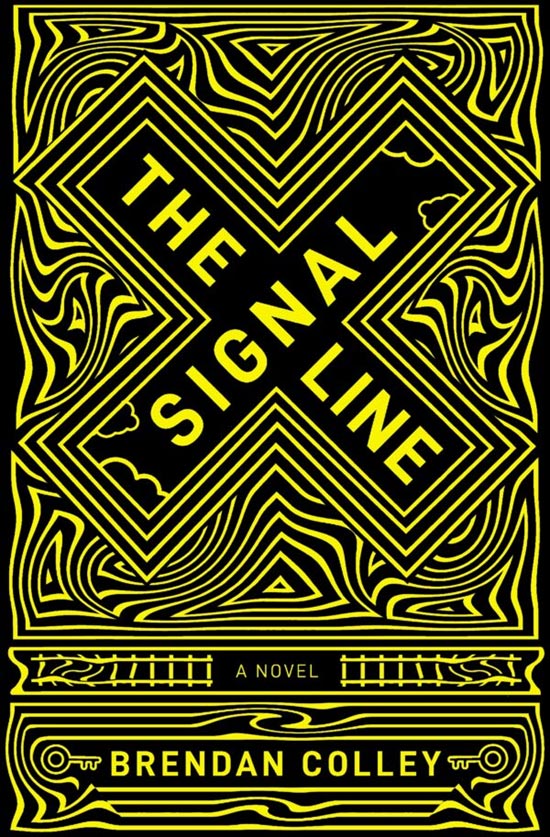
The Signal Line by Brendan Colley, book cover.
What do I like best about literary awards? They send a whole heap of reading recommendations in my direction. Yesterday the shortlists for the 2023 Victorian Premier’s Literary Awards were announced, and as a fan of fiction I’m looking forward to adding some more novels to my to-be-read list. While nominations span seven categories, including poetry, young adult, Indigenous writing, and drama, I’ve listed the shortlisted titles in the fiction category:
- Cold Enough for Snow, by Jessica Au
- The Signal Line, by Brendan Colley
- This Devastating Fever, by Sophie Cunningham
- An Exciting and Vivid Inner Life, by Paul Dalla Rosa
- Salonika Burning, by Gail Jones
- The Lovers, by Yumna Kassab
The winners in each category will be named on Thursday 2 February 2023.
RELATED CONTENT
Australian literature, literary awards
Red Heaven by Nicolas Rothwell wins Prime Minister’s Literary Award for fiction
13 December 2022
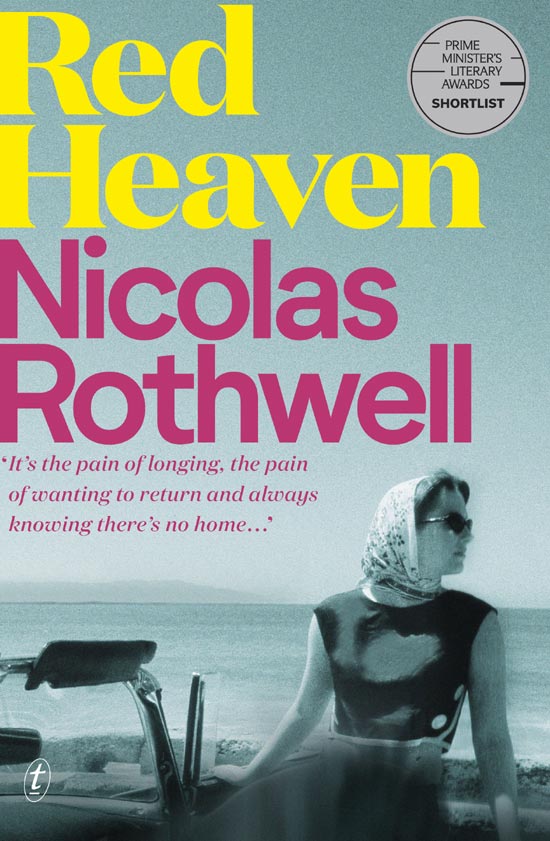
Far North Queensland writer Nicolas Rothwell has been named winner of the 2022 Australian Prime Minister’s Literary Award in the fiction category, with his 2021 novel, Red Heaven. Published by Text Publishing, Red Heaven recounts the childhood of a boy growing up in Europe in the 1960s:
It begins in the late 1960s in Switzerland, as the boy’s ideas about life are being shaped by two rival influences. These are his so-called aunts — imperious, strong-willed, ambitious — both exiles, at the mercy of outside political events; both determined to make the boy into their own heir, an inheritor of their values. In self-contained episodes, each set in an alpine grand hotel, we see one aunt and then the other educate their protégé.
Serghiana, the ‘red princess’, is the daughter of a Soviet general, a producer of films and worshipper of art, a true believer. Ady, a former actress and singer, is a dilettante and cynic, Viennese, married to a great conductor: in her eyes, all is surface, truth a mere illusion. Memory and nostalgia — the aunts’ gifts to the boy, gifts of obligation — are the purest expression of love allowed them. Gradually he comes to understand the shadows in their past. Their stories stay with him, guiding his path through adolescence, until he can absorb the influences of the wider world.
Winners in other categories of this year’s awards include Human Looking, a collection of poetry by Andy Jackson, and The Gaps, by Leanne Hall, which won in the young adult category.
RELATED CONTENT
Australian literature, literary awards, Nicolas Rothwell
Will 4000 character tweets be the end of Twitter as a micro-blogging platform?
12 December 2022
In Twitter’s early days, the original one-hundred-and-forty character limit per tweet was a test of a micro-blogger’s ability to be succinct yet informative. It may have been harsh, but the more you thought about the seemingly restrictive limit, the easier it became to craft compelling tweets. One-hundred-and-forty characters forced users to be to the point, and not waste a single character in doing so.
But the increase, across most languages, to two-hundred-and-eighty characters, in November 2017, seemed like the striking of a happy balance. Twitter still felt like a micro-blogging platform, while giving members a little more latitude in their tweets.
Then last winter it was reported Twitter was trialling a notes function. Members would have been able to append a text file — containing two-thousand-five-hundred words — to a tweet. That seemed liked a sensible idea, as I wrote in June. People without a website or blog, would be able to make Twitter the focus of their web presence, without having to get involved in the effort of maintaining a website. And anyone who didn’t want to read what was effectively a two-thousand-five-hundred word tweet, could simply scroll through to the next item in their feed.
News today of a proposed four-thousand character limit doesn’t mean people still can’t skip past any tweet they don’t want to read. But it is a game changer. Yet the real question is: why is this happening in the first place? To increase user engagement? Of that, I’m not sure. For me Twitter has always been a place where I can scan the main feed looking for stories of interest. And if something takes my interest, I can click through for more on the story, by way of the embedded link in the tweet.
And what of interactions with other users? A two-hundred-and-eighty character tweet limit surely helped keep conversations ticking over. How will discussion fare now people can make sprawling contributions to the discourse? Will anyone hang around to read whatever is tweeted?
One thing is certain, if the four-thousand character tweet limit is adopted, Twitter will cease being a micro-blogging platform — which is what made it so popular in the first place — and become something else altogether.
RELATED CONTENT
social media, technology, Twitter
British authors worse off than lowly paid Australian authors
11 December 2022
Australian authors are not alone when it comes to struggling to make a living from their writing. English-French author Joanne Harris, also chair of the management committee of the British Society of Authors, writing for The Guardian, says British authors have seen their earnings go backwards in the period from 2006 to 2022:
When the ALCS first ran its survey of author incomes in 2006 it found that the median self-employed income of a full-time author was £12,330. In 2022 — a year in which multiple publishers have posted record profits while freelancers in all professions are still reeling from the impact of Covid-19, Brexit and rising living costs — the median full-time income has fallen to £7,000. That’s a drop of more than 60% when accounting for inflation.
Unsurprisingly, there are British authors who are considering giving-up writing, and finding other ways to make a living.
But a quick look at those numbers. In 2006, £12,330 equated to about A$30,750. I used an exchange rate from December 2006, where one British pound equated to about two dollars and fifty cents in Australian currency. Today’s rate is closer to one dollar and eighty cents, according to xe.com.
At around the same time, December 2006, the minimum wage in Australia was not quite A$27,000 per annum. So an annual salary of A$30,750 wouldn’t have been too bad (well…), at least in Australian terms. But today £7,000 equates to a paltry A$12,633. That figure again: A$12,633. Then go and contrast that number with the present minimum Australian wage of about A$42,000.
Considering the lowest earning writers in Australia, being literary authors, make A$14,500 a year, describing the position the majority of British authors find themselves in, as dire, seems like an understatement to say the least.
RELATED CONTENT
Joanne Harris, literature, writing
Could flight of the bird propulsion power deep space travel
11 December 2022
It may be possible to construct deep space vessels capable of (eventually) reaching speeds equal to two percent of the speed of light:
Scientists have proposed a dazzling new mission to travel to the stars that is inspired by the elegant flights of seabirds, such as albatrosses, reports a new study. The interstellar concept mission would harness shifting winds generated by the Sun in order to accelerate a spacecraft to as much as 2 percent the speed of light within two years, allowing it to soar into the vast expanse beyond our solar system.
But two percent the speed of light, a velocity that would take some time to attain anyway, isn’t all that speedy considering the vast distances between celestial objects, such as the Sun, and the nearest star to us, Proxima Centauri.
If we round off the speed of light at 300,000 kilometres (km) per second, two percent of that is six thousand km per second. That’s 360,000 km per minute, and 21,600,000 km per hour. 518,400,000 km per day. If my maths is on spec — not always guaranteed — the journey to Proxima Centauri, some 40,208,000,000,000 km distant, would take 77,561 days, or about 213 years.
On the other hand, if Pluto is an average of 5,300,000,000 km from Earth — sometimes it is closer, sometimes more distant — it would take about ten days to travel there. Assuming such speeds could be attained at relatively close proximity to the Sun, that is. This method of deep space travel seems reasonable for reaching points in and near the solar system, but might be out of the question for interstellar voyages carrying people.
RELATED CONTENT
Dani Vee, Felix Shannon, Jason Steger talk their books of 2022
10 December 2022
Dani Vee, literary podcaster and author, Felix Shannon, radio book show co-host, and Jason Steger, literary editor at The Age and Sydney Morning Herald, talk about their favourite books of 2022, with Kate Evans, and Cassie McCullagh, hosts of ABC radio show The Bookshelf.
RELATED CONTENT
Australian literature, books, literature
The Lost King, a film about finding Richard III, by Stephen Frears
10 December 2022
The Lost King, trailer, tells the story — in its own way — of British writer Philippa Langley, and her relentless work to find the body of English King, Richard III, who died at the Battle of Bosworth Field, in the English county of Leicestershire, in 1485.
There’s some serious British talent involved here. Veteran filmmaker Stephen Frears — whose previous work includes My Beautiful Laundrette, The Queen, Tamara Drewe (where I saw him speak at a screening thereof in Sydney in 2011), and Philomena — directs.
Steve Coogan, who also co-wrote the screenplay, portrays Langley’s husband, John, while Langley herself is played by Sally Hawkins. Hawkins has to be one of the most prolific actors around. Her career started in 1999 with a role as an extra in Star Wars: Episode I – The Phantom Menace, and since then she has been in Cassandra’s Dream, An Education, Never Let Me Go, Made in Dagenham, Submarine, Blue Jasmine, The Shape of Water, and Spencer. To name but a few.
The Lost King opens in Australian cinemas on Monday 26 December 2022.
RELATED CONTENT
film, Sally Hawkins, Stephen Frears, trailer, video
How to Replace the Sky an interactive comic by Matt Huynh
10 December 2022
How to Replace the Sky: New York based Australian artist and illustrator Matt Huynh explores his relationship between technology and his work.
I probably won’t stop using new devices to make and share my work any time soon. My habits and instincts have been shaped too much by what the gadgets need me to do. But maybe that would all change if only I could shape my tools to suit me instead.
And in the same week ChatGPT lands, and, who knows, stands to change the way we do anything and everything.
RELATED CONTENT