
Digital nomads soon able to work tax free in Indonesia
17 September 2022
People who need little more than a laptop and an internet connection for their work, and want to live in Indonesia, will soon be able to apply for the newly introduced Digital Nomad Visa. Presently the work-permit will allow remote workers to spend six months in Indonesia tax free, though the Indonesian government is considering extending the visa to five years.
The Indonesian Government has just announced the proposed introduction of a brand new ‘Digital Nomad Visa’, with them looking to welcome three million lucky freelancers to their tropical shores for a five-year working visa. This is excellent news for remote workers, allowing visa holders to stay in paradise long-term on an international income, all without having to pay any taxes to the Indonesian government.
While the digital nomads may not be paying taxes, much of the money they earn will be spent locally, boosting businesses in the areas workers choose to reside in.
RELATED CONTENT
UFO sightings surge in skies above Ukraine recently
16 September 2022
Astronomers in Ukraine have observed an uptick in unidentified flying objects over the country in recent months. While it seem obvious there would be more aerial activity with a war raging in the region, scientists are adamant what they’re seeing in Ukrainian skies are not military vessels.
Ukraine astronomers have reported a slew of UFOs observed in the country’s airspace. They’ve reported their findings in a preprint paper published by Kyiv’s Main Astronomical Observatory Ukraine’s National Academy of Science. Remember, UFOs don’t necessarily mean extraterrestrial spaceships from other planets. Perhaps they are advanced military aircraft from much closer to home, like even from one of Ukraine’s (ahem) neighbors.
All the more curious given recent reports from US Navy pilots who say they’ve seen unidentified flying objects during flight operations. Are unidentified flying objects drawn to areas where military craft are operating?
RELATED CONTENT
Relive the good old days of Daft Punk at the Daft Punk cafe
14 September 2022
The Daft Punk cafe, by Ukrainian developer, and fan of the erstwhile French electronic music duo, Vadim Demedes.
With daftpunk.cafe, I wanted to create a fun corner on the internet for Daft Punk fans around the world. Listen to the radio, play some tetris or test your knowledge of track names and just have a good time!
RELATED CONTENT
When the famous die, people flock to their Wikipedia pages
14 September 2022
When someone famous dies, visits to their Wikipedia page usually surge, as this visualisation by The Pudding shows. Sometimes the count goes off the scale. A case in point is late musician Prince. When he died in 2016, his Wikipedia page was viewed over eleven millon times in the two days afterwards.
More than 1,300 notable people died in the past three years, according to Wikipedia. Here are 84 who got over half a million pageviews in the first 48 hours after their deaths. Although no one grabbed our attention quite like Prince, the spike in pageviews after a celebrity’s death can often overshadow that of other major events, even a presidential inauguration.
One can only imagine what the pageview numbers will be for British monarch Queen Elizabeth II, who died last week. Incredibly, or perhaps not, her death was noted on her Wikipedia page within seconds. Editors of the online encyclopaedia were also swift to change the page of then Prince Charles, to King Charles III, this before his regnal name had been officially confirmed.
RELATED CONTENT
current affairs, history, trends
Ideas to help introverts and extroverts work together
14 September 2022
Philip Coggan, writing for the Economist’s Bartleby column, with workplace strategies helping introverts and extraverts to more effectively work together, despite their personality differences.
Then there’s this:
The study also found that the children of professionals were more likely to be extrovert. It could simply be that children who grow up in more prosperous homes are less likely to face the kind of stressful events that undermine self-confidence. People with higher self-confidence may apply for more prestigious jobs and may be more likely to believe that their efforts will be rewarded; those with a negative self-image may feel it is not worth trying too hard.
Maybe I’m reading this paragraph in the wrong context, but the suggestion seems to be introverts see themselves negatively, and aren’t so confident. That’s not my understanding of introversion.
RELATED CONTENT
introversion, personality, psychology
Miles Allinson and Emily Bitto talk with Michaela Kalowski
13 September 2022
Melbourne based Australian authors Emily Bitto and Miles Allinson discuss their recent novels, Wild Abandon and In Moonland respectively, with Michaela Kalowski, in an interview recorded at this year’s Sydney Writers’ Festival.
Having penned two of the past year’s most acclaimed novels, Miles Allinson and Emily Bitto come together to discuss their stories of characters searching for identity and meaning within fractured realities. Miles talks about In Moonland, a family portrait of three generations that stretches from the wild idealism of the 70s to the fragile hopes for the future. Emily sheds light on Wild Abandon, her tale of a lonely outsider who travels from Australia to America’s heartland trying to find his place in a late-capitalist world.
RELATED CONTENT
Australian literature, books, Emily Bitto, Miles Allinson
Ocean heat absorption highest in waters around Antarctica
12 September 2022
While all the world’s oceans are absorbing some degree of heat, and somewhat moderating the rate of global warming, the Southern Ocean, being the waters that generally surround Antarctica, is soaking up the most excess warmth.
Ocean warming buffers the worst impacts of climate change, but it’s not without cost. Sea levels are rising because heat causes water to expand and ice to melt. Marine ecosystems are experiencing unprecedented heat stress, and the frequency and intensity of extreme weather events is changing. Yet, we still don’t know enough about exactly when, where and how ocean warming occurs.
Even if carbon dioxide emissions ceased overnight, it could thousands of years for heat trapped in the oceans to be released again.
RELATED CONTENT
Dystopian stories might sell, but do they change the world?
12 September 2022
Can dystopian stories bring about positive change, or do they dull readers into accepting the grim inevitable? Climate change will destroy the world. Governments will soon control our every thought. And so on. British novelist and critic Olivia Laing suggests stories that are more positive, may bring about — you know — positive outcomes.
We become accustomed to what we once found shocking. The bad future lives inside people’s heads, gathering its own momentum. It seems to me we’ve put too much faith in the inoculatory power of terrifying simulations, rather than realising that for certain viewers they might suggest appetising possibilities, while for others they confirm dread, magnifying the emotions that contribute to paralysis and foreclosing on any more liberating or enlivening alternatives.
This doesn’t mean the world needs more stories with conflict-free plots, rather outcomes that might inspire readers instead of disheartening them.
RELATED CONTENT
ManyBooks fifty-thousand free fiction titles to read
12 September 2022
ManyBooks is an online book resource offering free access to over fifty-thousand titles. That should keep you occupied for a while.
ManyBooks was established in 2004 with the vision to provide an extensive library of books in digital format for free on the Internet. Many of the early eBooks are from the Project Gutenberg archives, which means you will be able to find a lot of classics on the site.
RELATED CONTENT
Cutters End by Margaret Hickey wins 2022 Danger Prize
10 September 2022
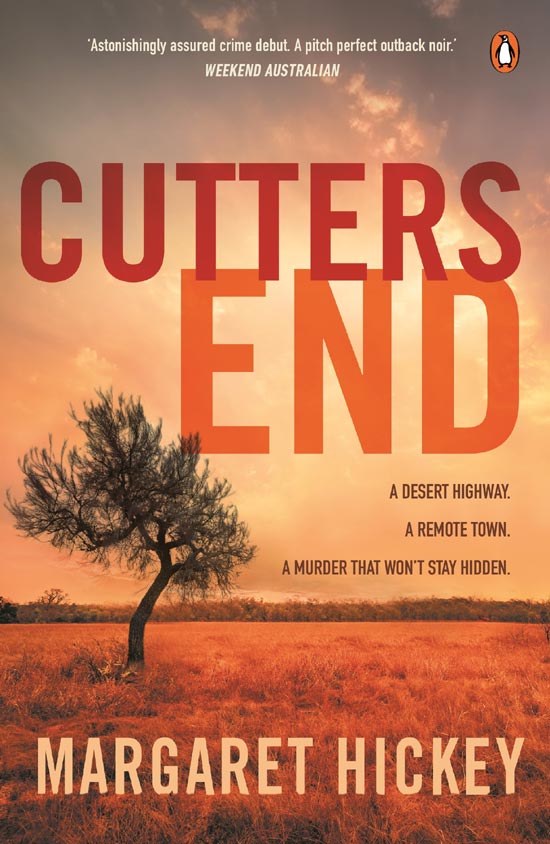
Cutters End, by Victorian based author and playwright Margaret Hickey, was named winner of the 2022 Danger Prize for crime and justice writing with an Australian setting, at the Bad Sydney Crime Festival, yesterday evening.
Published by Penguin Books Australia in July 2022, Cutters End has a synopsis that’s sure to draw in fans of crime writing:
New Year’s Eve, 1989. Eighteen-year-old Ingrid Mathers is hitchhiking her way to Alice Springs. Bored, hungover and separated from her friend Joanne, she accepts a lift to the remote town of Cutters End.
July 2021. Detective Sergeant Mark Ariti is seconded to a recently reopened case, one in which he has a personal connection. Three decades ago, a burnt and broken body was discovered in scrub off the Stuart Highway, 300km south of Cutters End. Though ultimately ruled an accidental death, many people — including a high-profile celebrity — are convinced it was murder.
When Mark’s interviews with the witnesses in the old case files go nowhere, he has no choice but to make the long journey up the highway to Cutters End. And with the help of local Senior Constable Jagdeep Kaur, he soon learns that this death isn’t the only unsolved case that hangs over the town…
Incidentally, Cutters End was shortlisted in the Ned Kelly awards for crime writing, the winners of which I’ve also written about today.
RELATED CONTENT