
Silverchair will not be reforming: Daniel Johns
23 October 2021
Daniel Johns, lead singer of the defunct NSW Central Coast based indie rock act Silverchair, speaking on Channel Ten’s The Project, said the band will not be reforming, and he has no intention of performing live again. For anyone not around at the time, Silverchair was a defining act in Australian music.
He said he had struggled to shut down the persistent rumours that Silverchair, who split in 2011, would one day reform. “I was like, ‘This is really starting to effect my mental health’. Because I am saying ‘that’s it’, and every time I try to tell the truth, someone told a lie,” he told The Project. “So I was like, ‘I wouldn’t get Silverchair back together with a gun to my head for $1 million’. Maybe that was too harsh in hindsight.”
Hope springs eternal I think. In a note posted to Silverchair’s Facebook page in May 2011, the band said they were going into “indefinite hibernation.” It might have suggested to some fans a return was on the cards at some point. John’s conversation with The Project can be streamed here until about 20 January 2022.
RELATED CONTENT
Boundless Indigenous Writer’s Mentorship 2022
22 October 2021
Applications are open for the 2022 Boundless Indigenous Writer’s Mentorship, a partnership between Writing NSW and Text Publishing. Submissions close on Monday 22 November 2021.
The mentorship is awarded annually to an unpublished Indigenous writer who has made substantial progress on a work of fiction or non-fiction. The intention of the program is to support the writer to develop their manuscript and to facilitate a pathway to publication.
RELATED CONTENT
Australian writing, Indigenous literature, literature
From the desk of your favourite author
22 October 2021
Kill Your Darlings asked Australian authors about their writing routines, and to share images of their working spaces.
RELATED CONTENT
Australian writing, literature
I Give My Marriage a Year, by Holly Wainwright
22 October 2021
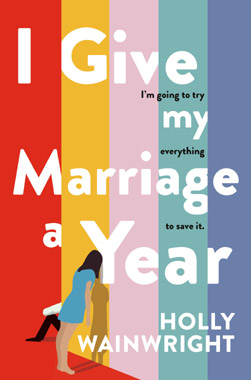
If there were an award for book cover of the year (actually there’s the Australian Book Designers Association, and the Academy of British Cover Design, for quick starters), then I’d nominate I Give My Marriage a Year (published by Pan Macmillan, August 2020), by Australian content producer and writer, Holly Wainwright. I’d do likewise if there were also an award for book title of the year.
But I Give My Marriage a Year is more than eye-catching cover design, and a pithy title, it’s like having seats centre stage while you watch two sports teams you know nothing about, go head to head. Sydneysiders Lou and Josh have been married for fourteen years. They have two children, and live in the city’s inner western suburbs. But their marriage has lulled into a void.
Lou decides it’s time to take action. Or more to the point, to make a plan to take action. For twelve months she will subject her relationship with Josh, who works as a carpenter, but would rather be in a band, to a number of stress tests. At the end of the year, she will assess the outcomes and make a final decision, does she leave Josh, or does she stay?
That leaves the reader to decide who they’ll back. And the choice may not be all that simple. Both players will break rules and land low blows. But the best in both Lou and Josh will also come to the fore. Will there be only one winner, or can the spoils of victory be shared? And without any further delay I shall add I Give My Marriage a Year to my to-be-read list.
RELATED CONTENT
fiction, Holly Wainwright, TBR list, writing
The Secret Life of Writers podcast with Charlotte Wood
21 October 2021
Sydney based Australian author Charlotte Wood speaks to Jemma Birrell, creative director at Tablo Publishing, and host of the Secret Life of Writers podcast. Wood, who is based in Sydney’s bustling inner west, speaks of the quiet she finds on the NSW Central Coast, something conducive to her writing. That I can go for. Fascinating to hear Wood describe her writing journey. She started out wanting to write, but not knowing what to write.
RELATED CONTENT
The Housemate, by Sarah Bailey
21 October 2021
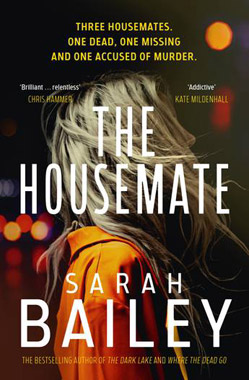
Hands up anyone who misses living in a share house. No, I didn’t think I’d see many hands up in the air. After all, what’s to miss about co-inhabiting with strangers, aside from maybe the parties? The conflicts and politics? No. The person who leaves the kitchen and bathroom perpetually messy? No. The someone bringing noisy “friends” in and out at all sorts of weird hours, usually when everyone else is trying to sleep? No.
The self-appointed head of the house who… but I’ll stop right there. I’m here today to write about the newest addition to my to-be-read list, The Housemate (published by Allen & Unwin, August 2021), the latest novel by Melbourne based Australian author and advertising executive Sarah Bailey. Olive, an investigative journalist in Melbourne, is sent out by her boss to write about the suspicious death of a woman in rural Victoria.
The deceased turns out to be the former flatmate of another woman, murdered in the so-called “Housemates Homicide”, a story that had gripped the nation ten years earlier. While the third housemate was eventually jailed for the crime, the circumstances surrounding the horrific killing were never fully understood.
Working with Cooper, her colleague podcaster, whom she doesn’t always get along with, Olive begins delving into the killing again. In doing so, Olive discovers other deaths may be connected to the original murder ten years ago. She also learns she might have a previously unknown personal connection to case, one that may pose a danger to her and her family.
RELATED CONTENT
fiction, Sarah Bailey, TBR list, writing
The Lost Daughter trailer
20 October 2021
The Lost Daughter (trailer), a film adaptation of Italian author Elena Ferrante’s novel of the same name, directed by Maggie Gyllenhaal, starring Olivia Colman. That’s a whole lot of awesome in one regular size sentence.
RELATED CONTENT
Elena Ferrante, film, Maggie Gyllenhaal, Olivia Colman, trailer, video
Stella Prize 2022 entries close tomorrow
20 October 2021
Well, that was fast. Entries for the Stella Prize 2022 close tomorrow, Thursday, 21 October 2021. It seems like only a week or two ago when I wrote that entries had opened, but it’s more like six weeks.
RELATED CONTENT
Australian literature, literary awards, Stella Prize
The Shadow House, by Anna Downes
20 October 2021
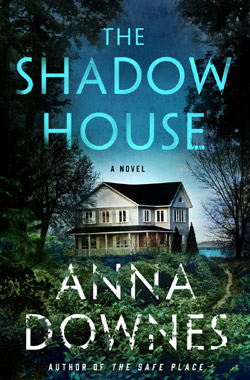
It might be a story we’ve heard before, but there’s something about The Shadow House (published by Affirm Press, September 2021), by Sydney, Australia, based British author Anna Downes, that’s snags at my curiosity. First, there’s the prospect of starting a new life in a beautiful house, in a remote, yet welcoming, community, surrounded by a lush forest, far from a previous, unhappy existence.
But then it comes. Slowly at first. A gnawing doubt, that perhaps it’s all a little too good to be true. But by the time that happens, it’s too late. Alex, with her children, Ollie, a teenage boy, and baby Kara, have left Sydney, and moved to rural Pine Ridge, a fictional town on the NSW Central Coast of Australia. She left an abusive partner, and despite Ollie’s misgivings at leaving the city, Alex feels she made the right choice.
Until that is the strange, disturbing parcels, begin appearing on her doorstep, and Alex thinks she sees shadowy figures moving about in the dense woods enveloping the house. Six years earlier, meanwhile, Renee, had lived on a farm that became the site of the community Alex moved to. Like Alex, Renee also had a teenage son, Gabriel. But Gabriel went missing one day, and was never seen again.
Is there a connection between the odd things happening to Alex, and the tragedy that struck Renee’s family? Who is leaving bone fragments outside Alex’s house, and what’s with the spooky carry-on in the nearby forest? But Alex has cause to be alarmed, Renee reported the exact same happenings just before Gabriel disappeared…
RELATED CONTENT
Anna Downes, fiction, TBR list, writing
The Melbourne Writers Festival 2021, rewound
19 October 2021
Re-live this year’s Melbourne Writers Festival through podcasts from last month’s event. And not to be left out, the Sydney Writer’s Festival has also made recordings of proceedings from this year available.
RELATED CONTENT