
Showing all posts about books
Why are Australian publishers averse to science fiction books?
20 February 2023
Australian author Alice Boer-Endacott, writing for the Australian Young Adult Literature Alliance (#LoveOzYA) blog:
However, despite the growing mainstream appreciation of fantasy (and science fiction) texts, especially within YA, Will [Kostakis] notes, “it’s as if we’re conditioned to see something as less worthy just because it is unabashedly fun. The implications of this? We talk less about fantasy books’ craft, we omit some of our finest YA writers from awards conversations, they’re not studied in schools … That last bit is very important in the Australian landscape, where sales are (unfortunately) quite small.” This final point was echoed by an industry insider with whom I had a passing conversation on this subject (they declined to be named). They told me, “the success of YA texts are dependent on whether or not schools pick up class sets, and they are much less inclined to do that with fantasy.”
Some Australian publishers explicitly state they will not accept science fiction and fantasy manuscripts. Some Australian authors meanwhile have reported local agents and publishers will only accept literary fiction manuscripts, and nothing else. Scoring any publishing deal is difficult, but the odds are especially stacked against sci-fi and fantasy writers in Australia.
RELATED CONTENT
books, literature, novels, science fiction
Daughter to TikTok: buy Stone Maidens, my dad’s novel
18 February 2023
After spending fourteen years writing a novel — between working and bringing up a family — American lawyer turned writer Lloyd Devereux Richards, published his novel Stone Maidens through Amazon, in 2012.
And then next to nothing happened. Until Richard’s daughter, Marguerite, posted a short clip about the novel on TikTok. Then things started happening. The clip went viral. Sales surged. Stone Maidens sold out after a short stint as the number one on Amazon’s bestseller list, such was interest.
Last week Marguerite posted a 16-second TikTok video that briefly recounted her father’s journey as an author. She explained that her father worked tirelessly on his book while raising three children, and “he’s so happy even though sales aren’t great”. The clip ended with a simple call to arms: “I’d love for him to get some sales.”
It’s not the first time something like this happened after a book concept took off on TikTok. Numerous authors whose manuscripts have been rejected by publishers, have seen their work printed after being embraced by Tiktok users. The Atlas Six, by Olivie Blake, which I mentioned a few days ago, is another example.
Finding a publishing deal through TikTok seems like a lottery to me, but it’s probably worth posting your book idea there, on a “be in it to win it” basis.
RELATED CONTENT
books, literature, Lloyd Devereux Richards, social media
There’s nothing wrong with marking a book did not finish
18 February 2023
Life’s too short to stick with, say, a movie or a book, that isn’t appealing, so ditch them, says Josh Gondelman, writing for Self magazine:
This is not, by the way, a criticism of the slow burn. It’s simply a permission slip to ditch the no burn. Gratification doesn’t have to be immediate, but it should be… eventual. With all the world’s art at our fingertips, there’s no reason to settle for something that leaves us cold. Unless, of course, you’re simply trying to bludgeon yourself into numbness with some kind of dull programming marathon. We all have to get to sleep somehow.
Yes, sleep. I often read books later in the evening, because, you know, I’m writing about books during the day, so I have to read later on. But if I find myself constantly nodding off while reading a novel, that’s pretty much an indication to stop and move onto something else.
RELATED CONTENT
New Australian books and TBR ideas, 17 February 2023
17 February 2023
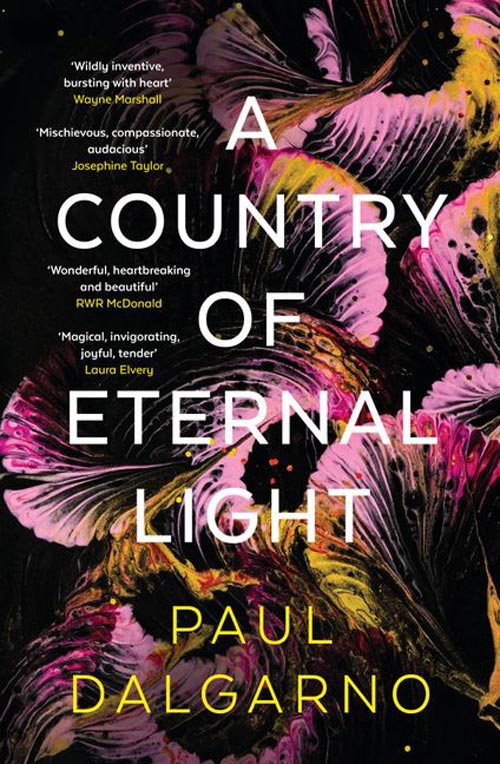
Here’s a selection of recent or upcoming Australian published books to add to your TBR list, that have caught my eye this week.
- The Bookbinder of Jericho by Pip Williams — follow up to 2020’s The Dictionary of Lost Words — a story about twin sisters working in the bindery at Oxford University Press during World War I.
- The Wakes by Dianne Yarwood. Funerals, failing marriages, and a catering business, are the ties that bind five people, to greater or lesser degrees, in Yarwood’s fiction debut.
- Gigorou by Sasha Kutabah Sarago. The beauty assistant, model, and magazine editor recounts her journey to reconcile her conflict with beauty.
- The Messiah’s Bride by Megan Norris. The harrowing story of Stefanie Hinrichs, a survivor of an Australian doomsday cult, who was forced to become the child bride of the cult’s leader.
- A Country of Eternal Light, by Paul Dalgarno. A dead woman travels back and forth through time, and around the globe, as she seeks meaning in life and death.
RELATED CONTENT
Australian literature, books, Dianne Yarwood, Megan Norris, Paul Dalgarno, Pip Williams, Sasha Kutabah Sarago
All That’s Left Unsaid, debut fiction by Tracey Lien
15 February 2023
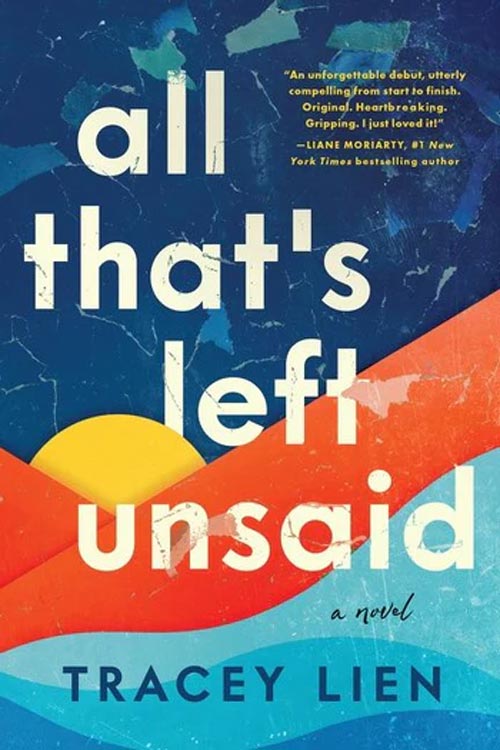
There are ways to begin a writing career, and there are ways to begin a writing career. Your first novel being the subject of a manuscript bidding contest, and then making the shortlist of a major literary award once published, would probably rate as a pretty good start in the eyes of most pundits.
This is what happened to Sydney based Australian journalist and author Tracey Lien, and her novel All That’s Left Unsaid, published in September 2022 by HarperCollins Australia. So intense was enthusiasm for Lien’s manuscript, it was reported no fewer than nine publishing houses slugged it out for the publishing rights.
Frantic auctions for manuscripts are not uncommon, but they’re not exactly every day occurrences either. In 2021, American author Olivie Blake also found herself, and the manuscript of her book The Atlas Six — which she had already self-published — at the centre of a lucrative bidding contest that was sparked on TikTok.
But Lien’s story continues. Soon after being published, All That’s Left Unsaid was shortlisted in the debut fiction category of the 2023 Indie Book Awards. Needless to say, this is a novel that packs a punch. Ky Tran, a young woman is forced to return to Australia after her younger brother, Denny, is murdered in a busy restaurant, in the Sydney suburb of Cabramatta.
Despite the presence of numerous bystanders though, no one seems to know anything about how Denny died. With local police seemingly uninterested in the case, Ky sets about contacting, and talking to, each of the witnesses present when Denny was killed. But All That’s Left Unsaid is more than a murder story.
Lien’s novel lifts the lid on a troubled area of Sydney — also home to a large refugee population — during a difficult chapter in its history. The streets were awash with drugs and violence. Cabramatta is also where Australia’s first political assassination took place, when John Newman, a New South Wales State parliamentarian was killed outside his home in 1994.
Emma Finn, of London based literary agency C&W Agency described Lien’s manuscript as “electrifying and compulsive”, at the time the publishing rights were acquired. One can only wonder what might be next for Lien, and All That’s Left Unsaid. Blake’s novel The Atlas Six is in the process of being adapted for TV, and given interest thus far in Lien’s debut, a screen adaptation hardly seems like a surprise. Time will tell.
The winners of the Indie Book Awards will be announced on Monday 20 March 2023.
RELATED CONTENT
Australian literature, books, literature, novels, Tracey Lien
Astronomy, Sky Country by Karlie Alinta Noon, Krystal De Napoli
14 February 2023
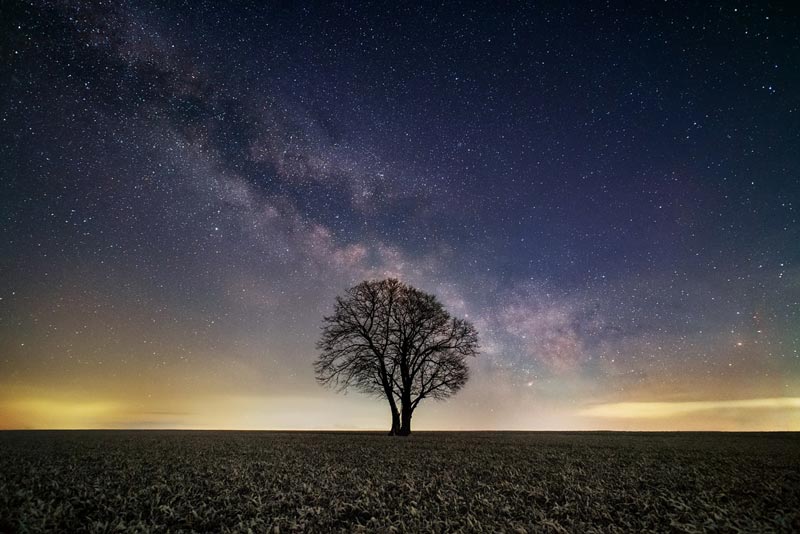
Image courtesy of Evgeni Tcherkasski.
“Aboriginal and Torres Strait Islander people are the oldest scientists in human history.”
Learning this may come as a surprise to readers of Astronomy, Sky Country, written by Karlie Alinta Noon and Krystal De Napoli, and published by Thames & Hudson, winner of the People’s Choice Award in the 2023 Victorian Premier’s Literary Awards.
Because, for instance, were not the Assyro-Babylonians, in Mesopotamia, in south west Asia, documenting their scientific and astronomical research, over three thousand years ago? They were, but Indigenous peoples living in Australia had been making, and recording, astronomical observations tens of thousands of year earlier.
Unlike the Assyro-Babylonians though, who inscribed their knowledge onto tablets and the walls of temples, First Nations Australians recorded information, including astronomical knowledge, differently. Knowledge and stories was passed from generation to generation through word of mouth, cultural rituals, and Songlines.
Songlines were memorised descriptions of pathways or tracks used by Indigenous Australians to guide them from one place to another across country, and included instructions on how to travel, and landmarks to guide their journey. Songlines also contained protocols to observe when crossing other Indigenous peoples’ lands, or country.
But far longer journeys, to destinations a great distance from country, and, on occasions, beyond the Australian continent, required different means of navigation. This is where Indigenous Australians looked to the sky and the stars. This meant travelling overnight when the stars were visible, and when it was also a little more comfortable than trekking through the heat of day.
Torres Strait Islanders, for instance, navigated by a large constellation named Tagai, one of the creator beings. The Tagai group of stars embodies the constellations of Scorpius, the Southern Cross, and Corvus. These three star groups can be seen in the lower left hand quadrant of this constellation map at Nature Noon.
But Tagai was not solely a navigation guide, the constellation also played a role as a timekeeper. Tagai’s movement across the sky as the year progressed, marked the passing of seasons, and acted as a calendar of sorts, indicating times to hunt for food, or harvest crops.
Planets also assisted some Indigenous Australians with navigation, including Venus. Venus was also a part of some Songlines containing cultural lessons and protocols.
Through Astronomy, Sky Country, Karlie Noon, a Gamilaraay astronomer and science communicator, and Krystal De Napoli, a Kamilaroi astrophysicist and educator, bring, through the lens of the cultures of Indigenous Australians, a new understanding to the science of astronomy.
Contemporary astronomical knowledge, for its importance, value, and indeed fascination, is analytical and systematic. Scientists and astronomers of recent centuries have been more concerned with comprehending, and classifying stars as mere stellar objects. Red giant star or red dwarf? What distance are they from Earth, and each other?
But stars are not mere points of light in the night sky. They are also entities that guide, teach, and tell stories. While Indigenous Australians are not the only early cultures to embed legends, stories, and knowledge, in the planets, stars, and constellations, they are among the first.
RELATED CONTENT
astronomy, Australian literature, books, Indigenous literature, Karlie Noon, Krystal De Napoli
Striking workers reach tentative deal with HarperCollins
13 February 2023
New York based American publisher HarperCollins has reached a tentative deal with workers who have been striking since November 2022.
The tentative agreement includes increases to minimum salaries across levels throughout the term of the agreement, as well as a one time $1,500 lump sum bonus to be paid to bargaining unit employees following ratification.
Employees have been seeking fairer rates of remuneration, and an undertaking from the company to increase workplace diversity. Some workers have been struggling to make ends meet on salaries of US$45,000, which is well below the minimum annual salary of about US$56,000 needed by a single person to live sustainably in the New York City region.
RELATED CONTENT
#BookTwitter and other Twitter communities fear for future
4 February 2023
For years now book aficionados, publishers, and literary agents, have been convening on #BookTwitter, a community similar to Instagram’s #Bookstagram posse of book lovers.
Like many other Twitter groups though, #BookTwitter’s future hangs in the balance, subject to the fickle whims of the social networking service’s present regime, leaving members concerned they’ll wake up one day and find it gone, along with Twitter itself:
The recent chaos at Twitter has left many communities on the platform wondering — what happens if we wake up tomorrow and the lights are off for good? One such community is “Book Twitter,” made up of writers, editors, agents, booksellers, publishers, literary organizations, and everyone in between. Recently, notable authors like John Green and Sarah MacLean have joined other prominent voices in either deleting or indefinitely locking their accounts, leaving many fearful that a slow bleed of influential players will eventually lead to the community’s demise — if Twitter’s code doesn’t blow up first.
RELATED CONTENT
books, literature, social media, social networks, Twitter
Sophie Cunningham, Emily Bitto, talk This Devastating Fever
1 February 2023
Australian author, and co-founder of the Stella Prize, Sophie Cunningham, discusses her latest novel, This Devastating Fever (published by Ultimo Press, September 2022), with Melbourne based author Emily Bitto, in a podcast recorded by the Wheeler Centre.
This Devastating Fever, Cunningham’s ninth book, tells the story of an author writing about the life of Leonard Woolf, the husband of British writer Virginia Woolf, and features a curious tie in with the once notorious Y2K bug:
Alice had not expected to spend most of the twenty-first century writing about Leonard Woolf. When she stood on Morell Bridge watching fireworks explode from the rooftops of Melbourne at the start of a new millennium, she had only two thoughts. One was: the fireworks are better in Sydney. The other was: is Y2K going to be a thing? Y2K was not a thing. But there were worse disasters to come. Environmental collapse. The return of fascism. Wars. A sexual reckoning. A plague.
Uncertain of what to do she picks up an unfinished project and finds herself trapped with the ghosts of writers past. What began as a novel about a member of the Bloomsbury set, colonial administrator, publisher and husband of one the most famous English writers of the twentieth century becomes something else altogether.
RELATED CONTENT
Australian literature, books, Emily Bitto, novels, Sophie Cunningham
The Dublin Literary Award 2023 longlist
31 January 2023
Seventy books, published in thirty-one countries, have been named on the Dublin Literary Award 2023 longlist. After Story by Sydney based author and filmmaker Larissa Behrendt, Bodies of Light by Jennifer Down, winner of the 2022 Miles Franklin award, and Cold Enough for Snow by Jessica Au, are among Australian titles to be included.
Formerly known as the International IMPAC Dublin Literary Award, before being renamed in 2015, the Dublin Literary Award was established in 1994 to celebrate excellence in world literature. Awarded annually, novels either written in, or translated into English, can be nominated by participating libraries globally. A shortlist of ten book will be announced in March 2023, with the winner being named later this year, in June.
RELATED CONTENT