
Showing all posts about humour
Announcing the winner of the 2023 Lyttle Lytton Contest
24 July 2023
Last month the winners of the Lyttle Lytton Contest were announced. The Lyttle Lytton is a literary prize, but not of the usual variety. Instead of celebrating the good or excellent, Lyttle Lytton honours the worst of the worst. In this case bad, or terrible, would-be opening sentences from novels that will likewise turn out to be awful. The lines are not taken from actual published works though, instead they are devised by contest participants vying to write the best bad sentence they can think of.
RELATED CONTENT
humour, literary awards, literature, writing
What to do when no one likes the quirky links that you curate
11 July 2023
Well this wasn’t part of the plan. Imagine you’ve set yourself up as the editor of a (possibly informal) email newsletter featuring (what you consider to be) interesting, funny, and quirky links.
Except no one you send the newsletter to (possibly whether they wish to receive it or not) seems to find anything you’ve compiled to be the least bit amusing. Welcome to the world of online (sort of) publishing. The only consolation (maybe) is no one can unsubscribe.
But stick with it I say, you never know when you might strike a chord with someone one day.
RELATED CONTENT
humour, publishing, self publishing
Are you a movie buff, or a Buzzfeed movie buff?
30 April 2023
According to Buzzfeed, if you’ve seen the following fourteen movies, you’re a movie buff:
- Alice in Wonderland directed by Tim Burton
- Beetlejuice directed by Tim Burton
- Burlesque directed by Steve Antin
- E.T. the Extra-Terrestrial directed by Steven Spielberg
- Footloose directed by Herbert Ross (I think they mean the 1984 film)
- Heathers directed by Michael Lehmann
- Jennifer’s Body directed by Karyn Kusama
- Mean Girls directed by Mark Waters
- Suicide Squad directed by David Ayer
- The Bye Bye Man directed by Stacy Title
- The Harry Potter films directed by various
- The Perks of Being a Wallflower directed by Stephen Chbosky
- The Texas Chainsaw Massacre directed by Tobe Hooper
- Up directed by Pete Docter and Bob Peterson
Methinks a number of movies, one in particular, have been omitted from this list…
RELATED CONTENT
Amelie was a KGB spy says filmmaker Jean-Pierre Jeunet
22 March 2023
Twenty-one years after he made Amélie, full title The Fabulous Destiny of Amélie Poulain, starring Audrey Tautou, the film’s director Jean-Pierre Jeunet has revealed Amélie was actually a KGB spy. He makes the startling admission in a short film, Amelie: the Real Story, which uses scenes from the original 2001 made feature. A master of cunning, our Amélie, but we all knew that.
Did no one ever wonder how a young waitress afforded such sophisticated decoration for a flat in Montmartre, one of Paris’ most expensive districts?
You know, I did wonder, because I wanted to live in apartment exactly like Amélie’s.
RELATED CONTENT
film, humour, Jean-Pierre Jeunet, video
What if 2001: A Space Odyssey was directed by George Lucas?
4 February 2023
Stanley Kubrick’s 1968 sci-fi classic 2001: A Space Odyssey is remixed with George Lucas’ 1977 space opera Star Wars, by YouTuber Poakwoods, and this is the result.
Truly awesome.
Also, it seems hard to believe from the third decade of the twenty-first century that less than ten years separate 2001: A Space Odyssey and the first Star Wars film.
RELATED CONTENT
2001: A Space Odyssey, film, humour, science fiction, video
The Bulwer-Lytton Fiction Contest for awful novel opening lines
18 December 2022
Not a literary award at all, more of an anti-literary award really, the Bulwer-Lytton Fiction Contest (BLFC), which has been running since its inception at San Jose State University in 1982. But unlike the literary awards we are more familiar with, the Bulwer-Lytton recognises terrible writing, and envisages the worst possible opening sentences to what will be awful novels.
Joe Tussey, from Daniels, in the U.S. state of West Virginia, was named winner in the 2022 adventure category, for this opener:
“Hoist the mainsail ye accursed swine” shouted the Captain over the roar of the waves as the ship was tossed like a cork dropped from a wine bottle into a jacuzzi when the faucet is wide open and the jets are running full blast and one has just settled into the water with a glass of red wine to ease the aches and pains after a day of hard labor raking leaves from the front yard.
The BLFC accepts nominations, the usual categories, including fiction, crime, and young adult, in the form of the worst paragraph you can devise, all through the year.
RELATED CONTENT
humour, literary awards, literature, writing
A guide to your spooky season Michael Myers-Briggs Type
17 October 2022
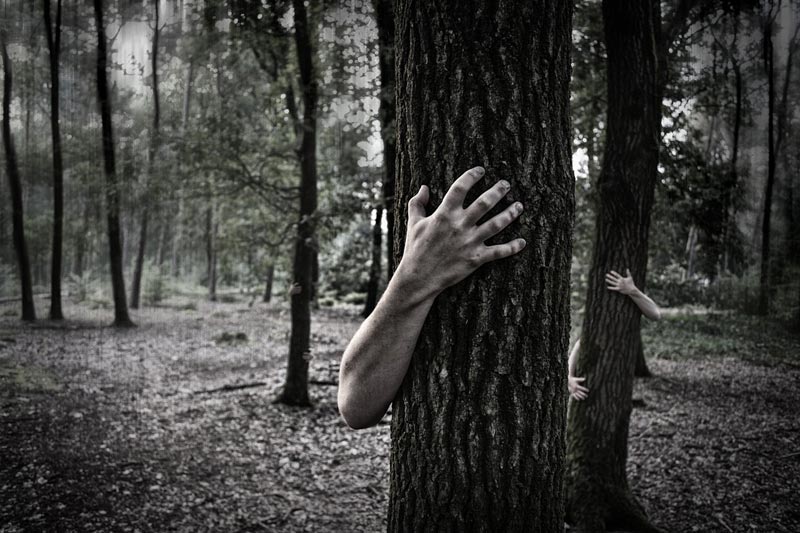
Image courtesy of Simon Wijers.
Hot off the desk of writer, actor, and comedian Simon Henriques. Understanding your Michael Myers-Briggs Type is never more important than during spooky season:
It’s important to keep in mind that no Michael Myers-Briggs Type is the “correct” one — every style of silent, masked stabbing spree is equally valid. Instead, use your type as a jumping-off point to honestly reflect on your strengths and weaknesses, as well as just your personal preferences for how you enjoy to ruthlessly murder.
RELATED CONTENT
film, humour, personality, psychology
Bicycles and the damage they have caused by Paul Fairie
29 August 2022
Paul Fairie, a researcher at the University of Calgary, and humourist, has, based upon clippings from vintage newspapers, concluded that bicycles are responsible for all sorts of problems:
- A decline in marriages
- A decline in book sales
- Appendicitis
- A decline in furniture sales
- An increase in the number of women smokers
- A decline in grain consumption
- The closure of a Christian society (so now we know…)
- The decline in trans-Atlantic travel
- A condition referred to as “bicycle face”
Bicycle face, in case you’re curious, is described as being “the sentimental side of that tired feeling”. It possibly also applies to cyclists riding on a footpath (especially when a dedicated bike lane runs adjacent to the same road), who look passed pedestrians as though they are invisible.
RELATED CONTENT
Fifty of the funniest, laugh out loud, books ever written
30 July 2022
Fifty of the funniest books of all time complied by Sarah McKenna, managing editor of Penguin Books in the UK. The list begins with Three Men in a Boat written by Jerome K. Jerome in 1889, and scrolls through to A Calling for Charlie Barnes, written by Joshua Ferris in 2021.
RELATED CONTENT
Stories about ghosts that nurses have seen
29 October 2014
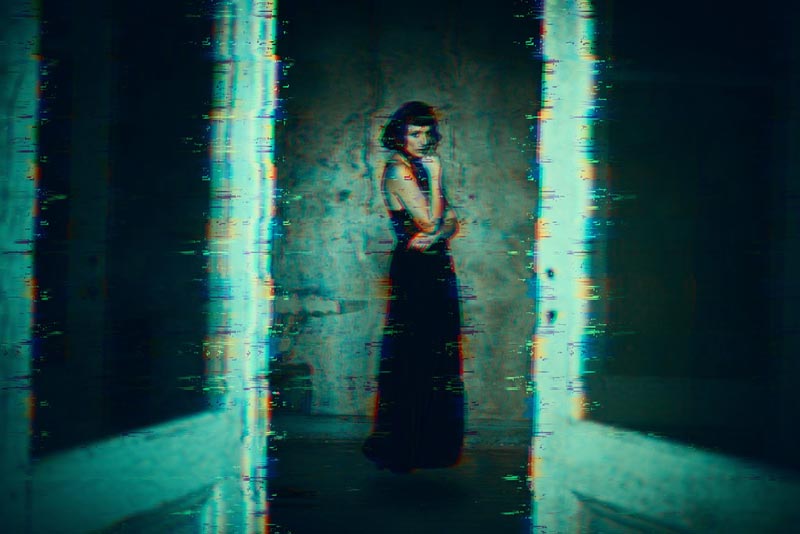
Image courtesy of Maximiliano Estevez.
I once spent a month staying at a hotel when I was somewhere or other, and every evening when I came in there’d be a young woman with straight blonde hair, sitting on the stairs. She’d always be engaged in a FaceTime conversation, speaking in Spanish, with, I came to notice, the same male.
I never saw her at any other time. Curious as to who she was, I asked the manager about her one morning. He looked blankly at me. He knew of no such guest, especially one who had been staying there as long as I had. Predictably, I never saw her again.
That’s not quite how things unfolded, and that’s not quite meant to be a ghost story, but I thought I’d tell the tale nonetheless.
Anyway to bookmark for later tonight… ghosts may well contravene the second law of thermodynamics, but these ghost stories, as told by nurses, may have you doubting the axiom that nothing unreal exists, for a spine chilling couple of minutes at least.
Originally published Wednesday 29 October 2014.
RELATED CONTENT