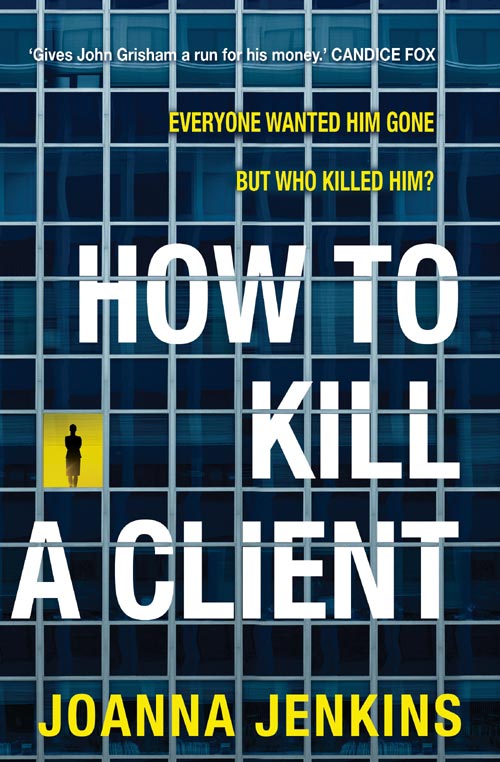
Gavin Jones is the in-house counsel at a large mining company, headquartered in Brisbane, the capital of the Australian state of Queensland. In his role, Jones awards legal contracts worth millions of dollars each year. As such, legal firms in Brisbane, and across Australia, are at his beck and call.
Among these law companies is Howard Green, one of Brisbane’s best known legal practitioners, who are frequently awarded lucrative work thanks to their relationship with Jones. There is nothing they wouldn’t do for fear of losing his favour. With his influence, Jones is feted wherever he goes.
Or at least that used to be the case. But at age thirty-nine, Jones is found dead. The victim of murder. Who though could possibly want someone who was the life-blood of so many businesses in mining and legal circles, dead? As the police investigation commences though, a side of Jones, not so well known to those outside of industry circles, begins to emerge.
He was demanding. Manipulative. Aggressive. Abusive. Narcissistic. And a misogynist. He treated women appallingly. Any women partners of Howard Green whom Jones took a disliking to were quickly swept aside. He treated his wife no differently. But his horrific conduct was not limited to women, and many others were also subjected to Jones’ wrath.
Indeed as the police probe continues, instead of eliminating suspects, the list of people with a grudge against Jones only grows. Far from being lauded by his business associates, just about no one actually liked him. This is the premise of How to Kill a Client, published by Allen & Unwin, January 2023, the debut novel of Brisbane based Australian author, and former lawyer, Joanna Jenkins.
Readers of How to Kill a Client have described Jenkins’ whodunit as captivating, compelling, razor sharp, and riveting. Numerous readers were unable to discern the identity of Jones’ killer until the final reveal, which speaks mountains for Jenkins’ skilful writing… despite the number of suspects.
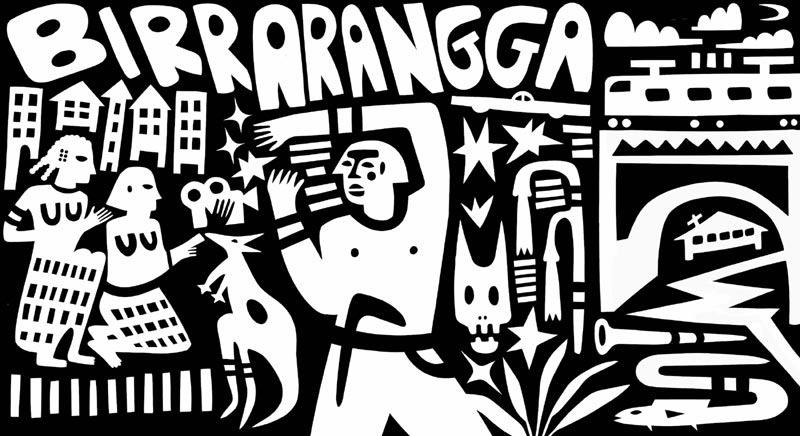
The biennial Birrarangga Film Festival runs from Thursday 23 March, through to Tuesday 28 March 2023, in Melbourne:
BIRRARANGGA Film Festival celebrates Global Indigenous Films that explore the curatorial themes of ‘strength, resilience and the environment’. First Nations relationships to the image as a form of expression, particularly in Australia, is connected to thousands of years of cultural practices. This festival honours that history and acknowledges the contemporary currency of the moving image, of film, as an expression of the human experience in relation to our natural surroundings.
The festival opens with a screening of Bones of Crows, directed by Canadian screenwriter and filmmaker Marie Clements.
I might notice that the portrayal of a cultural activity is off: Australians talk about going ‘to the footy’ but not ‘to the ball game’.
The article I link to was published about three and a half years ago. Sensitivity readers aren’t exactly new, it’s just we’ve been hearing a lot about their work recently.
Twenty-one years after he made Amélie, full title The Fabulous Destiny of Amélie Poulain, starring Audrey Tautou, the film’s director Jean-Pierre Jeunet has revealed Amélie was actually a KGB spy. He makes the startling admission in a short film, Amelie: the Real Story, which uses scenes from the original 2001 made feature. A master of cunning, our Amélie, but we all knew that.
Did no one ever wonder how a young waitress afforded such sophisticated decoration for a flat in Montmartre, one of Paris’ most expensive districts?
You know, I did wonder, because I wanted to live in apartment exactly like Amélie’s.
The Novel Prize is a biennial award for a book-length work of literary fiction written in English by published and unpublished writers around the world. It offers $10,000 to the winner and simultaneous publication in North America by New Directions, in the UK and Ireland by the London-based Fitzcarraldo Editions, and in Australia and New Zealand by the Sydney-based publisher Giramondo.
Both novels will be published simultaneously in 2024 by the three participating prize publishers. Australian author Jessica Au was the inaugural winner of the 2020 Novel Prize, with her book, Cold Enough for Snow.
Generation Z, being people born between 1997 and 2015, prefer to read paper books rather than electronic ones, according to World Economic Forum data. A break from eye-straining smartphone screens, a desire to support local bricks and mortar book stores, and the smell of newly published paper books, are among reasons they cite for the preference.
Book sales in the US and the UK have boomed in the past two years, the management consultancy McKinsey found. Sales in the US hit a record of more than 843 million units in 2021, while last year had the second-highest number sales, at almost 789 million. This increasing popularity was partly because of Gen Z and its social-media trends, including the hashtag #BookTok on TikTok, McKinsey said.
I have a love/hate relationship with politics. I love that we have a stable form of politics in Australia, even though sometimes it can get a little heated and it certainly isn’t without its problems. But I hate that it has taken over writers festivals to the degree that it is hard to find a session that isn’t overtly political. These festivals have moved from being celebrations of books to become fixated on politics and ideology.
If you argue everything that happens in the world is political to some degree, then keeping politics out of writers’ festivals isn’t going to be easy. Personally though, I’d rather see more talk focus on books, and fiction, at festivals.
Ashley Kalagian Blunt discusses her new novel Dark Mode, with Dani Vee on the Words and Nerds podcast. Plenty of talk about the dark web, which features prominently in the novel.
Deciding to donate our bodily organs, perhaps in the event of our unexpected demise, is a decision we make, then largely forget about. After all, when the time comes, we won’t be around to think about it, nor appreciate the difference doing so might make to the lives of others. For instance, what opportunities, what new hopes, might such a donation create for the recipient, and their loved ones?
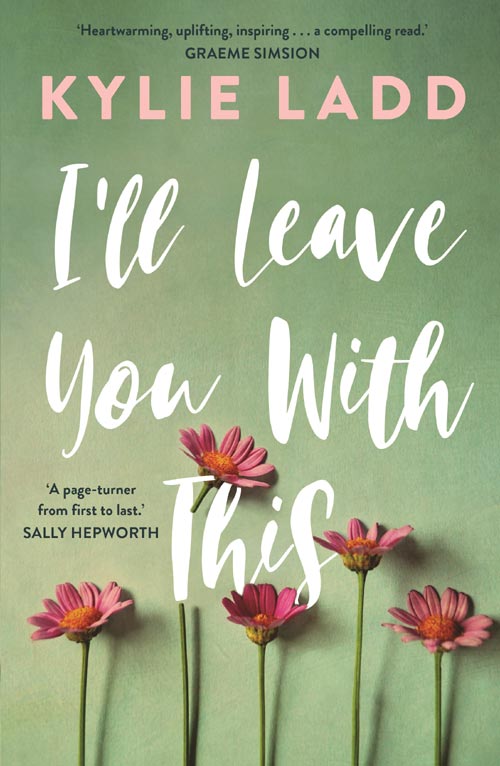
This is one of the themes running through I’ll Leave You With This, published by Penguin Random House Australia, January 2023, the seventh book by Melbourne based Australian author and psychologist, Kylie Ladd. Every year, the four O’Shea sisters, each troubled in their own way, gather on the anniversary of the death of their brother, Daniel. He was the victim of a shooting, and had requested that his organs be donated should he die suddenly.
Allison, the eldest of the sisters, who works at a Sydney hospital, is married with two children. Bridie, once a promising film director, finds her career languishing. Clare, also a medical professional, has struggled to conceive a child, which has resulted in the breakdown of her marriage. Emma — far younger than her elder sisters — is a musician, plagued by loneliness, who turned to religion in a bid to find meaning in her life.
Daniel’s loss is keenly felt. He was more than an only brother to the four sisters, and while alive bound the family together. Since he died, the sisters, occupied with their own lives, have slowly drifted apart. But on the third anniversary of Daniel’s death, Clare tells her sisters about an idea she has. Why don’t they try and locate the people who received Daniel’s organs, and learn how they have helped those who received them?
Finding each recipient — for all the difficulties entailed in the process — and hearing their stories, might give the sisters a collaborative goal to work towards, and perhaps be a source of hope for them. I’ll Leave You With This is a layered family drama, following four people leading sometimes rich, and definitely complex, complicated, lives. The sisters’ quest takes them to unexpected places, and forces them to evaluate their lives, and relationships with each other, in the cold light of day.
Spanning a number of years in its telling, I’ll Leave You With This is another example of compelling Australian literature. With a story such as this, I have the feeling it will not be told solely through the pages of a book. This is a story I could see as possibly a film, or a TV series, one day. Let’s sit back and see what happens.